Purpose The purpose of this study is to investigate the factors for setting proper training duration of frequency that can guarantee the student athletes' right to study and performance, and to derive the ranks of setting proper training duration of frequency of student athletes by school level. Consequently, to provide basic data for the development of training guidelines for the growth period of Korean student athletes. Methods Delphi and Analytic Hierarchical Process(AHP) techniques were used. The Delphi survey was conducted in three phases, and collected data through Delphi survey were computed by SPSS win ver. 22.0 and Excel, using the mean, standard deviation, median, and coefficient of variation. Using the AHP technique, we classified the factors for setting proper training duration of frequency derived through Delphi survey, and calculated the importance by using Microsoft Excel 2010. Conclusion First, elementary students should be guaranteed regular class participation, have basic after school training, and be provided with adequate rest so that they do not lose interest in the exercise. Second, middle school students are required to decide whether to continue exercise based on their ability to exercise and abundant experience. Therefore, when abandoning the exercise, students should be able to faithfully carry out their academic performance. Third, high school students are directly related to college entrance and employment, so they have to concentrate on performance rather than on academic performance.
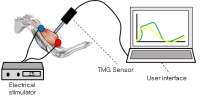
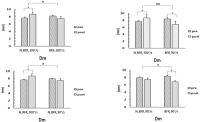
Purpose The purpose of this manuscript was to investigate the effect of high and low speed blood flow restriction versus non-blood flow restriction isokinetic exercise on isometric muscle strength, muscle fatigue, and muscle contraction displacement. Methods The subjects were consisted of ten males without non-specific muscular skeletal disease. They were classified into four training groups: ① high speed(300°/s) without blood flow restriction, ② high speed(300°/s) under blood flow restriction, ③ low speed(90°/s) without blood flow restriction, ④ low speed(90°/s) under blood flow restriction. Before and after the intervention, all of the subjects underwent measurements of isometric quadriceps strength, muscle fatigue, and muscle contraction displacement. Results In regard to isometric quadriceps strength before & after intervention, there was no significant difference between groups. For the lactic acid measurement before & after intervention, there was a signigicant difference between groups(p<.05). Also, there was a significant difference between groups(p<.05) in muscle contraction displacement in terms of Dm but there was no significant difference between groups in terms of Tc Conclusions Isokinetic exercise with blood flow restriction had effects on lactic acid and muscle contraction displacement.