The purpose of this study was to analyze the differences among behavioral skills of goalkeeper of K-League and national team and the differences among behavioral skills of goalkeeper according to game the result of match. 5 games of K-League Classic and 10 A matches of the national team in 2013 were analyzed by using Soccer Data Analysis Program and ‘Evermedia HD Capture Station’, which is an HD capture equipment with excellent functions of editing and storage of high-definition video. For statistical analysis process, SPSS Version 21.0 was used to conduct t-test and ANOVA. The results of analysis were as follows: First, the differences among behavioral skills of goalkeeper of K-League and national team were higher in the order of catching factor, kick factor, strategy factor, punching factor. The differences among the specific sub-factors of behavioral skills factors was the highest in crossing catching to be followed by cross punching. And goalkeepers of K-League were higher than those of the national team. In back pass kick factor in kick factor and build-up factor in strategy factor, goalkeepers of the national team were higher than those of K-League. In kick factor, there were significant differences in goal kick (out of play), back pass kick (in play), cross punching, and build-up factors. Second, as for behavioral skills factors of goalkeeper according to the result of match, there were significant differences in catching factor, punching factor, and strategy factor; there were no significant differences in ground kick factor among kick factors; there were significant differences in factors of goal kick, volley kick, and free kick.
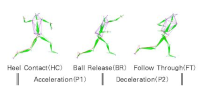
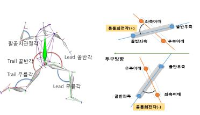
The purpose of this study was to classify high school baseball players as superior or inferior group by Functional Movement Screen(FMS) and to provide basic information for finding great pitcher and improving exercise performance by comparing and analyzing the pitching motion. The results of this study are as follows. The inferior group’s center of mass(COM) moved significant on the left side than superior group at heel contact(HC), ball release(BR), and follow throw(FT)(p<.05). There were no significant difference in linear velocity of shoulder, elbow and wrist between two groups, but inferior groups showed large difference in each joint. The superior group controled rotation of pelvis at HC and showed significant higher knee extension at BR and FT than inferior group(p<.05). The angular velocity of superior group’s throwing arm were higher in acceleration period(p<.05). Taken together based on the results, the players who have higher muscle function showed great pitching motion, so we can conclude that FMS could be useful for evaluating the potential of pitcher.