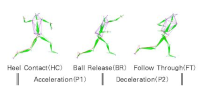
The purpose of this study was to classify high school baseball players as superior or inferior group by Functional Movement Screen(FMS) and to provide basic information for finding great pitcher and improving exercise performance by comparing and analyzing the pitching motion. The results of this study are as follows. The inferior group’s center of mass(COM) moved significant on the left side than superior group at heel contact(HC), ball release(BR), and follow throw(FT)(p<.05). There were no significant difference in linear velocity of shoulder, elbow and wrist between two groups, but inferior groups showed large difference in each joint. The superior group controled rotation of pelvis at HC and showed significant higher knee extension at BR and FT than inferior group(p<.05). The angular velocity of superior group’s throwing arm were higher in acceleration period(p<.05). Taken together based on the results, the players who have higher muscle function showed great pitching motion, so we can conclude that FMS could be useful for evaluating the potential of pitcher.
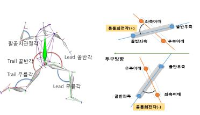
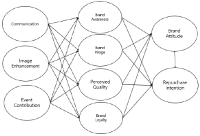
Purpose The purpose of this study was to provide title sponsorship marketing strategies by defining the relationship between professional volleyball title sponsorship, brand equity, brand attitude, and repurchase intention. Methods This study distributed 390 questionnaires to 2018-2019 V-League audiences and a total of 313 questionnaires were used as final validity sample. For data analysis, SPSS 21.0 and Amos 18.0 were used for frequency analysis, reliability analysis, confirmatory factor analysis, and structural equation analysis. Results First, title sponsorship had significant influence on brand equity, therefore hypothesis 1~3 were accepted, except for 1-3(perceived quality) and 1-4(brand loyalty). Second, among brand equity subfactors, hypothesis 4-1(brand awareness) and 4-4(brand loyalty) had significant influence on brand attitude which made hypothesis 4 partially accepted . Third, among brand equity subfactors, only brand image(hypothesis 5-2) had significant influence on repurchase intention which made hypothesis 5 partially accepted. Lastly, brand attitude had significant influence on repurchase intension, which made hypothesis 6 accepted. Conclusions It is anticipated that based on the result of the study, effective marketing strategy can be developed for title sponsorship companies in the future.
