
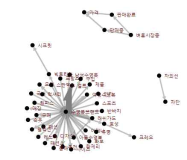
Purpose The purpose of this study was to examine the changing trends of swimsuit perception by using SNS big data. Methods By using “swimsuit” and “swimsuit brand” as key words, data was searched through blogs, cafes, Jisiksin(Tip), news, and web documents provided by naver and daum. This study used 2 years of data from January 1st, 2014 to December 31st, 2015 and social matrix program Textom was used for extracting matrix data and analyze them for frequency. To visualize data networking, NetDraw of UCINET6 program was used. Results Through analyzing the popular link words to the key words, it was known that the key words were 'swimsuit brand', 'children's swimsuit', 'rash guard', 'women's swimsuit', and 'model' in the order in 2014, and ‘swimsuit brand', 'rash guard', 'children's swimsuit', 'women's swimsuit', and 'Arena’ in the order in 2015. Second, the median of connectivity values showed that it was high in ‘swimsuit brand', 'women's swimsuit', 'children's swimsuit', 'rash guard', and 'Arena’ in the order in 2014, and ‘swimsuit brand', 'rash guard', 'women's swimsuit', 'children's swimsuit', and 'Arena’ in the order in 2015. Third, th results of CONCOR analysis demonstrated that ‘female customer’, ‘couple swimsuit’, 'rash guard', ‘brand’, 'children's swimsuit', and ‘fashion’ were grouped in 2014, and ‘brand’, ‘fashion’, 'rash guard', ‘purchase factor', and 'children's swimsuit' were grouped in 2015.




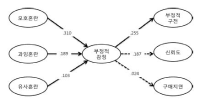
The ever-increasing golf club market made difficult and brought confusion to most of amateur golfers to differentiate and choose suitable clubs for them. Therefore, the purpose of study was to examine how consumer confusion proneness affects consumer’s negative emotion, negative word of mouth, trust and decision postponement, during the process of purchasing golf clubs. 450 questionnaires were distributed to recreational golfers in 6 different golf-driving rages and 4 golf courses located in Seoul, Gyeonggi and Gangwon area with a return rate of 98.4% (n=443). Total of 432 questionnaires were used for data analyses with PASW 18.0 and AMOS 18.0. The results of the study are as follow. First, all of the subordinate factors of consumer confusion proneness had a significant effect on the consumer’s negative emotion. Second, consumer’s negative emotion had a significant effect on negative word of mouth. Third, consumer’s negative emotion had a significant effect on trust. Fourth, consumer’s negative emotion had no significant effect on purchase postponement.
