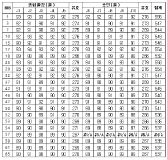
Purpose The purpose of this study is conducted to analyze the objectivity of the ski technical championships hosted by Korea Ski Instructor Association (KSIA) and to identify the error sources that affect the score of the competition. Methods To this end, we used the data from the 25th(2009) to 33rd(2017) ski technical championships held by the Korea Ski Instructor Association (KSIA). The data provided by Win Excel 2010 was used to sort out the missing data, such as abandonment, according to the data processing method. The collected data were analyzed by using SPSS 22.0 to calculate the mean and standard deviation of each season, event, and judges, and the Intraclass Correlation Coefficient (ICC). In addition, by using the single facet crossed design(p*j) of the generalizability theory’s G study, the variance component estimates for the participant(p) and the judges (j) are calculated, and the influence (%). Results As a result of the research, it was confirmed that the results of all the seasons and events from the 25th to the 33th events were very consistent, with the objective of .845~.986 higher than the recognition level of .80. In addition, the results show that the relative ratio of the judges to the error of the judging score is very low as a result of the error analysis through the dispersion component estimates. Conclusion In summary, the results of the KSIA evaluation are highly evaluated objectivity and have very low impact on the judges' errors.
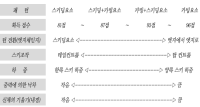
PURPOSE This study was designed to propose a quantitative base training evaluation method through alpine ski training monitoring using a triaxial accelerometer. METHODS Twelve Korean alpine ski athletes, six each in France and New Zealand, participated in this study. Activity data during training and daily living were collected for 7 days via the Actigraph GT9X. The collected data were downloaded through ActiLife Ver 6.13.1. Energy expenditure was calculated with Freedson (2011), and the resting metabolic rate was corrected using the Harris & Benedict (1918) formula. Further, the physical activity intensity classification criteria and METs formula of Freedson (1998) were used to classify hourly activity intensity. The collected data were organized by date, time, intensity, and energy expenditure using Microsoft Excel 2016. Differences between weekdays vs. weekends and skiing vs. physical training were analyzed through a paired sample t-test using Windows SPSS 23 with a significance level of a=.05. RESULTS First, both groups showed repetitive on and off high-intensity activities during scheduled ski training and competition. Second, moderate-intensity activities accounted for an average of 6-10%, and the weekly total time and intensity of MVPA was very high. Finally, the group from France showed differences in total energy expenditure during weekdays vs. weekends (p<.05) and the energy expenditure of both ski training and physical training during weekdays vs. weekends (p<.05). The New Zealand group showed a difference in total energy consumption during weekdays vs. weekends (p<.05). CONCLUSIONS A systematic training program based on quantitative training evaluation should be developed for alpine ski athletes to maintain proper rest and exercise intensity levels.
