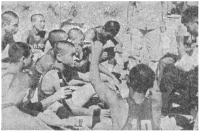
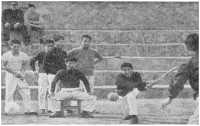
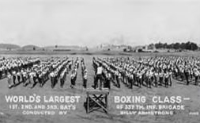
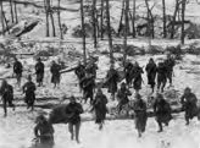
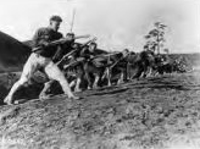
Purpose This study confirmed the historical significance of the First World War US Combat Strength Training Fitness System for contributing in the ROK military sports development. Methods This research method is literature analysis to be focused by the previous US Army Field Manuals. Results Concretely, The meaning of US Army fitness training was divided into four stages. First, this study confirmed the actual condition of the US Army fitness before First World War. Since 1916, US Army has developed a group physical training program applied the items suitable for the war and has systematically reflected the program in the recruitment training. Second, this study confirmed the process of operating military fitness program during the First World War. US Army physical fitness program provided an effective method to suit soldier fitness for war. Third, this study observed the fitness training changes of US Army after the First World War. At that time, US Army focused on maintaining health and basic physical strength for civilians and reserve forces, but US Army ran parallel with basal physical fitness and combat physical fitness after the Korean War. Fourth, this study compared military strength training between First World War and current US Army. Since First World War, the training of US Army has been developed around doctrine and manuals to be maintained the consistency of the system. In conclusion, US Army physical training system of First World War meant to be provided the basis of current military physical education and physical training. In other words, current fitness training is not dogmatic but has evolved, and it accommodated the basics of soldier physical training course from the past.



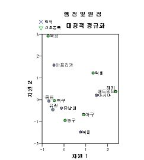
To activate the export of defense industry, our government approach a niche market by various advertising and revising policy. However, techniques of current Korea defense industry are difficult for market development of various aspects. Thus a new approach of overcoming existing export marketing strategy is needed. this study presents a strategy for exporting country, which is to activate the export of defense industry through military-sports diplomacy. The military-sports diplomacy is chosen because several cases confirm the sports diplomacy is an effective instrument which can develop political relationship between countries. a research needs to be done to check if Export target countries' preference for sports and possibilities of supporting should be investigated. by combining experts' opinion result using correspondence analysis, the following analyses of defense industry export activation strategy via Sports-diplomacy can be suggested. Overall, Sports policy action to expanse Export target geographical areas is strengthening ties for using soccer, badminton, hockey sports with each other. Detail, sports policy in the proportion of low-country exports must be to use badminton, hockey, rugby which prefer in asia area. and sports policy in the proportion of exports to the high country must be to use soccer, basketball, field and track events which prefer in Africa and Central and South America. area. In suggestion, The research concluded that information exchange between Defense Acquisition Program Administration and Korea military sports organization is needed, and the compatibility of exporting weapons to target countries is a priority while executing sports diplomacy.

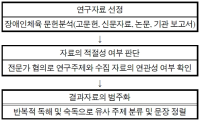
Purpose This study examines the Physical Education curriculum history of special schools, and then in-depth grasps the process of how the sports environment for the disabled has changed by age. Method The research method was literature review analyzing papers, reports and newspapers. For the concrete process, this study verified the relationship between the research subject and the collected data through experts and historians with disabilities to verify the sports data for the disabled. Results First, the process of physical education management of special schools is as follows. in the 1940's and 50's special schools, physical education was carried out simply by gymnastics. but, special schools were differentiated by the characteristics of the disabled, and the institutional foundation for physical education was also imitated by the 1960s, 1970s and 1980s, special schools were shortened in physical education time due to the increase in the number of courses and the strengthening of disability coping programs. in the 1990s, as special sports curriculum was established, customized prescription for students with disabilities was implemented. Second, the process of changing disability sports is as follows. In the 1960s and 1970s, disability sports were mainly focused on special schools, while in the 1980s, disability sports were expanded by the government. in particular, the hosting of the 88 Seoul Olympics and Seoul Paralympics provides an opportunity to equip the disabled with a system, organization and facilities. in the 1990s disability sports was meaningful in terms of academic progress, and with the quantitative growth of the 1980s and the academic foundations of the 1990s, disability sports in the 2000s provided a legal basis and improved welfare conditions for the disabled. In the future, it is necessary to find a way to solve the value of physical education for the disabled more reasonably.