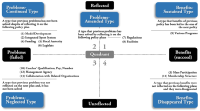
Purpose The purpose of this study is to identify policy learning in the government-led sport club policy and to analyze its type of the policy learning. Methods Sport club related documents such as policy plans, evaluation reports and journals published from 2004 to 2018 were analyzed by framework of this study. For identifying the policy learning, 12 items were determined by policy goals, policy means and policy targets. Each item was placed on four quadrants of the X-axis(benefits and problems) and the Y-axis(reflected and unreflected), and was categorized. Results This study found out the five types of policy learning. A 'benefit-sustained type' is the type that benefits of previous policy has been led to the benefits of next policy and a ‘problem-amended type’ is the type that previous problem is solved by reflecting on the following policy plans. A ‘problem-continued type’ is the type of problem that has not been solved. On the other hand, A ‘Benefit-diminished type’ and the ‘problem-neglected type’ are that previous results were not reflected. It indicates that those types have not performed the policy learning. Conclusions In order to expand the benefits of the sport club policy and to solve the problem, we should recognize the policy process and environment are not static and do policy learning. Furthermore, it suggests that there should do policy learning on what Korean sport club would be.
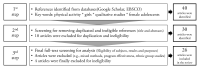
Purpose The purpose of this study was to develop a comprehensive model for facilitating and hindering factors about girls' participation in physical activities. Methods Based on systematic analysis, 26 foreign journals published from 2005 to 2016 were comprehensively analyzed. The journals were directed to facilitating and hindering factors of girls' physical activities. A model was developed by categorizing various factors in the previous studies, and by conceptualizing those categories, and by creating visualization of relations between the categories. Results Seven facilitating factors are referred to as 'SPORTS', including ‘Self-recognition’, ‘Physical environment’, ‘Opportunities’, ‘Relationship’, ‘Treatment’, and ‘Social supports’. In contrast, nine hindering factors are conceptualized as 'INCAPABLE' which includes 'Internalized gazes’, ‘Negative feedback’, ‘Competitiveness’, ‘Alternativeness’, ‘Perceived danger’, ‘Appearance’, ‘Bad feeling’, ‘Lack of opportunities’, and ‘Effeminate norms'. Conclusions It is suggested that the girls' physical activity patterns vary depending on whether the girls subjectively interpret the physical activity or girls are being objectified by other's evaluation. And those individual, relational, and environmental levels are needed to strengthen the subjectification of girls.

