The primary purpose of the study was to compare cardiovascular function, mental health indices, stress-related variables according to body mass index (BMI) and percent body fat (%BF) in 20s females. Sixty-eight women, aged 20-29 yrs, participated in the study as subjects. There were three groups, i.e., normal group (BMI<24 kg·m-2 and %BF<25%; n=25), normal weight obese group (BMI<24 kg·m-2 and 28%<%BF<40%; n=19), and obese group (BMI>26 kg·m-2 and 28%<%BF<40%; n=24). Cardiovascular function, mental health indices, stress-related blood variables were measured and compared among three groups. Main results of the present study were as follows: 1) SBP, DBP, mean arterial pressure, and RPP were significantly higher in obese group than normal group. 2) There were no significant differences in mental health indices among three groups. 3) Fasting plasma insulin, fasting plasma glucose, and CRP were significantly higher in obese group than normal weight obese group and normal group. It was concluded that there would be abnormal cardiovascular function, insulin resistance, and inflammation in general obese individuals in 20s females, not normal weight obese and normal individuals.
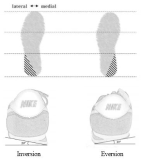
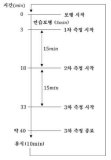
The purpose of the study was to investigate the effect of shoe's soles abrasion positions on gait biomechanics and joint moment of the lower limbs. Participants between the age of 20 and 29 (Male: 10, Female: 8) were chosen as subjects. These subjects wore shoes for 40 minutes with soles that were previously worn down medially or laterally. Motion analysis system consisting of 8 infrared cameras and two force platforms were used to measure the following: center of mass(COM), ground reaction force(GRF) and lower limb’s joint moment. Significant differences in the COM and GRF were observed between lateral & medial worn shoes and non-worn shoes. In addition, significant differences in ankle and knee movements were observed. The change in shoe soles is common however there is still a lack of information regarding the effects on gait patterns, joint forces, etc. This study reveals that shoes with worn down soles can negatively influence our gait pattern. We recommend that shoes be checked regularly for signs of wear and tear and changed accordingly. Furthermore, research focusing on the effects of differently shaped shoe sole abrasion is needed to recommend how they influence an abnormal gait. In addition, further studies on the relationship of worn shoes on lower back pain needs to be conducted.


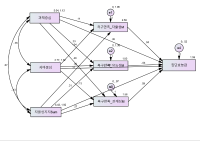
In sport context, the motivational climate created by significant others (e.g., coachs and peers) has been influences on the athletic-student's motivation, engagement, performance, and skill development. Collective efficacy is important for team performance because it influences a group's task choice, effort expenditure, persistence in the face of failure, and resistance to discouragement. This study was to examine the influence of peer motivational climate (i.e., task-involving and ego-involving motivational climate) and coach autonomous support for basic psychological need satisfaction and collective efficacy. In the study, participants were 289 athletic-students' of team sports. In the study then, questionnaire was assessed using by the correlation and path analysis. The results showed that task-involving motivational climate significantly predicted of collective efficacy, while ego-involving motivational climate were negatively predict to the collective efficacy. The results suggest the importance of considering peer influence in addition to coach influence when examining motivational climate in team sport.
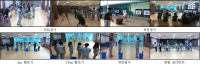
The purpose of this study was (1) to develop a archery lesson using forced connection method-sportcasting for cultivating collaborative problem-solving competencies, and (2) to apply and to examine the responses of students after physical education(PE) lesson. A archery lesson of Understanding-Performance-Appreciation step was developed according to LfPE(Lee, 2014) using backward curriculum design. Participants were tenth grade students (N=148) in a high school. Open-ended question used to collect the data. The analysis of data indicates that students expressed features in lessons. Six features are (a) 朋友信之, (b) 君子不器, (c) 能竭其力, (d) 觀其所由, (e) 溫故知新, (f) 思而不學. In-depth interviewers were carried out for further analysis of the answers to the questionnaires. The results are as follows. First, 朋友信之 means lesson cultivating collaborative problem solving competencies. Second, 君子不器 means pleasant and funny lesson. Third, 能竭其力 means lesson cultivating self management ability. Fourth, 觀其所由 means lesson cultivating appreciativeness for archery. Fifth, 溫故知新 means lesson improving the status of PE teacher and school. This study concluded that a archery lesson generated fun and interest for students. Implication for developing lesson using LfPE, utilize and transform forced connection method-sportcasting in PE were discussed.


Sportscasting in Physical Education (Lee, 2011) is a class activity that students simulate sports broadcasting (e.g., students report, analyze, and comment on game play). It encourages problem solving (PS) learning for students. Scaffolding is the support with the intention of helping the student achieves his/her learning goals and contributes to problem solving. However, limited studies have examined if sportscasting with scaffolding is effective instructional strategies for PS. The purpose of this study was to examine effects of sportscasting with scaffolding on PS abilities, and on academic achievement. Participants were 46 college students. The static-group comparison design was used: an experiment group (N=26) with supportive scaffoldings (e.g., conceptual explanation, terminology dictionary, visual materials) and a control group (N=20) with reflective scaffoldings (e.g., organizing the environment, using appropriate cues to guide behaviors, and modeling). The results revealed that students in reflective scaffoldings had higher PS abilities than students in supportive scaffoldings. However, two groups were not statistically different in academic achievement. Sportscasting with instructional scaffolding promote a deeper level of cognitive skills and male students performed better than female students. The effective scaffolding types (Lewis, 2010) for sportscasting were discussed to help students to foster PS skills.
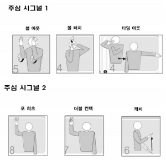
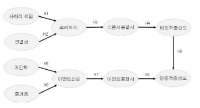
The purpose of this study was to develop a model of relationship intensification, identification formation, and loyalty achieved through mutual effect within participants of sports sponsorship. Through this, the study aims to provide guidance to businesses for establishing and developing sports sponsorships. In order to achieve the objective, two identification paths were used to understand the process of deepening consumer-sponsor relationship in professional volleyball title sponsorships. The target of this study is 'NH Nonghyup' a valleyball title sponsor in 2014-2015. A survey was conducted on 264 home crowd members of Korea Air, Samsung fire, Kepco, Woori card, OK saving bank and Hyundai capital based in metropolitan regions. Sampling method was Convenience Sampling Mode, and questionnaire has been structured to be self-administerd type. SPSSWIN Ver. 21.0 and AMOS 18.0 have been used for data processing. The results were as follows: Frist, the study showed that the connection between consumer-sponsor mutual effect positively influence "we-ness." "We-ness" in turn positively affected sponsor identification, and sponsor identification in turn positively affected attitudinal loyalty. Second, the personalization and enjoyment in consumer-event mutual effect positively affected event trust, and event trust in turn positively affected event identification, and event identification in turn positively affected behavioral loyalty. Third, attitudinal loyalty positively impacted behavioral loyalty.
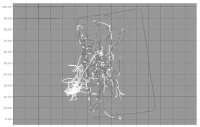
The purpose of this study was performance improvement through analysis of movement in elite field hockey players regarding positions using real-time GPS monitoring for compared training game and 2014 Incheon Asian Games. Fifteen elite women field hockey players (Defender: 4, Mid-fielder: 6, and Forward: 5) participated in this study. There were 2014 Incheon Asian Games Korean national team. Real-time GPS system analysis was completed during 10 training game appearances 5 2014 Incheon Asian Games appearances. The results of this study showed that in training game mid-fielder>forward>defender for 3, 4, 5, and 6 zone at speed zone by moving distance, in 2014 Incheon Asian Games forward>mid-fielder>defender for 6 zone at speed zone by moving distance. And moving distance by quarter increased all position in 2014 Incheon Asian Game more than training game. Therefore, These data might be useful to analysis of movement in field hockey players. Moreover improved performance and individual exercise ability by feedback for players distance, heart rate, and exercise trajectory. Thus, Gold-medal won at the 2014 Incheon Asian Games in field hockey.
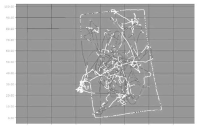

This study was to verify the structure of efficacy related to performance perceived by short-track athletes when playing a match. Therefore, 50 players answered open questionnaires and 200 players participated in construct validity verification, a total of 250 players of short-track members of national, business and university team were sampled during the research phase. The data was analyzed through the study procedures. The results were as follows: First, efficacy structure of players during the match were categorized into three groups as game managing strategy(including course management, race control, match management and selective attention ability), psychological control ability(including positive imagery, match competition, competitive spirit, ability to handle hardship, anxiety control, and patience), and physical usage of ability(including physique, endurance, and quickness). Second, the result of the first construct validity verification through exploratory factor analysis showed 7 factors in 29 items as game management, course management, psychological control, physical use, coping with hardship, speed control and psychological stability. Finally, as a result of confirmatory factor analysis, short-track self-efficacy showed the 5 factor in 15 items except for coping with hardship and psychological stability.
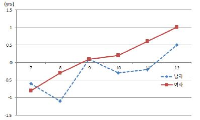
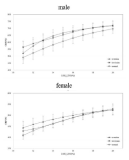
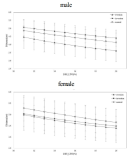
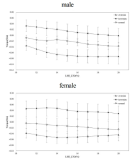
The aim of the study was to examine the tracking of body composition and physical fitness in boys and girls for 6 years. Thirty-seven boys and girls participated throughout the study. All measurements were performed annually. Body height, body weight, circumferences and skinfold thicknesses were measured and skeletal maturity was assessed. Body composition and bone mineral density were measured by DXA. Nine physical fitness tests were administered. Results of the study showed that there are significant interaction effects of time and group for body height(p<.01), waist circumference(p<.001), and skinfolds at triceps(p<.01), suprailiac(p<.01), thigh(p<.001) and medial calf(p<.01). All anthorpometric variables except skinfold thickness increased during the study period. Significant interaction effects of time and group were found for percent body fat(p<.05) and bone mineral density(p<.01). Percent body fat and fat tissue increased in boys from 7 to 11 years, then decreased in 12 years. Lean tissue(p<.001), bone mineral content(p<.001) and bone mineral density(p<.001) increased both in boys and girls throughout the study. There were significant interaction effect of time and group on sit and reach, standing long jump and sit-ups. In conclusion, percent body fat and fat tissue increased until 11 years, lean tissue and bone mineral density increased throughout the study both in boys and girls.
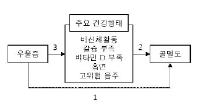
The purpose of this study was to investigate the relationship between depression and bone mineral density in Korean elder men (55+), and test mediating role of health behaviors. Korean National Health and Nutrition Examination Survey 2006-2011 data were analyzed. Bone mineral density was measured using DXA. Depression was measured by whether a participant had diagnosed depression, depressed mood lasted longer than 2 weeks, and/or suicidal thinking. Mediating health behaviors were serum vitamine D, calcium intake, high-risk drinking, endurance physical actiity, and resistance exercise. The associations among depression, health behaviors, and bone mineral density with demographic covariates were tested by linear regression, logistic regression, and path analysis. Diagnosed depression was not significantly associated with bone mineral density. Men who experienced substantial depressed mood and suicidal thinking has significantly lower bone mineral density than non-experienced counterparts. The effect of suicidal thinking on bone mineral density was mediated by endurance physical activity only. This study results suggest that elder men who experienced severely depressed mood and suicidal thinking were at-risk population for osteopenia. Also, physical activity intervention seems to be a priority to prevent osteoporosis comorbidity in depressed people.