
Purpose This study was conducted to investigate the appropriateness of the concept of condition for athletes and to conceptualize condition in a way suitable for field and then to produce a tool to test condition that reflects usability. Methods 30 college athletes and national athletes with more than 5 years of experience were selected. In the conceptual review stage, the appropriateness of the concept of condition was verified. In the conditional element collection stage, the condition concept reflecting usability was extracted. In the development stage of the conditional questionnaire, a condition questionnaire was developed in consultation with the data provider to reflect usability. Results Previous studies on the condition of athletes were complicated and the necessity for consideration of usability was raised. As a result of conceptualization with consideration of the application to the sport scene, condition in a scene is summarized into both physical and psychological states. As a result of the appropriateness evaluation of the tool that produced the condition inspection tool reflecting the condition element based on universality and peculiarity of conditionality, the athletes evaluated that the condition inspection tool properly reflects condition, is easy to apply and can be used for condition control. Conclusion The development and application of psychological testing instruments reflecting usability will accelerate the application of sports psychology in the appropriate direction. The reflection of usability will contribute not only to the reliability and validity of the psychological testing tools used in the field of sports psychology, but also to the improvement of the possibility of intervention by leaders and athletes, the convenience of development procedures, and the utility of response results.
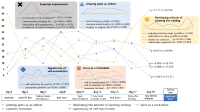
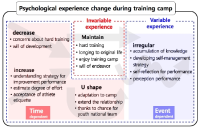
Purpose The current study aimed to identify national youth cyclist`s experience and change tendency of experience during camp training. Methods A total of 35 cyclists who participated in 2017 Korea youth national cycling camp training provided the data. The survey was conducted 9 times during the 20 days of camp training using open-ended questionnaire by diary method. The collected data were analyzed based on inductive categorization and response rates. This study was conducted in the order of formation rapport, data collection, and data analysis. Results Youth cyclists experiences during camp training to growing pains as an athlete, developing the attitude of savoring training, serve as a motivation, expertise formation and opportunity of self-examination. Based on the change in response frequency of the survey data, camp training experience falls into two categories: variable and invariable. Conclusions Youth national cyclist were growing their growth power through various experiences during the training camp, and these experiences changed to specific inflection points from the beginning to the end of the camp. Understanding changes in psychological experience can provide the design of timely psychological support and coaching method. This study will be used as a material for the design of the camp training program for the youth cyclist, as well as an opportunity to increase the interest of continuity reflection on the psychological experience.
PURPOSE This study was conducted to estimate the tendency of psychological factors influencing cycling performance by analyzing the characteristic factors of athlete reputation in the news big-data. METHODS To explore the psychological factors influencing cycling performance, an open questionnaire was conducted on 82 cyclists, and Inductive Content Analyses was performed. Overall, 89,520 news articles were collected through BIGKinds, and forming factors of athlete reputation were derived through LDA topic modeling analysis and inductive categorization. Through regression analysis, time series tendency of the factors of athlete reputation was calculated. Finally, the tendency of psychological factors to influence cycling performance was estimated based on the previously derived results in this study. RESULTS The psychological factors influencing cycling performance were found to be; emotion control, trust capital, cognitive control, motivation and communications with the coach. The forming factors of athlete reputation was found to be; reporting of the sports event, infrastructure creation, analysis to performance, moral issue, social environmental changes and sports gossip. The time series tendency of the forming factors of athlete reputation was found to include the categories of Hot, Warm, Cool and Cold. The psychological factors influencing cycling performance are estimated to expand to exercise performance and moral intelligence. CONCLUSIONS The results of this study suggest that the discussion of psychological factors influencing cycling performance extends not only to exercise performance, but also to moral intelligence, reflecting the socio-cultural context in the discussion of performance.
