Purpose The valuable impacts of exercise-intervention in diverse type of cancer patients were rationally well-prescribed, though many experimental and review researches already performed in this fields. Generally, cancer-related fatigue and pain remains one of the most prevalent problems for cancer populations. Therefore, exercise has become increasingly significant in cancer prevention and progression. The purpose of this recent study was to analyze the combined exercise program on cancer-related fatigue, pain, quality of life and cancer prognosis in diverse type of cancer patients. This study analyses the safety and feasibility of exercise intervention in diverse stages of cancer patients such as early stage, advanced stage and even metastatic periods in cancer populations. we also wanted to know the impacts of dose-response trial of aerobic and resistance exercise on quality of life in cancer survivors. Methods we conducted a comprehensive PubMed/MEDILINE electronic database from Jan 2015 to August 2020. The reference lists of eligible experimental research articles and relevant systemic review articles were checked. Inclusion criteria were adult cancer survivors from randomized controlled trials performing well-tailored exercise intervention programs to diverse type of cancer patients, Using predefined search items ‘exercise-intervention, cancer & immunology’. Based on reference search, more than 100 articles were identified whereas 30 research papers met the inclusion criteria and were well connected with exercise-intervention and cancer progression. we analyzed the connections between physical exercise and cancer intervention in the main text. Results Moderate to vigorous exercise (aerobic and resistance exercise) revealed to decreased level of cancer-related fatigue, pain, and cancer-related symptoms, however increased level of sleep quality, activities of daily living, exercise performance and health- related quality of life. Exercise intervention reduced pro-inflammatory markers and oxidative stress as well as insomnia, fatigue, pain symptoms whereas it enhanced the antioxidant systems and immune functions. In addition, home-based aerobic physical exercise might enhance muscular strength and quality of life in many types of cancer survivors. Psychological intervention also effective for reducing cancer-related fatigue and pain during and after cancer treatment. they might be the much better intervention than available pharmaceutical options. we believe that it is the related mechanisms of immune cell mobilization and activation such as NK cells which is induced by the activation of sympathetic system during and after physical exercise. Conclusion According to the aforementioned results, it was concluded that implementation of exercise intervention appear to be the best non-pharmaceutical interventions for cancer populations, and also revealed to be safe and feasible in early and advanced stages, although not in the metastatic periods. Sometimes, psychological intervention such as mindfulness-based stress reduction (MBSR) might be useful in reducing anxiety, depression, fatigue, pain and enhancing quality of life, quality of sleep for cancer populations. we can conclude, exercise-intervention might not just be prevention effect but might be therapeutics, however more studies are urgently needed to confirm the exercise intervention on the NK-receptors activation and immune connection of cancer populations.
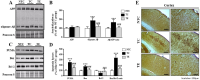
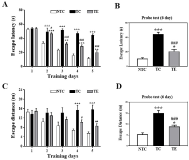
Purpose The aim of this study was to investigate the effects of treadmill exercise on mitochondrial quality control in the APP/sw transgenic mice model of Alzheimer's disease(AD). Methods The experimental mice were divided into non-tg-control (NTC, n=10), tg-control (TC, n=10), and tg-exercise (TE, n=10), and treadmill exercise was conducted for 12 weeks (15m/min, 60min, 5 times/week). And then, we measured the cognitive function using MWM and the brain cortex was evaluated to determine whether any changes in the oligomer Aβ, apoptotic-related factors, mitophagy and mitochondrial biogenesis. Results As a result, treadmill exercise significantly reduced oligomer amyloid and also had a positive effect on proteins (PUMA, Bax, Bcl-2) associated with apoptosis. In addition, through the treadmill exercise, PINK-1 decreased, and increased parkin, showing that active inhibition of mitophagy has been partially relaxed. It has been confirmed that the key autophagy markers LC3 and p62 significantly reduce p62 expression in TE group compared to TC group, and that LC3-II/LC3-I ratio tended to decrease, although not significant, increasing the activity of mitophagy. Next, proteins related to mitochondrial biosynthesis (SIRT-1, PGC-1α, Tfam, and COX-IV) have been identified, and the treadmill exercise has confirmed that the expression of all proteins has increased in part. Finally, cognitive has been shown to improve cognitive by shortening both swimming distance and time through treadmill exercise. Conclusions Thus, our finding suggested treadmill exercise alleviates cognitive dysfunction by improving mitochondrial quality control(mitophagy, mitochondrial biogenesis) and neuronal cell death via reducing amyloid accumulation, which may play a role in a preventive strategy for AD.
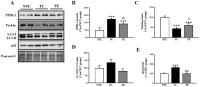
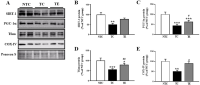
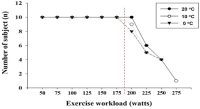
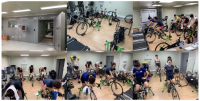
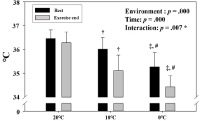
Purpose This study aimed to investigate the effects of acute cold stress (10℃, 0℃) compared with ordinary temperature (20℃) on exercise performance and physiological response at rest and during exercise. Methods A total of 10 healthy men (21.55 ± 2.16) were selected. In each environmental condition (20℃, 10℃, 0℃), the three testing order was randomly selected at crossover, and there was a week interval between the graded exercise test (GXT). On the testing day, they remained resting for 30 min in each environmental condition. Dependent variables (body temperature, energy metabolism parameters, skeletal muscle oxygenation profiles, and exercise performance parameters) were measured at rest and during GXT. Results In body temperature, at each environmental condition, there was a significant decrease (p<.05) at 10℃ and 0℃ compared with 20℃ after exercise, and in the difference depending on the environment at rest. After exercise, the body temperature significantly decreased (p<.05) in proportion to the decrease in temperature. There was no difference in heart rate and blood lactate level in energy metabolism, and the respiratory exchange ratio was significantly higher (p<.05) at 0℃ than 20℃. Minute ventilation (VE), oxygen uptake (VO2), and carbon dioxide excretion (VCO2) were significantly lower (p<.05) at 0℃ than 20℃ and 10℃ at various exercise load. All skeletal muscle oxygenation profiles did not show significant changes at rest and during exercise. In exercise performance, maximal oxygen uptake was significantly lower (p<.05) at 0℃ than 20℃, and exercise time to exhaustion was also significantly lower (p<.05) at 0℃ than 20℃ and 10℃. Conclusion Acute cold stress induces deterioration of exercise performance via a decreased body temperature and an increase in VE, VO2, and VCO2 during the same exercise load. In addition it was confirmed that this phenomenon was more prominent at 0°C than at 10°C when compared to 20°C.
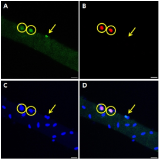
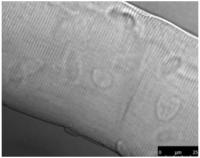
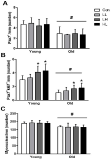
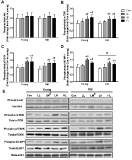
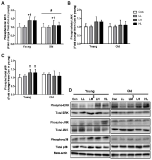
Purpose This is the first study to examine whether age impacts the response of single muscle fibers to high/low frequency and high/low volume electrical pulse stimulation. We performed in vitro experiments to evaluate the effect of low-frequency high-volume electrical pulse stimulation (EPS) on mechanistic target of rapamycin (mTOR), mitogen-activated protein kinase (MAPK) signaling pathway, and satellite cell activation in singles fibers of young and aged muscles. Methods Isolated single fibers from gastocnemius in 12-wk (n=21) and 72-wk (n=21) old male C57BL/6 mice were divided into four groups: 1) control (Con) received no EPS, 2) low-frequency low-volume EPS (LL), 3) low-frequency high-volume EPS (LH), and 4) high-frequency low-volume EPS (HL) were made to contract using independent EPS protocols. Satellite cell activation and anabolic pathway (mTOR and MAPK signaling) were measured before and after EPS. Results The number of quiescent (Pax7+/Ki67-) and active (Pax7+/Ki67+) satellite cells, myonuclear content and the phosphorylation of 4E-BP1 and ERK were higher in young when compared with old. However, regardless of age, LH and HL EPS significantly increased the number of activate satellite cells (142%, both) and phosphorylation of mTOR (129% and 133%, respectively), p70S6K (133% and 136%, respectively) and 4E-BP1 (140% and 129%, respectively) compared with Con. The protein expression of ERK phosphorylation only increased by LH EPS in both the young and old groups (123% and 125%, respectively). Conclusion Low-frequency high-volume EPS stimulated satellite cell activation and the mTOR signaling pathway in older similar to young muscle.
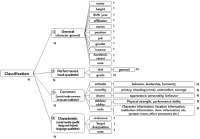
Purpose Soccer-related social media BigData includes complex information related to soccer players and is continuously and instantly generated. Text mining research is actively carried out for this kind of social media contents analysis, but it tends to be analyzed with limited linguistic characteristics such as understanding of language complexity and context, ambiguous terms, rhetoric, and new terms. This can be attributed to the fact that the tools commonly used for text mining use universal terminology dictionaries and packages that exclude the peculiarities of the analysis themes. The purpose of this study is to develop an Ontology model, which are representative tools for defining semantic ambiguity and relationships and systems between terms of text data. Methods In order to achieve the research objectives, we applied the 7-step development method of ‘Ontology Development 101: A Guide to Creating Your First Ontology’, which is useful for ontology development. Each step includes 1) Determine the domain and scope of the ontology 2) Consider reusing existing ontology 3) Enumerate important terms in the ontology 4) Define the classes and the class hierarchy 5) Define the properties of classes-slots 6) Define the facts of the slots 7) Create instances. In particular, the 3rd-step of this study, the glossary stage, is to extract core terms that make up he ontology, but since the goal of this study is to develop the ontology that can be used in social media contents analysis of soccer players, we conducted a social media text analysis related to actual soccer players and selected 484 core terms. Results The ontology which was developed in this research for social media contents analysis of soccer players consisted largely of four parts(General terms, performance results terms, common terms, and Characteristic term) and classified according to the content characteristics of the term. Conclusion Developed ontology in this study is object-oriented that defining classes and objects to define divisions and relationships between terms and also means a social media contents knowledge system of soccer players. In addition, it performs a function as a secondary tool which can be utilized for atypical data analysis.
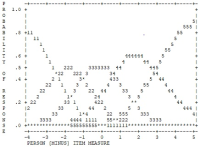
Purpose The purpose of this study was to determine item goodness-of-fit and the optimal categorization of an instrument measuring Korean elite young soccer player’s self-esteem using a two-facets Rasch model (item parameters and person parameters). Methods 10-item Rosenberg Self-Esteem Scale (RSES) with five response categories was administered to 366 elite young soccer players from the Korea football association. The Rasch analysis was conducted by WINSTEPS 3.65. Results First, the model fit the data well. Second, 5-category rating scale did function well. Third, a item-person map illustrated the distribution of RSES items and person’s level of self-esteem. Fourth, the separation reliability of the items and person was shown to be an acceptable degree of confidence, respectively. Lastly, there was statistically significant difference in self-esteem between starting players and bench players, which supported the known-difference evidence of validity. Conclusion These findings provided additional support for the suitability of the RSES in assessing self-esteem of Korean elite young soccer players.
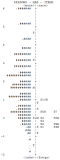
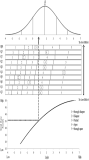
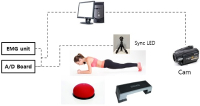
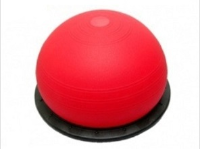
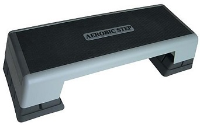
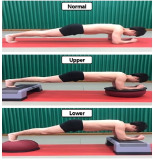
Purpose This study was to analyze and compare series of muscle activities during plank exercises with use of togu-jumper. Methods Ten male subjects (age 26.9±1.7 yrs, height 172.2±5.7 cm, weight 66.5±7.5 kg) who have no musculoskeletal disorder with one's upper or lower limb were selected as subjects. To analyze and compare series of muscle activity, five of surface EMG electrodes were attached to the upper rectus abdominis (URA), lower rectus abdominis (LRA), external abdominal oblique (EO), erector spinae (ES) and gluteus maximus (GM). Each subject did plank exercise on stable support surfaces (normal surfaces) and unstable support surfaces with the togu-jumper. For each dependent variable, one-way ANOVA with repeated measures were performed with significance level p<.05. Contrasts were performed to execute post tests for results with statistical significance. Results The study showed that the average IEMG values of URA and LRA increased in Upper (Togu-jumper used upper limb) compared to normal surfaces. This is perhaps because the effects of URA more than any other muscles for body stability. Furthermore, the peak IEMG values of LRA increased in Upper and Lower (Togu-jumper used lower limb) compared to normal surfaces. In addition, peak IEMG values of EO increased in Upper compared to Normal. This may have resulted due to momentary strong muscle activity in LRA and EO to correct body posture and balance. Therefore, using Togu-jumper on upper limb maximizes the performance of core training in plank exercise. Conclusions The study may be further applied to a method for effective training. It is considered that research and analysis has to be further done on modified plank exercise. Additionally, it is necessary to analyze not only global muscle but also local muscle, as a comprehensive research, to suggest ideal method for plank exercise.




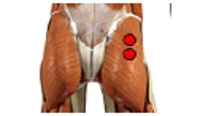
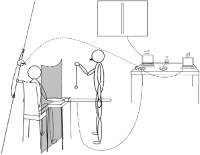
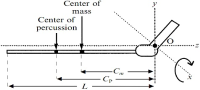
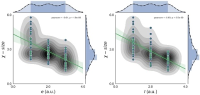
Purpose This study measured the haptic extroperception accuracy, that is, judging one hit position in a hand-held object. Especially, what factors associated the estimation of contact position when the impact is made at the grasped implement by hitting the ball. Methods Relative frequency and conditional probability based analysis verified that perceivers influenced not only the amount of pressure distinguished impressions by the coefficient of restitution but also the pressure distributions encoded impressions by the distance from the hand to the impact. Results Results conformed to previous invariant characteristic on dynamic touch in showing that perceiving the location of the impact of grasped objects, including dominant perceiving selectively modality, is constrained by inertial properties with such success requires appreciating the location of the implement’s center of percussion. Conclusion Investigated in this planes captured as a mechanical factor, we would suggest a broader hypothesis for further research into the effects of the rotational inertia related to haptic position accuracy in the hand-held object, and leading to different estimates of system function providing an account of generalization that accommodates of its varied aspects.
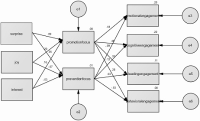
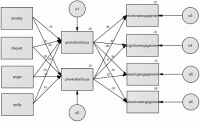
Purpose The purpose of this study was to find out the relationship between emotion and control focus and training involvement in games where elite shooters are late. Methods Thus, 228 elite shooters were selected and the research results were derived based on data analysis using discriminatory emotions, control focus, and training attendance scales. Results According to the analysis of the correlation between emotion, control focus, and training involvement, positive emotions of surprise, enjoyment, and interest showed a static relationship with improvement focus and training involvement, while negative emotions such as anger and guilt had a static relationship with prevention focus, but showed an inadequate relationship with training involvement. The multiple regression analysis between emotion and control focus showed that the improvement focus showed the most significant effect of enjoyment emotion, while the prevention focus showed that instability had the most effect on the prevention focus. Overall, the focus of improvement has been shown to be affected by training. Finally, it was found that positive sentiment had a positive effect on improvement focus and training involvement, while negative sentiment affected prevention focus and reduced cognitive involvement. Conclusions Positive sentiment toward the competition has been confirmed to enhance training participation by strengthening the focus of improvement, but negative sentiment has been shown to enhance the focus of prevention, reducing cognitive involvement.
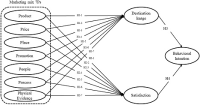
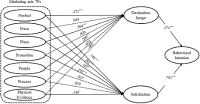
Purpose Limited research has investigated the marketing mix of international sporting events empirically. This study filled this gap by identifying the marketing mix and examined the structural relationships among marketing mix, destination image, satisfaction and revisit intention focusing on foreign spectators of 2019 Gwangju FINA World Championships. Methods The questionnaire was structured in four sections: sporting event marketing mix (seven dimensions and 21 items), host city image (three items), satisfaction (three items) and revisit intention (three items). Analysis of data from 396 foreign spectators in FINA Championships indicated that the proposed model fit the data well. Within a attitude-behavior theoretical framework, this study proposed and tested a structural relationships among the constructs. Results The results of this study presented that (1) product, place, and people in sporting event marketing mix significantly impacted foreign spectators’ destination image, (2) product, price, place, promotion, and physical evidence were appeared to be significant predictors of satisfaction, and (3) destination image and satisfaction had a significant effect on foreign spectators’ revisit intention. Conclusion The findings suggest marketing mix for the international sporting event and its influential mechanism on foreign spectators’ revisit intention. Practically, this study provides important implications for event organizers that can be utilized to develop strategic marketing mix in sporting events to enhance spectators’ destination image, satisfaction, and revisit intention.