Purpose The purpose of this study is to explore the process of change in parallel bar Skills over the last 20 years and to suggest the Skills to learn. Methods This study targeted on 48 finalists in parallel bar from 5 Olympic Games from 2000 to 2016 and 2019 World Championship over the last 20 years and explored the process of change in difficulty elements, each element group, and salto and arm hang. Results First, Element Group I preferred healy to support the most and performed it for 41 times. Also, percentage of salto and arm hang got lower and got substituted by Swing forward with 3/4turn and 3/4 healy to support and following a swing element to handstand on 1 rail, Healy to support. Secondly, Element Group III performed underswing frequently while performing salto and arm hang less frequently. Element Group III changed their skills to Moy piked with straddle backward to handstand, Swing forward straddle cut backward, and regrasp with straight body at horizontal. Third, Element Group IV preferred double salto backward pike the most in the past. However, the skill changed to double salto forward tuck with 1/2turn starting from 2016 Olympics. Conclusions Parallel bar is regarded as a weak gymnastics event. In response, this study result is expected to be used as the base data for growing the strength in parallel bar and winning the medals in main international competitions by suggesting the parallel bar Skills that Korean athletes need to learn.
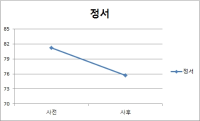
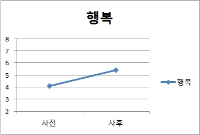
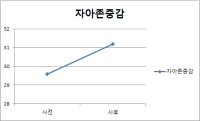
Purpose The purpose of this study was to examine the effects of positive psychological intervention program on mood state, self-esteem and happiness of university student athletes. Methods The participants were 10 university student athletes. The measures utilized the Profile of Mood States(POMS), self-esteem inventory and happiness questionnaire. Positive psychological intervention program was developed by previous studies, participants interview and expert discussion. The positive psychological intervention program were managing life, self-esteem enhancing program, being optimistic, positive emotion program, gratitude, forgiveness, communication skill training program, habit/routine making program and action strategy development. The data were analyzed by SPSS 20.0. Results These results were as followings. Firstly, positive psychological intervention program decreased total mood disturbance(TMD) of university student athlete. Secondly, positive psychological intervention program improved self-esteem of university student athletes. Lastly, positive psychological intervention program increased happiness level of university student athletes. Conclusion Training and education system should be established in which a positive psychological intervention program can be applied to university student athletes.
Purpose The purpose of this study is to analyze the performance contents of men's floor exercise and to provide basic materials for achieving excellent results at world competitions. Methods Teams ranked 1 - 12 who participated in the World Championships' floor movement group competition selected a total of 59 players by the convenience sampling method and carried out technical statistics, frequency analysis, member variable variance analysis, and post hoc analysis. Results First, as a result of frequency analysis of the difficulty of each group, all the teams ranked 1 to 12 liked the most difficulty of C and found that they do not like the F difficulty the most. Secondly, there was a difference in average for each group's start score, ranking 1st to 4th> 5th to 8th> 9th to 12th place. Thirdly, there was a difference in average of difficulty levels for each group B, C, E, and it became very significant with E difficulty.Results of post hoc analysis B difficulty (9th to 12th> 1st to 4th, 5th to 8th), C difficulty (9th to 12th> 1st to 4th), E difficulty (1st to 4th> 5th to 8th ·9th to 12th). Conclusion These results show that in floor exercise, the art of more than C difficulty and the connection technology of A, B, C, difficulty, E and F, difficult difficulty such as difficulty, creative and dynamic performance composition is excellent It clearly states that it is a condition for getting results.
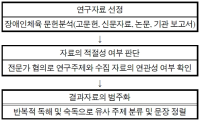
Purpose This study examines the Physical Education curriculum history of special schools, and then in-depth grasps the process of how the sports environment for the disabled has changed by age. Method The research method was literature review analyzing papers, reports and newspapers. For the concrete process, this study verified the relationship between the research subject and the collected data through experts and historians with disabilities to verify the sports data for the disabled. Results First, the process of physical education management of special schools is as follows. in the 1940's and 50's special schools, physical education was carried out simply by gymnastics. but, special schools were differentiated by the characteristics of the disabled, and the institutional foundation for physical education was also imitated by the 1960s, 1970s and 1980s, special schools were shortened in physical education time due to the increase in the number of courses and the strengthening of disability coping programs. in the 1990s, as special sports curriculum was established, customized prescription for students with disabilities was implemented. Second, the process of changing disability sports is as follows. In the 1960s and 1970s, disability sports were mainly focused on special schools, while in the 1980s, disability sports were expanded by the government. in particular, the hosting of the 88 Seoul Olympics and Seoul Paralympics provides an opportunity to equip the disabled with a system, organization and facilities. in the 1990s disability sports was meaningful in terms of academic progress, and with the quantitative growth of the 1980s and the academic foundations of the 1990s, disability sports in the 2000s provided a legal basis and improved welfare conditions for the disabled. In the future, it is necessary to find a way to solve the value of physical education for the disabled more reasonably.
The purpose of this research is to provide the information about sports injury by surveying and analyzing a result, and to lead analytic and scientific training among the subjects being elite summer sport athletes. All sports injuries are recorded on injury report form and the following results were obtained. In Cycle sport, the prevalence of injuries of the low back, knees were highest. and In Table tennis sport, the prevalence of injuries of the ankle was highest due to the chronic fatigue. The prevalence of injuries of the shoulder, low back were highest due to the overuse of joints. In Badminton sport, the prevalence of injuries of low back, knees, ankles were highest by overtraining. In Gymnastics, the prevalence of injuries of the low back, knees, ankles were highest. In Archery sport, there is a lot of injuries to the shoulder and neck. In Weight lifting sport, the prevalence of injuries of the low back, knees, and ankles were highest. In Golf sport, the prevalence of injuries of knees, low back were highest. In Hockey sport, the prevalence of injuries of ankles, knees, low back were highest. In Boxing sport, the prevalence of injuries of hands, shoulder, the low back were highest, In Judo sport, there are overall damage occurred in parts of the whole body, but the prevalence of injuries of ankles, knees, low back were highest. In Fencing sport, the prevalence of injuries of the low back, knees were highest. In Wrestling sport, although there is a difference slightly depending on freestyle and Greco-Roman, but the prevalence of injuries of knees, ankles, low back were highest. In Handball sport, the prevalence of injuries of ankles, knees were highest. In Taekwondo, the prevalence of injuries of ankles, knees, feet were highest.
