PURPOSE This study examined the biomechanical differences in running shoes with two midsole materials, ethylene-vinyl acetate (EVA) and polyether block amide (PEBA), and carbon fiber plate insertion. METHODS Ten recreational runners participated in the study and performed running trials on a 12m runway at a controlled speed of 3.89 m/s ± 5%. Biomechanical data were obtained for time-continuous variables of the metatarsophalangeal (MTP) joint (angle, moment, and power), as well as for discrete variables (push-off time, peak vertical impact force, peak anterior propulsion force, and timing of joint power transition). Data were analyzed using statistical parametric mapping for continuous data and the Wilcoxon signed-rank test for discrete variables (α = .05). RESULTS Compared with no-plate conditions, the EVA sole with plate significantly reduced push-off time, MTP joint range of motion, positive joint power, and peak anterior propulsion force, with an earlier timing of joint power transition (p < .05). In contrast, the PEBA sole with plate decreased MTP joint range of motion but increased plantar flexion moment, negative joint power, and push-off time (p < .05). Furthermore, under plate-inserted conditions, PEBA significantly increased plantar flexion moment, negative joint power, and push-off time, as well as exhibited a delayed timing of joint power transition compared with EVA (p < .05). CONCLUSIONS The interaction between midsole material and plate insertion causes complex variations in MTP joint energy management. Specifically, EVA shoes with a plate may facilitate rapid roll-off and promote swift turnover, thereby enhancing acceleration. In contrast, PEBA shoes with a plate may promote prolonged energy absorption, which could potentially reduce joint fatigue during long-distance running.
Purpose This study was carried out for the purpose of providing national players of our country by grasping various techniques and difficulty composition of world-level players. Methods For doing so, this research was executed by objecting 9 finalists in parallel bar of 2012 London Olympics and 8 finalists in parallel bar of 2016 Rio Olympics. Collected datum were treated with average, standard deviation, percentage (%) by using SPSS 18.0, and they was analyzed while securing feasibility through expert meeting. Results Research results are same as follows. First, Rio Olympics players appeared higher than London Olympics such like 6,61 points in average D-score of 2012 London Olympics final game and 7.0 points in average D-score of Rio Olympics final game. Second, I group was turned up to prefer Healy technique (34.88%) of D difficulty in two olympics. Third, Ⅱ group carried out Bwd. uprise and salto fwd. p. to sup technique of D difficulty by each 4 players (36.35%) in two olympics, so the technique was displayed as preferred techniques of players. Fourth, Ⅲ group executed at the London Olympics, C difficulty was the most frequently used, but at the Rio Olympics, D difficulty and E difficulty were the most frequent. Fifth, Players in London Olympics and Rio Olympics executed Basket to hdst technique, and it appeared to be most preferred technique by players. Sixth, Ⅴ group executed at the London Olympics, D difficulty was the most frequently used, but at the Rio Olympics, F difficulty was the most frequent. Conclusions These findings will be useful datum to gymnasts and instructors of our country by providing valuable datum in preparing 2020 Tokyo Olympics after grasping preferred techniques and trends of world-excellent players.

Purpose The study examined the effects of a 12-week high intensity circuit training (HICT) on abdominal fat, physical fitness, blood lipids, and insulin resistance in middle-aged obese women. Methods Thirty obese women, aged 32-48 yrs, were recruited and randomly assigned to either HICT group (TR; n = 15) or control group (CON; n = 15). Subjects in the TR group participated in HICT of which resistance exercise and aerobic exercise were performed with a duration of 40 min/session and 3 sessions/wk for 12 weeks, whereas subjects in the CON group were asked to maintain their normal life patterns. Dependent variables included abdominal fat area, body composition, physical fitness, blood lipids profiles, and insulin resistance index. Analysis of variance with repeated measures with Bonferroni corrections was used to compare the outcomes between two groups. Results Main findings of the present study were as follows: 1) compared to the CON group, the TR group had significant reductions in overall (i.e., body mass index and percent body fat) and abdominal obesity (i.e., waist circumference, total abdominal fat area, visceral fat area, subcutaneous fat area, and visceral fat area-subcutaneous fat area ratio), 2) compared to the CON group, the TR group had significant improvements in health-related physical fitness (i.e., muscular strength, muscular endurance, muscle power, flexibility, balance, and cardiorespiratory endurance), and 3) compared to the CON group, the TR group had significant improvements in fasting lipids, glucose, insulin, and insulin resistance. Conclusions The current findings of the study suggested that HICT would be an effective exercise intervention to improve metabolic complications associated with obesity and poor physical fitness in obese middle-aged women.


Purpose The purpose of this study was to identify the relationship among the social responsibility (economic responsibility, community cultural activity and social contribution activity), the image of the club, and the assets (image, reliability, attitude and loyalty) of the mother company. Methods The objectives of this research were the home fan in “2018 Shinhan Bank My Car KBO League.” A survey was conducted for 350 home fans of SK Wyverns who gathered in Incheon SK Happiness Dream Baseball Ground to watch the games of SK Wyverns vs. Samsung Lions held from April 6 (Fri.) to April 8 (Sun.). Data processing was done with PASW Ver. 18.0 and AMOS 18.0. Results Firstly, among the sub-factors of social responsibility, economic responsibility, community cultural activity and consumer protection had significant influence on the team image. Secondly, the team image had meaningful influence on the mother company image. Thirdly, the mother company image had significant influence on the mother company trust, mother company attitude and mother company loyalty. Fourthly, the mother company trust had significant influence on the mother company loyalty. Fifthly, the mother company attitude had significant influence on the mother company loyalty. Conclusions The mother companies of professional baseball clubs, too, will have to seek various ways for joint working with professional baseball clubs while actively supporting the activities of the professional baseball clubs being aware that professional baseball clubs give positive effect to the mother companies.
PURPOSE This study aimed to understand the changes in the exercise behavior of participants in the exercise-psychological counseling program. METHODS This study sampled adult female participants of C diet camp in Seoul, who were in stages 2~3 of the “Stages of Change Model.” A total of 60 participants were randomly assigned to the counseling group (n=30) and control group (n=30). During the 12 weeks of study, all subjects participated in the diet camp program C. The counseling group participated in the exercise psychological counseling program once a week, while the control group participated in recreational activities instead. Exercise adherence, outcome-expectancy, and satisfaction were measured once every four weeks. Latent growth models were used to analyze the measured data. RESULTS Exercise adherence, outcome-expectancy, and satisfaction in the counseling group exerted a statistically significant positive effect. A statistically significant positive effect on the change of exercise adherence variable was observed in the control group, but the trend was only 1/4 of that of the counseling group. In the control group, exercise outcome-expectancy and exercise satisfaction did not have a statistically significant outcome. CONCLUSIONS The exercise counseling program is an essential intervention strategy that enhances participants’ exercise adherence, outcome-expectancy, and satisfaction. Therefore, a positive change in exercise behaviors occurs.
The purpose of the study was to determine relationship of abdominal fat, adipocytokine, bone mineral density, and bone turnover markers in obese male adolescents. Twenty four male adolescents (obese: 12, normal: 12) volunteered to participate in the study. Anthropometry and skeletal maturity were measured. Body composition and bone mineral density were estimated by DXA (Hologic, QDR-4500, USA). Abdominal fat with total adipose tissue (TAT), visceral adipose tissue (VAT), subcutaneous adipose tissue (SAT), and visceral adipose tissue to subcutaneous adipose tissue ratio (VSR) were estimated by computed tomography (ECLOS, HITACH, Japan). Blood samples were obtained for and analysis of adipocytokines including leptin and adiponectin. Bone turnover markers, osteocalcin (OC), bone-specific alkaline phosphatase (BALP) for bone formation markers and N-terminal telopeptide (NTx), C-terminal telopeptide (CTx) for bone resorption markers were analysed. All data were analyzed utilizing SAS 9.3 (SAS Institute, NC, USA). Independent t-test was used to evaluate the differences between obese adolescents and normal adolescents. Pearson correlation analysis was applied to figure out the relationship between abdominal fat, adipocytokines, bone mineral density, and bone turnover markers. Multiple regression analysis was used to find out the factors of abdominal fat which influence on bone mineral density. A level of significance was set at p<.05. The results of the study indicated that fat tissue (p<.001), percent body fat (p<0.001), TAT (p<.001), VAT (p<.001), and SAT (p<0.001) were significantly higher in obese adolescents than normal adolescents. However bone mineral contents were significantly higher in normal adolescents. Normal adolescents have significantly higher whole body BMD and lumber BMD than obese adolescents. Abdominal fat including VAT and SAT related negatively with whole body BMD and lumbar BMD. Leptin related negatively with BMD whereas adiponectin related positively with BMD. NTx for bone resorption marker related positively with abdominal fat. Visceral adipose tissue was a predictor for whole body BMD and lumbar BMD in explaining 46% and 32% in adolescents. In conclusion, obese male adolescents have lower whole body BMD and lumbar BMD than normal adolescents. Abdominal fat including VAT and SAT related negatively with whole body BMD and Lumbar BMD. And leptin and adiponectin were closely related with BMD. Finally, visceral adipose tissue was a predictor for whole body and lumbar BMD in adolescents.
PURPOSE This study optimized stopword removal to enhance topic modeling performance. We propose an objective method combining normalized pointwise mutual information (NPMI) with median-based term frequency–inverse document frequency (TF–IDF) to automatically generate stopwords. METHODS Using text data from 443 research papers on “Taekwondo sparring,” we selected stopword candidates based on NPMI and identified 30 words with the lowest TF–IDF scores. We examined the impact of removing 1–30 stopwords on u_mass coherence scores. RESULTS The NPMI–TF–IDF method significantly improved coherence (R² = .456; p < .001). However, excessive removal led to diminishing returns, with the optimal coherence score (−11.442) achieved at 200 stopwords. In contrast, manually selected stopwords yielded a lower coherence score (−16.001). The findings indicate that integrating TF–IDF with NPMI effectively preserves meaningful words and outperforms PMI2 and PMI3 approaches. CONCLUSIONS Manual stopword selection can reduce reproducibility. Optimizing stopword removal based on domain-specific characteristics is essential. Future research should validate this method across diverse fields to establish a more generalizable standard.
PURPOSE This study examined levels of safety knowledge and practice among recreational sports participants, focusing particularly on impacts of gender, age, injury experience, and exercise-level profile. In sports environments, understanding these factors is essential for developing targeted strategies to promote safe behaviors. METHODS Survey data from 7725 participants engaged in regular recreational sports activities were analyzed. Latent Profile Analysis was employed to categorize participants based on their injury experience and exercise levels, resulting in two profiles: Group 1 (moderate or severe injury experience with intermediate exercise levels) and Group 2 (mild injury experience with beginner exercise levels). Three-way ANOVA was then used to evaluate relationships between these profiles and safety knowledge and practice levels. RESULTS Results revealed significant differences across sex, age, and profile groups. Compared with women, men demonstrated higher levels of safety knowledge and practice, which were likely influenced by greater exposure to high-intensity sports and risk-taking tendencies. Adolescents exhibited the highest levels of safety knowledge and practice linked to structured safety education, but these levels declined in early adulthood and then increased again in middle age due to growing health awareness and preventive motivations. Furthermore, participants in Group 1 consistently showed higher levels of safety knowledge and practice than those in Group 2, highlighting injury experience’s role in shaping safety behaviors. CONCLUSIONS These findings underscore the importance of developing gender-specific safety education programs, age-appropriate interventions, and training initiatives tailored to beginning participants. Future research should evaluate these strategies’ long-term impact on safety practices and injury prevention in diverse sports settings.
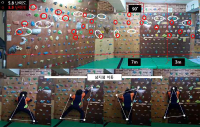
[Purpose] The study was designed to examine the effects of a 10-week sports climbing training on body composition and surrogate indices of major lifestyle disease in obese elderly women. [Methods] Twenty elderly women, whose percent body fat was over 35%, were randomly assigned into one of two groups, i.e., sports climbing training group (TR: n=10) and control group (CON: n=10). The subjects in TR completed sports climbing training program with 5.8 and 5.9 of difficulty, at 11-13 of ratings of perceived exertion (RPE), 60 min/session, three sessions/wk for 10 weeks. Independent variables regarding body composition and major lifestyle disease, i.e., hypertension, dyslipidemia, and atherosclerosis, were measured and compared between two groups as well as between two tests simultaneously using a repeated two-way ANOVA. [Results] Regarding physique and body composition, there were significant interactions between group and test in body weight, body mass index, fat mass, and percent body fat. These variables decreased significantly in TR. 2) Regarding indices of hypertension, systolic blood pressure, diastolic blood pressure, mean arterial pressure, and pulse pressure decreased significantly in TR. Regarding indices of dyslipidemia, triglyceride decreased significantly in TR. Regarding indices of atherosclerosis, TG/HDL-C ratio decreased significantly in TR. [Conclusions] It was concluded that the 10-week sports climbing training would be beneficial for reduction of body fat despite its’ influence on fat-free mass was limited, and would also contribute on improving surrogate indices of hypertension, dyslipidemia, and atherosclerosis in obese elderly women. Future research investigating the effects of various period, intensity, duration, and frequency of sports climbing training would be warranted.
Frailty in older adults is related to an increased risk for poor health outcomes including falls, disability, hospitalization and mortality. The purpose of this study was to determine the thresholds of a functional fitness associated with frailty for community-dwelling woman aged 65 or older. In this study, the National Fitness Award(NFA) items for elderly were utilized as the physical function and fitness testing for korean elderly women. The total of 444 community-dwelling woman completed the testings. Frailty status was classified by the Japan LTCI system ‘Kihon Checklist’ in the study. The prevalence of the frailty was 19.1% in the study. The frail elderly were older and showed higher obesity index such as weight, body mass index (BMI), percent body fat and waist circumference than the normal elderly. After adjusting for age and BMI which was related to frailty, fitness testing items were compared depending on frailty. As the result, the frail elderly showed significantly lower fitness levels in grip strength, 30-second chair stand test, timed up and go, figure-of-8 walk around two cones, and 2-minute step test than the normal elderly. When the fitness cut-off values were analyzed using the ROC curve, also, grip strength: 34.13%, 30-second chair stand test: 14 reps, timed up and go: 7.09 seconds, figure-of-8 walk around two cones: 30.88 seconds, and 2-minute step test: 93 reps. In addition, based on the cut-off values of each fitness item, the group with a low fitness level showed a 1.86 to 3.09 higher odds ratio of frailty than the group with a high fitness level, even after age and BMI were adjusted. In conclusion, these findings indicate that the fitness cut-off values in this study are fitness levels for preventing frailty of Korean elderly women and there will be a need for a large-scale study including subdivided fitness cut-off values for each age group and targets elderly men as well.
