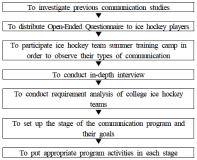
This study was designed to develop a communication training program for college ice hockey teams and examine the effects of this program. College ice hockey players and coaches participated in this study. The various types of data were collected and analyzed to assess the needs of the program and to develop the program with expert meetings. To analyze the effects of the developed program, questionnaires, experience reports, and in-depth interviews were conducted as measures. The results of this study are as follows. First, ice hockey team communication consisted of eight factors (i.e., sympathy, respect, trust, two-way verbal communication, firm expression of opinion, training program communication, developing rapport, and cohesion). Thus, the program developed based on eight factors and consisted of three stages of total 12 sessions which was 90 min to 100 min long. Second, this program increased communication satisfaction, coach-athlete interaction, group cohesion and exercise effectiveness, and these quantitative results were statistically significant. Moreover, qualitative analysis revealed that this program enhanced sympathy, social cohesion, and task cohesion among participants as well as positively changed their communication skills better than before. The communication training program which was developed through this study could provide basic information of a communication training program in the sports domain and positively influence overall sports team effectiveness and performance.
The purpose of this study was to examine whether the difference between ingestion of nutrition supplements for 8 weeks can regulate physical activities and fatigue recovery. Fifty one middle-aged women participated in this study and were divided into placebo, ingestion of 20g energy supplement and ingestion of 40g energy supplement groups. Energy supplement mainly consists of carbohydrates and proteins. All subjects take in this supplement one time per a day for 8 weeks. Physical activity and fatigue recovery were measured before and after ingestion of energy supplement for 8 weeks by using the Wingate anaerobic and a blood tests. In the Wingate anaerobic test, the peak power(p<.01) and average power(p<.05) were significantly increased in ingestion of 20 and 40g supplement groups compared to the placebo group. Although concentrations of lactate and growth hormone in the blood didn’t show a significant differences among groups, blood concentrations of cortisol and ammonia were further enhanced in ingestion of 20 and 40g supplement groups compared to the placebo group(p<.001). The results of present study provide evidence that energy supplement mixed with carbohydrates and proteins may be effective to increase physical activity as well as to reduce blood concentration of fatigue-related factors after exercise.
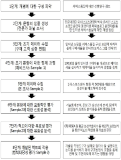
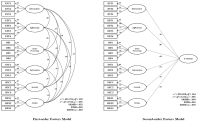
The purpose of this study was (a)to clearly define the concept of service quality as it relates to the online sports shopping mall, and (b)to develop and validate a psychometrically sound measurement scale, (c)examine the relationship among service quality and shopping satisfaction and intention of recommendation for marketing strategy internet sport shopping mall management. Following Churchill’s(1979) suggestions, the author developed internet Sports Shopping Mall Service Quality(E-SSMSQ). For the development E-SSMSQ (1)literature review, (2)focus group interview, (3)in-depth interviews (4)pilot test(n=97), (5)first data collected(n=459), (6)Frequency analysis, descriptive analysis, exploratory factor analysis(EFA) and reliability analysis for items evaluation, (7)confirmatory factor analysis(CFA) and correlation analysis for scale validation, (8)CFA, correlation analysis and structural equation model(SEM) test for predictive validity used second data collected(n=471). The current study conceptualized the service quality in the context E-SSMSQ by incorporating interaction, efficiency, order processing, information, security, and design. The authors also developed 20 items E-SSMSQ. The results of SEM support the psychometric property of the scale. First, interaction, efficiency and order processing of E-SSMSQ had significantly influence on internet shopping mall satisfaction. Interaction, efficiency, security, and design of E-SSMSQ had significantly influence on internet shopping mall intention of recommendation.
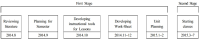
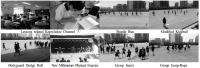
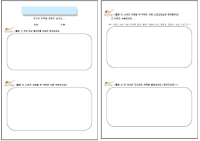
Researchers and teachers in physical education have emphasized sportsmenship in sport education setting. However, how to teach sportsmenship in physical education is not proposed yet. The purpose of this study was (1) to develop an instructional program for teaching and learning sportsmanship and (2) to examine its effects on sportsmenship. Participants were 7th middle school students(N=95). Data were collected using Sportsmanship Test(Park, 2014), open-ended questionnaire and in-depth interviews with students. The data were analyzed through paired samples t-test and qualitative content analysis. Results showed that significant difference was observed in students' sportsmanship test scores after instruction. Analysis of interview data showed that students experience the value of utmost effort, respect for opponents, respect for teammates, acknowledging results, respect for judgment, and valuable lessons related to character education. Implications for sportsmanship education using instructional program were discussed.
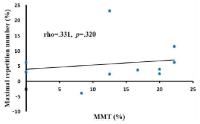
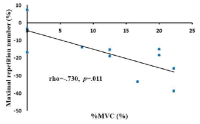
The purpose of this study was to determine whether maximum repetition number can be used as an indicator of strength imbalance. Eleven healthy, resistance-trained males were tested for one repetition maximum (1-RM) the chest-press exercise, and than manual muscle testing (MMT), two-arm at 80% of 1-RM and one-arm at 40% of 1-RM in the pectoralis major were measured for the maximum voluntary contraction (%MVC) and maximum number of repetitions during the chest press exercise. Exercise velocity was constantly 4 seconds (concentric: 2-s, eccentric: 2-s) per repetition. The changes in %MVC were significantly higher in non-dominant limb (NDL) compared with dominant limb (DL) pectoralis major during two-arm chest press (p < 0.01) and one-arm chest press exercise (p < 0.05). In contrast, the changes in MMT (p < 0.05) and maximum repetition number (p < 0.01) were significantly higher in DL compared with NDL during one-arm chest press exercise. There was no correlation between maximum repetition number and MMT (rho = 0.331, p = 0.320). However, maximum repetition number was significantly negative correlated with %MVC in two-arm chest press (rho = -0.730, p = 0.011). It is possible that maximum repetition number can be used as an indicator of strength imbalance.
This study conducted to explore K-League (Korea Professional Football League) referees’ psychological experience and coping strategies just after the moment of wrong judgment. Open-ended questionnaire were conducted on 35 full-time referees who participated in the K-League winter training camp. The data were categorized by inductive content analysis. The results were as follows. Psychological experience yielded 45 raw data points, which were based on the following 10 sub categories; increased anxiety, rumination wrong judgment, concern about reprimand, and feeling apologetic; and four general categories including, psychological fragmentation, feeling helpless, concern about reputation, and acknowledgment of wrong judgment. Thus, K-league referees experience a psychological turbulence just after the moment of the bad calls and worsen feelings of helplessness about the wrong decisions. Also, K-league referees worry about further disadvantages following the misjudgement and admit their bad calls feeling sorry for teams and athletes who were in the incidents. Coping strategies yielded 55 raw data points from which the following categories were identified 11 sub categories; increasing concentration, attempting to forget wrong judgment, apologizing on wrong judgment, and change in thinking; and four general categories including, emotional self-support, avoiding situation, correcting the error and thinking, and changing of refereeing approach. Therefore, K-league referees enhance their concentration in order to not reoccur wrong judgement after the moment of the mistakes and try to forget the incidents of wrong judgement. Also, K-league referees apology to the teams and athletes who experienced the bad calls and make efforts to correct the mistakes if possible. Moreover, K-league referees try to modify a criteria of judgement in order to manage aftereffects of wrong judgement and make decisions correctly by approaching the scenes of the wrong judgement. The study emphasizes the importance of referee psychological stability on the field and the need for psychological support. The study is expected to encourage further research on sports referees in Korea to ensure they receive appropriate psychological support.
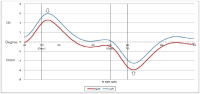
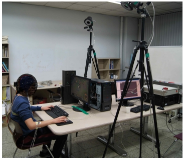
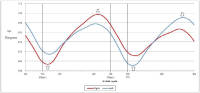
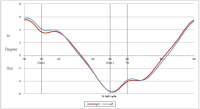
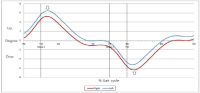
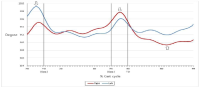
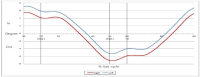
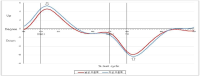
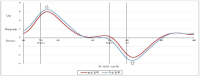
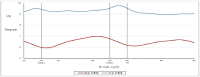
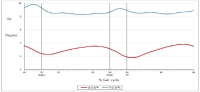
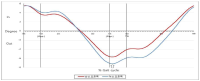
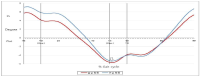
The purposes of this study were to establish gait reference data for 20s Korean and to analysis between Korean and foreigner. Male 34 and female 36 were selected for a subject group in accordance with the classification system of Korean standard body figure and age by Korean Agency for Technology and Standard. The sample size was calculated by GPower which is used for power analysis. The power of this study was 80.7%. 3D motion capture system and force platform were used to measure in this study. Gait data were collected by 8 cameras and 2 force platform. Each camera was operated at 120 frames/sec for sampling frequency and 1/1000 sec for shutter speed. The sampling frequency of force platform was 1200Hz. As a result of the study, the following results were obtained. A statistically significant difference in analysis between gender and within gender was appeared differently dependent on whether or not standardized. No significant difference appeared between legs for a female group in all temporospatial variables. But the significant difference with support time ratio and swing time ratio appeared for a male group. In analysis between gender, a significant difference appeared about walking speed and cadence. In pelvic tilt, a significant difference between right and left was found only in frontal plane for a male but found in a frontal plane and a horizontal plane for a female. In analysis between gender, a significant difference was found in sagittal plane both legs. In conclusion, normal gait pattern between gender was different and showed the difference between Korean and foreigner.
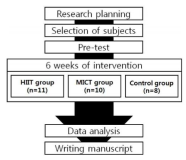
The primary purpose of this study was to investigate the effects of 6 weeks of high-intensity intermittent training (HIIT) and moderate-intensity continuous training (MICT) under relatively equal energy expenditure on body composition, aerobic capacity, cardiovascular function, insulin resistance, and blood lipid profiles in 20s overweight males. Twenty-nine males were randomized into one of the following groups: HIIT group (n=11), MICT group (n=10), and control group(n=8). Subjects in HIIT group completed 6 weeks of training for 25 min/sessions, three times/wk, and subjects in MICT group exercised for 33 min/session to equalize the energy expenditure with HIIT group. Subjects in control group were asked to maintain their normal life pattern during the same intervention period. Data were analyzed using two-way repeated measures ANOVA with post hoc test. Main results of the present study were as follows: 1) Body weight, BMI, fat mass, and WHR decreased significantly in HIIT group. 2) VO2max, VEmax, and time to exhaustion increased significantly in HIT group. 3) SBP decreased significantly in HIIT group and HRrest was tended to decrease in HIIT. 4) Fasting plasma insulin and HOMA-IR were tended to decrease in HIIT, but the changes failed to reach the statistically significant level. 5) HDL-C and TG were tended to improve in HIIT, but the changes failed to reach the statistically significant level. Results indicate that high intensity intermittent exercise training is more beneficial in aerobic capacity and cardiovascular function. It was also suggested that 6 weeks of aerobic exercise training in either high intensity intermittent or moderate intensity continuous was not sufficient enough to induce changes in body composition, insulin resistance and blood lipid profiles.
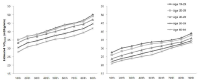
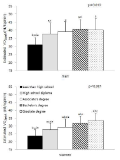
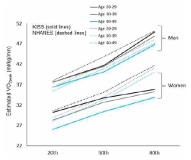
To provide the distribution of cardiorespiratory fitness including Bruce treadmill exercise time and estimated peak oxygen uptake (VO2peak) and investigate association with cardiorespiratory fitness and metabolic syndrome, sedentary lifestyle, or education level among Korean adults. Analysis of data on 2,006 adults (19-64 yr) who had completed a maximal grade treadmill exercise test, from the Sports Institute of Sports Science Fitness Standards (KISS FitS) project 2014-2015. The mean maximal exercise time was 11’26’‘, 11’18’‘, 11’06’‘, 10’03’‘ and 8’51’‘ (minutes and seconds) for men 19-29, 30-39, 40-49, 50-59 and 60-64 years of age, respectively, for women, it was 9’49’‘, 9’09’‘, 8’42’‘, 8’01’‘ and 7’33’‘ for the corresponding age groups. The mean peak oxygen uptake was estimated as 42.3, 41.8, 41.2, 37.6 and 33.6 ml/kg/minute for men 19-29, 30-39, 40-49, 50-59 and 60-64 years of age, respectively, For women, it was 34.0, 31.8, 30.3, 28.0 and 26.4 ml/kg/minute for the corresponding age groups. A positive association between cardiorespiratory fitness level and education level was observed for both men and women. Furthermore, participants with sedentary lifestyle had a significantly lower cardiorespiratory fitness than participants with activity lifestyle. Finally, Men with moderate and high fitness level had 50% and 87% lower odds for the metabolic syndrome, and women had 48% and 50% lower odds for the metabolic syndrome, respectively, than the ones with low fitness level after adjustment for age, smoking, alcohol intake, and sedentary lifestyle. These results can be used to track future Korean assessments and to evaluated interventions. The differences in fitness status by education level, sedentary lifestyle or metabolic syndrome can also be used to develop health policies, program and educational services.
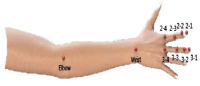
The purpose of this study was to determine how acute active pc-video game affects kinematic variables and muscle activities of adolescents. Fourteen middle school students(age: 15.9±0.7 yrs, height: 171.3±6.1cm, weight: 60.0±5.4 kg, right handed) who have no musculoskeletal disorder were recruited as the subject according to having experience in using the pc-video game for more than six months. Maximum angle, angular velocity, and muscle activity of the upper extremity were determined for each trial. For each dependent variable, a paired t-test was performed to test if significant difference existed between pre- and post a 60 minute active pc-video game(p<.05). This study found that one hour pc-video game hour may not affect on movement and ROM of the finger and the wrist, whereas it may have an effect on muscle activity of the upper extremity. It seems that repetitive movement pattern during an active pc-video game may hinder muscle activity of adolescents’ upper extremity. Part of the increase in musculoskeletal disorders is linked to the amount of time adolescents are allowed to play video games. This study found that an active pc-video game appears to have negative effects on the upper extremity muscles. Since wrist movements are continually repeated throughout the video game, carpal tunnel syndrome may possibly be caused by long-term exposure to video games.