Purpose The purpose of this study was to develop a psychic energy management scale that construct a concept and based on extracted contents of structural validity and reliability of university athlete psychic energy management inventory. Methods To develop the scale, the researches were completed <research ⅰ; constructing sub-factors of Psychological Energy Management, ⅱ; developing scales of psychic energy management, ⅲ; verifying validity of psychic energy management>. The results shown are a follows. Results The psychic energy management inventory contents of the university athlete were categorized into five categories ; team energy, game energy, environment energy, leisure energy and body energy. Through statistical procedures and factor analysis, the psychic energy management inventory was developed with 4 factors 18 items (coach energy 4 question items, game/environment energy 6 question items, colleague energy 4 question items, body energy 4 question items). Conclusion Convergent validity and discriminant validity was demonstrated through the external validity, the multi-group analysis confirmed the structural equivalence of the scale between the school grades.
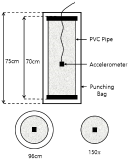
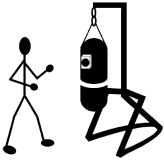
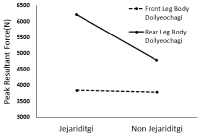
Purpose The purpose of this study is to investigate the comparison of peak resultant force in taekwondo body dollyeochagi in accordance with Jejariditgi existence and the position of kicking leg. Methods Twelve students who majored taekwondo participated in this experiment. They have a forth dan(degree) black belt in taekwondo. The peak resultant force was measured 12 times(2 jejariditgi existence × 2 position of kicking leg × 3 times). Two-way ANOVA with repeated measures was used to analyze the data. Results There was significant difference in interaction effect of peak resultant force in taekwondo in accordance with jejariditgi existence and the position of kicking leg. And there was significant difference in main effect of peak resultant force in taekwondo in accordance with jejariditgi existence and the position kicking leg. Higher peak resultant force was shown in body dollyeochagi with jeariditgi as compared with non jejariditgi. And higher peak resultant force was shown in rear kicking leg as compared with front kicking leg. Conclusions The results show that jejariditgi is a factor affecting the peak resultant force. Comparison of peak resultant force in taekwondo body dollyeochagi in accordance with jejariditgi existence and the position of kicking leg will provide strategies for coaches and athletes to perform improved taekwondo dollyeochagi.

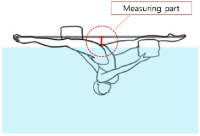
Purpose The purpose of this study is to compare the physical fitness levels among artistic swimmers in artistic swimmer national team trials. It is aimed to strengthen the physical fitness evaluation criteria of the national team and construct a physical fitness evaluation item suitable for an artistic swimming event. Methods A total of twenty two female elite artistic swimmers participated in this national team selection trial. Measurement list was performed body composition (Height, Weight, Body fat(%), Skeletal muscle mass, Lean body mass, BMI, Shoulder width, Arm span), Basic physical fitness (Push-up, Sit-up, Chin-up, Endurance of trunk backward extension and Sargent jump), Flexibility (Trunk backward extension, Shoulder flexibility, Frog position and Underwater split R, L) and Swimming test (100 m freestyle, 400 m freestyle). Data were analyzed by Independent t-test using SPSS Statistics ver 25.0. Results Age and skeletal muscle mass were significant difference between the two groups (p<.05). Also, 400 m swimming test was significantly different (p<.001). However, there were no significant differences in basic physical fitness and flexibility. Conclusions These results suggest that selected athletes are excellent not only in acting but also in physical fitness. Based on these results, it is necessary to construct a physical fitness items for the preliminary artistic swimming and to classify the physical fitness evaluation criteria according to the characteristics of the artistic swimmers.
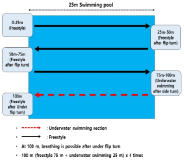
Purpose The purpose of this study was to identify the effect of a power-specific weight training program in order to improve the muscle strength of Korean national team’s freestyle wrestlers. Methods Participants were 13 male athletes in the national freestyle wrestling team. The period of the program was 6 weeks. Muscle strength, muscular endurance, muscle power, flexibility, agility, cardiorespiratory endurance, anaerobic power and isokinetic muscle function were measured. Data were analyzed using IBM SPSS Statistics ver. 23.0 (IBM Co., Armonk, NY, USA). Paired t-test was conducted for comparison between pre-test and post-test score. Results There were significant difference and tendency in the leg isokinetic power and trunk isokinetic flexion strength. However, there was no significant difference in muscle strength, muscular endurance, muscle power, flexibility, agility and cardiorespiratory endurance. Conclusion The 6-week program focusing on the power-specific weight training indicated a significant difference not in every variable but in isokinetic muscle power, speed power and core strength. It is suggested that the training program was applied to the athletes less continuously and not in the long term because of frequent international games abroad and the need for losing weight. Consequently, a year-long training program with personalized methods should be developed to bring about more significant outcomes.
Purpose This study aims to contemplate the identity and significance of sport ethics as an independent academic field by examining how it began and developed, where it is now, and where it will or should be moving forward. Methods First, a history of sports philosophy which gave birth to sport ethics is surveyed. Second, the emergence of sport ethics in the historical development of sport philosophy is analyzed. Third, major methodologies and theoretical frames of sport ethics are introduced. Last, what needs to be done in South Korea in relation to sport ethics is suggested. Results Sport ethics in the future is expected to resort to interdisciplinary approaches which combine a variety of academic disciplines and methodologies. In addition, sport ethics must relate its theory to practice. The pressing task for sport ethics in South Korea is to establish its identity as a separate academic field. In order to do this, we should figure out what to study in sport ethics, and continue to study about the range, methodology, and theoretical frame of sport ethics. Conclusions The establishment and development of an academic field becomes only possible when fully supported by numerous scholars’ work, practical achievement of the field, and a diversity of policy and institution, and a continued discussion and agreement on the content and methods of the discipline. In order to enhance its status as well as professionalism of sport ethics scholars, researchers of various academic backgrounds should study sport ethics, exchange ideas on theory and methodology, and spread results of studies through education, guiding through the development of sports.
Purpose The purpose of the study was to determine difference of body composition, bone mineral density and health-related fitness by physical activity level in young women. Methods A total of 90 women aged 19-29 years participated in this study. The subjects were divided into three groups (low, middle, and high level) according to the physical activity level estimated by bone-specific physical activity questionnaire(BPAQ). Body height and weight were measured. Body composition parameters including four sites of bone mineral density(BMD) were estimated by DXA (Hologic, QDR-4500, USA). Health-related fitness tests was assessed using sit & reach, grip strength, sit-ups, and VO2max. Statistical analysis was performed using SAS version 9.4. All data were presented in terms of means and standard deviations. One-way ANOVA was applied to determine difference of dependent variables by physical activity level. Duncan's multiple range test was used as a post-hoc test. The statistical significance level was set at p < .05. Results There were significant differences on body weight(F = 4.867, p = .01), body mass index(F = 5.053, p = .008) and fat-free mass(F = 8.364, p = .0001) among the three groups. Significant differences were found on whole body BMD(F = 16.730, p = .0001), lumbar BMD(F = 11.480, p = .0001), femur BMD(F = 42.182, p = .0001) and forearm BMD(F = 5.560, p = .005) among the three groups. There were also significant differences on sit and reach(F = 11.433, p = .0001), sit-ups(F = 17.972, p = .0001), VO2max(F = 3.106, p = .05) and duration of GXT(F = 7.479, p = .001). Conclusions There were differences on body composition, bone mineral density and health-related physical fitness by physical activity levels. Nevertheless, the questionnaire used in this study was not able to judge participation in various exercise types including aerobic exercise or resistance exercise. Therefore, in the future study, longitudinal study considering various types of physical activity and dietary intake will be needed.
Purpose The aim of this study is to find how the pyruvate intake and aerobic exercise effect on the body composition, exercise performance ability, blood factor and obesity related hormone, and to verify the effect of pyruvate intake and aerobic exercise as an effective substance for obesity improvement. Methods This study selected 20 obese men in their twenties who has more BMI than 25kg/m2, and are applicable in 25% of the body fat, and randomly sampled group of 10 people for pyruvate intake and aerobic exercise (PYA), and 10 people for placebo intake and aerobic exercise (PLA). Intake of pyruvate and placebo was implemented for 10 weeks, 6 g a day, and aerobic exercise, treadmill exercise in the intensity of 50 ~ 60%’s target heart rate, was conducted for 10 weeks, 3 times a week, 60 minutes a day. To demonstrate the effect of pyruvate intake and aerobic exercise, all of the body composition, exercise performance ability, Lactate, and blood factor and hormone related to obesity were measured before and after the test in the same manner. Results The main results from this study are as follow; 1) In the case of body composition, in PYA, weight(p < .01), BMI(p < .05), body fat percentage(p < .01), and body weight without fat(p < .001) are reduced meaningfully. 2) In the exercise performance ability increased significantly in both PYA(p < .01) and PLA(p < .001) for V˙O2max, Also, in the case of distance during the exercise, PYA(p < .01) and PLA(p < .05) increased significantly in 15 minutes and PYA(p < .01) and PLA(p < .05) 30 minutes, but only in PYA from 45 minutes(p < .01) to 60 minutes(p < .05) 3) In case of Lactate, the significant decrease in PYA during stabilization and the significant increase in PYA after 30 minutes of exercise was not seen after 45 minutes 4) In the case of blood factor, HDL-C showed a meaningful decrease in PLA(p < .05) and Leptin showed a meaningful decrease in PYA(p < .001). Conclusions To sum up these results, it was more effective for the group of PYA which ingested pyruvate in improving obesity, even when the same aerobic exercise is conducted.

Purpose The study examined the effects of a 12-week high intensity circuit training (HICT) on abdominal fat, physical fitness, blood lipids, and insulin resistance in middle-aged obese women. Methods Thirty obese women, aged 32-48 yrs, were recruited and randomly assigned to either HICT group (TR; n = 15) or control group (CON; n = 15). Subjects in the TR group participated in HICT of which resistance exercise and aerobic exercise were performed with a duration of 40 min/session and 3 sessions/wk for 12 weeks, whereas subjects in the CON group were asked to maintain their normal life patterns. Dependent variables included abdominal fat area, body composition, physical fitness, blood lipids profiles, and insulin resistance index. Analysis of variance with repeated measures with Bonferroni corrections was used to compare the outcomes between two groups. Results Main findings of the present study were as follows: 1) compared to the CON group, the TR group had significant reductions in overall (i.e., body mass index and percent body fat) and abdominal obesity (i.e., waist circumference, total abdominal fat area, visceral fat area, subcutaneous fat area, and visceral fat area-subcutaneous fat area ratio), 2) compared to the CON group, the TR group had significant improvements in health-related physical fitness (i.e., muscular strength, muscular endurance, muscle power, flexibility, balance, and cardiorespiratory endurance), and 3) compared to the CON group, the TR group had significant improvements in fasting lipids, glucose, insulin, and insulin resistance. Conclusions The current findings of the study suggested that HICT would be an effective exercise intervention to improve metabolic complications associated with obesity and poor physical fitness in obese middle-aged women.


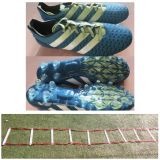
Purpose The purpose of this study was to investigate the lower extremity muscles activity during forward side step by soccer field ground types. Methods Fifteen elite high school soccer players participated in this study. Muscle activation patterns were recorded at 2000 Hz during forward side step task. Surface EMG of the tibialis anterior(TA), soleus(SOL), medial gastrocnemius(MG), lateral gastrocnemius(LG), peroneus brevis(PB) muscle was recorded, and the root mean square of the EMG was normalized, using a maximum voluntary isometric contraction(%MVIC). One-way repeated ANOVA was used for comparison among three soccer field ground types(natural grass, artificial turf, hard ground). Results Artificial turf displayed greater soleus and peroneus brevis activities compare to natural grass during forward side step task. Conclusions The relationship between increased soleus and peroneus brevis activation and greater incidence of injury in artificial turf versus natural grass requires further study. Soccer players routinely training on artificial turf for prolonged periods should be carefully monitored.

Purpose The purpose of this study was to investigate characteristics of levels of physical activity in considering gender and different types of competition-oriented physical activity classes using three-dimensional accelerometers. Methods A total of 981 students(505 male students, 476 female students) in six different types of physical education classes were participated in this study. All of the six different types of physical education classes were competition-oriented classes, and levels of physical activity were accessed by three-dimensional accelerometers. Data were analyzed using t-test and ANOVA. Results First, descriptive analyses of participation time of levels of physical activity showed that MVPA of physical education classes is 10.26 mins (22.89%) on average, and, MVPA showed differently in different types of physical education classes in the order of T ball(14.61 mins), flying disk(12.61 mins), soccer(10.78 mins), volley ball(10.56 mins), basketball(9.64 mins), and table tennis(5.73 mins). Second, female students showed significantly lower levels of MVPA in all the different types of physical education classes. Third, post-hoc analyses showed that significantly higher levels of MVPA were found in T ball physical education classes and significantly lower levels of MVPA were found in table tennis physical education classes, compared to other types of physical education classes. Conclusions MVPA in physical education classes is not satisfied with recommended MVPA, and MVPA in Korean physical education classes is lower than MVPA in same types of physical education classes in other countries. In addition, significant mean differences of MVPA are found between male and female students, and new sports physical education classes show higher levels of MVPA compared to classic sports physical education classes. These results indicate that competition oriented physical education classes widely used in Korea need to find ways to increase MVPA and to overcome different levels of MVPA between male and female students.
