Purpose Student-athletes in Korea are confronted with career development in both academics and sport. This paradigm change in sport policy aims at guarantee of student-athletes' learning rights and successful career transition after sport. But dual career development can be a difficult task for student-athletes, if there is a lack of social support. The purpose of this study was to provide updated information regarding the burnout-in-sport literature and suggest directions for future research in sport psychology. Methods This study is based on reviewing the literature. In order to improve the validity of discussion, the author focused on the findings of the published research articles targeting student-athletes. The outcomes were examined and discussed based on models and measurement tools of athletes’ burnout. Results First, longitudinal study is needed to understand causalities in sport burnout. Second, it is necessary to develop korean sport burnout scale reflecting our social and cultural contexts. To do this, qualitative research should be preceded to provide in-depth understanding on burnout phenomenon of student-athletes. Third, the cut-off values which can allow the separation between clinical and nonclinical athletes should be developed. Fourth, due to dual career development as a new sport environment, burnout research has to pay attention both psychological variables in person and environmental variables. Conclusions Since the 1990s burnout research in sport psychology has been increased in its quantity as one of the remarkable topics in Korea. Based on the comprehensive and systematic review of the literature, directions for future research are suggested.
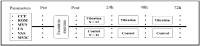
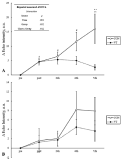
Purpose The purpose of this study was to investigate the effect of vibration therapy on the functional, imaging, and mechanical properties in elbow flexor after a single bout eccentric exercise. Methods Twenty-three untrained adults male participated in this study [CON(control)= 11, VT(vibration)= 12]. Volunteers performed 5-set of 6 maximal (90˚/s) eccentric contractions of the non-dominant elbow flexor on a isokinetic dynamometer. Vibration was applied using a side alternating vibratory platform (12 Hz frequency, 4 mm amplitude) with 3-set of 60 sec during 3-day after eccentric exercise. Results The VT group showed a reduction in exercised-induced muscle damage(EIMD) symptoms in the form of attenuating muscle swelling and echo intensity (P<.05) compared with the CON, mechanical properties were improvement (P<.05) compared with the CON. However, muscle soreness, range of motion and maximal voluntary isometric contraction were not significant (P<.05). Conclusion As currently practiced, vibration therapy after eccentric exercise may reduce EIMD by improving quality of the muscle, suggesting that this therapy is an effective strategy for EIMD.
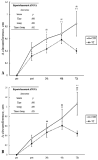
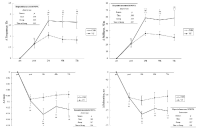
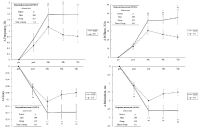
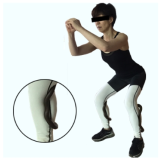
Purpose This study was designed to investigate the effects of weight-bearing exercise and CareRing treatment on cardiovascular responses, popliteal vein functions, and vascular elasticity of 30-40s women who had worked longer than eight hours a day in a standing position. Methods Thirteen subjects participated in 30 min of standing up treatment (STAND), weight-bearing exercise treatment (EX), and weight-bearing exercise with CareRing treatment (EX+RING). Each subject took part in the three trials repeatedly in a counter-balanced order and proceeded with a wash-out period of at least one week between the respective trials. Results The main results were as follows: 1) Significant reduction in EDV, no change in the diameter of popliteal vein, trend of reduction in blood flow of popliteal vein, and increased baPWV, indicating reduction of vascular elasticity of whole body, were shown in the STAND. 2) CO and EF increased significantly, and TPR decreased significantly in the EX. Blood flow velocity and blood flow volume of popliteal vein increased significantly, and baPWV decreased significantly from immediately after the treatment throughout the recovery phase in the EX. 3) HR, CO, and EF increased significantly in the EX+RING. Blood flow velocity and blood flow volume increased significantly in the EX+RING. Diameter of popliteal vein increased significantly immediately after the treatment and decreased significantly at 40 minutes of recovery. TPR and baPWV decreased significantly immediately after treatment compared to the STAND. Conclusions It was concluded that weight-bearing exercises would be effective in preventing venous or cardiovascular diseases occurred due to long-standing in 30-40s women, who are at high risk for such diseases. Furthermore, it would be more effective to combine pressure treatment with CareRing during weight-bearing exercises.
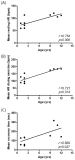
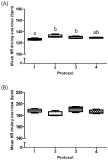
Purpose The purpose of this study was to investigate changes of the cardiovascular system by comparing heart rate (HR) and blood responses to exercise in younger and older adult dogs and to verify the value of dogs as aging model in exercise science research. Methods A total of 11 healthy beagles were divided into 2 groups according to age: younger adult dogs (1~2 years old, 7 animals) and older adult dogs (9~11 years old, 4 animals). Each animal exercised on the treadmill for 25 minutes, twice a week, and for 4 weeks. The exercise intensity was gradually increased by applying four different protocols. Resting HR, HR during exercise, and HR recovery time were determined as HR parameters. Biochemical analysis was performed on blood samples. The independent Student’s t-test and one-way ANOVA were used to analyze the mean difference of each variable. The associations between age and HR parameters were determined using Spearman‘s analysis. Results Older adult dogs showed higher HRs during rest and exercise than younger adult dogs. HR recovery time was significantly longer in older adult dogs than in younger adult dogs. A strong positive relationship was observed between beagles’ age and resting HR, HR during exercise, and HR recovery time, respectively. The heart rate response to the treadmill exercise was similar between the 1st week and 4th week in younger and older adult dogs. Exercise significantly reduced the white blood cell level in older adult dogs and increased the alkali phosphatase level in younger adult dogs. Conclusions The results of this study demonstrated that short-term treadmill exercise may have a positive effect on the aerobic capacity, inflammation, and bone formation, suggesting that dogs are valuable as aging model in exercise science research.
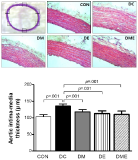
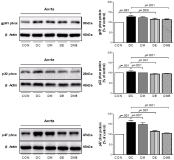
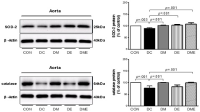
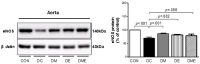
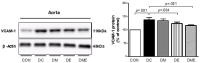
Purpose The purpose of this study was to investigate the effect of treadmill exercise and MitoQ treatment on NADPH oxidase, antioxidation and vascular function-related factors in aortic of D-galactose-induced aging rats. Methods To induce the animal model of aging, D-galactose was diluted in saline, and a dose of 100mg /kg was intraperitoneally injected into Sprague-Dawley rats once a day for a total of 10 weeks. Rats were divided into five groups: Control group (CON, n=9), D-galactose control group (DC, n=9), D-galactose+MitoQ group (DM, n=9), D-galactose+Exercise group (DE, n=9), D-galactose+MitoQ + Exercise group(DME, n=9), and treadmill exercise was conducted for 5 days/week during 8 weeks with gradual increase of intensity. MitoQ treatment was intraperitoneally injected at a concentration of 100μM/kg twice a week for 8 weeks during the research period. Results The result showed that treadmill exercise and MitoQ treatment decreased the expression of NADPH oxidase level and increased antioxidant enzyme such as SOD-2, catalase. It lead to positive effects such as increasing the level of eNOS, a protein involved in vascular function while decreasing the level of VCAM-1. In addition, as a result, it showed the structurally reduced intima-media thickness. Conclusions It can be concluded that treadmill exercise and MitoQ treatment are effective in ameliorating and treating vascular dysfunction resulting from aging.

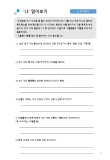
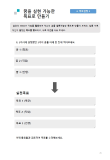
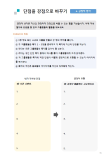
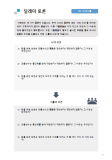
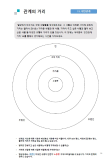
Purpose The purpose of this study was to verify their effectiveness as we develop and apply worksheets for improving life skills and resilience of collegiate Taekwondo athletes. Methods The study went through three stages: developing, applying, and evaluating. In the developing stage, literature review, expert meeting, and pilot test (n=25) were conducted to develop the worksheets. In the applying stage, 37 athletes participated in life skills program using the worksheets. Data were collected by survey and in-depth interview. In the evaluating stage, paired t-test, word cloud analysis, and inductive content analysis used to identify the effect of worksheets. Results First, the worksheets were composed of 3 stages (plan, acquisition, implementation) and 15 sessions including 12 factors of life skills. Second, the worksheets were applied in each phases such as planning, acquiring, and implementing. In the planning phase, they understood life skills knowledge and set goals. In the acquisition phase, students learned specific life skills’ strategies. In the practice phase, the acquired life skills were applied and practiced in real life and relationships. Third, the result of paired t-test showed that all the factors of life skills and 6 factors of resilience were significantly improved. In addition, word cloud and in-depth interviews revealed that the participants' cognitive and psychological changes were most prominent. Conclusions The life skills worksheets consists of 12 factors in 15 sessions and can be considered as an effective intervention tool for improving the resilience and life skills of collegiate Taekwondo athletes.
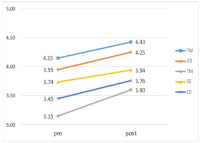
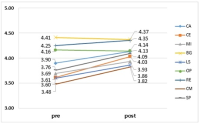



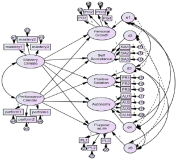
Purpose This study identified the influence of perceived motivational climate on psychological well-being in ballet majors. Methods Participants were 211(male=25, female=186) collegiate students enrolled in ballet department. Measures were The Perceived Motivational Climate in Sport Questionnaire(PMCSQ) and Psychological Well-being Questionnaire. Data were analyzed by using descriptive statistics, reliability test, correlation, and structural equation modeling. Results Results were as follows. First, mastery climate who ballet majors perceive significantly influenced on the five subscales of their psychological well-being: Mastery climate was positively related to personal growth, self-acceptance, positive relation with others, autonomy, and purpose in life. Second, performance climate who ballet majors perceive significantly influenced on the five subscales of their psychological well-being: Performance climate was negatively related to personal growth, self-acceptance, positive relation with others, autonomy, and purpose in life. Model fit indices were acceptable(RMSEA=.070). Conclusion In conclusion, this study indicated that motivational climate who ballet majors perceive was a important situational factor on their psychological well-being.
Purpose The purpose of this study is to explore ‘K League Influx (KLI)’ which is the phenomenon a number of international footballers migrate to South Korea and its factors. Methods Qualitative case study was conducted with 10 footballers who have migrated to South Korea and 4 their Korean agents. Results The KLI can be explained with four factors such as (1) Asian football dream and K league as a stop (not destination); (2) Brazilian footballer salary increase caused by Chinese football policy; (3) Financial crisis of European football market; and (4) The quantitative and qualitative changes in the agent market due to FIFA’s abolition of agent system and the development of new media. Conclusions These factors are close to the properties of external factor rather than internal factor. It requires various perspectives on sport labor migration (academic significance) and new management philosophy of K league and each club (practical discussion). Therefore, this study examined the possibility of 'selling-league' and suggested the follow-up study and policy direction related to it.
Purpose The purpose of this study was to analyzes the task related to job creation of sport industry sector in the 3rd(2019~2023) sport industry long-term plan and suggest possible revisions of the sport industry relevant laws. Methods This study focused on literature review on sport industry long-term plan, sport related legal and regulations reviews. To achieve the purpose of the study effectively, the legislative purpose and main contents of the Sports Industry Promotion Law were examined, and the legislation and amendment policy measures dealing with new job creation and reinforcement of sport industry manpower, according to sports industry long-term plan. Results First, To promote job creation in sport industry, the provision of sport relevant laws including fostering sport industry specialized manpower, settling down the system to meet the demands of industrial sites and establishing specialized higher education institutions that can strengthen their capabilities. Second, as the paradigm of creating jobs value added in sport industry has changed into a state-of-the-art convergence-and-composite based system such as the Fourth Industrial Revolution, legal systems that can reflect and implement it is urgently needed. Therefore, institutionally preemptive measures should be established before being new technological wave settled down in advance. Third, the development of a curriculum with substantial resources for strengthening the practical competency of sport industry manpower should be continued, and a revision of sport related laws on securing the budget is required. Conclusions By revising the current sport industry associated laws, it is expected to build a cornerstone on promoting job creation in sport industry.
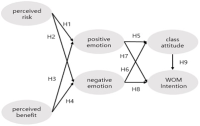
Purpose The purpose of this research is to empirically analyze the relationship between a indoor swimming pool on perceived risk & perceived benefit, emotion responses, class attitude, and word-of-mouth intention through structural equation model analysis. Methods This study set 224 members at the six private indoor swimming pools located in Gyeonggido as the research subjects. As for sampling method, convenience sampling method was used, and self-administered questionnaire was used for the survey. In an effort to verify the proposed structural model, this study used SPSSWIN Ver. 23.0 and AMOS 18.0. Results First, perceived risk had a positive effect on positive emotion. Second, perceived risk had a positive effect on negative emotion. Third, perceived benefit had a positive effect on positive emotion. Fourth, perceived benefit did not have a positive effect on negative emotion. Fifth, positive emotion had a positive effect on class attitude. Sixth, negative emotion did not have a positive effect on class attitude. Seventh, positive emotion had a positive effect on word-of-mouth intention. Eighth, negative emotion did not have a positive effect on word-of-mouth intention. Ninth, class attitude had a positive effect on word-of-mouth intention.
