This study conducted to explore K-League (Korea Professional Football League) referees’ psychological experience and coping strategies just after the moment of wrong judgment. Open-ended questionnaire were conducted on 35 full-time referees who participated in the K-League winter training camp. The data were categorized by inductive content analysis. The results were as follows. Psychological experience yielded 45 raw data points, which were based on the following 10 sub categories; increased anxiety, rumination wrong judgment, concern about reprimand, and feeling apologetic; and four general categories including, psychological fragmentation, feeling helpless, concern about reputation, and acknowledgment of wrong judgment. Thus, K-league referees experience a psychological turbulence just after the moment of the bad calls and worsen feelings of helplessness about the wrong decisions. Also, K-league referees worry about further disadvantages following the misjudgement and admit their bad calls feeling sorry for teams and athletes who were in the incidents. Coping strategies yielded 55 raw data points from which the following categories were identified 11 sub categories; increasing concentration, attempting to forget wrong judgment, apologizing on wrong judgment, and change in thinking; and four general categories including, emotional self-support, avoiding situation, correcting the error and thinking, and changing of refereeing approach. Therefore, K-league referees enhance their concentration in order to not reoccur wrong judgement after the moment of the mistakes and try to forget the incidents of wrong judgement. Also, K-league referees apology to the teams and athletes who experienced the bad calls and make efforts to correct the mistakes if possible. Moreover, K-league referees try to modify a criteria of judgement in order to manage aftereffects of wrong judgement and make decisions correctly by approaching the scenes of the wrong judgement. The study emphasizes the importance of referee psychological stability on the field and the need for psychological support. The study is expected to encourage further research on sports referees in Korea to ensure they receive appropriate psychological support.
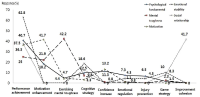
This study aimed to explore the psychological factors affecting sports performance and their purposes as perceived by adolescent athletes. Study data were collected by conducting an open-ended survey with 232 student athletes from adolescent athletes in S city. The collected data were categorized using content analysis, which was conducted twice to explore the psychological factors affecting sports performance and their purposes. From 537 answers, 30 performance-affecting psychological factors—including confidence, endurance, effort/dedication, optimal tension, and social support—were identified, and they were classified into five categories: psychological fundamental, mental toughness, motivation, emotional stability, and social relationships. From 588 answers, the purposes of the psychological factors were identified, including performance achievement, motivation enhancement, demonstrating mental toughness, cognitive strategy, confidence increase, emotional regulation, injury prevention, game strategy, and reinforcement cohesion. These performance-affecting psychological factors and their purposes may serve as a reference to understand how secondary school students perceive the relationships among various psychological factors and the relationship between the psychological factors and performance. This study is expected to inform goal setting and content organization in psychological skills training.
Purpose : The purpose of this study was to investigate coaching information with which coaches provided players during badminton competition. Methods : To this end, we generated an open-ended questions and presented it to 88 high school athletes registered in the Badminton Korea Association. The survey was conducted during a tournament and immediately after the tournament to collect the data. The collected data were categorized through inductive content analysis. Results : As a result of this study, a total of 480 raw data points collected through the open-ended survey were categorized into four general areas: psychological information, technical information, tactical information, and game operation information. Specifically, psychological information was divided into six subdivisions: concentration, confidence, relaxation/stabilization, mental toughness, play thought, and passion; technical information was broken into four subdivisions: strokes, footwork, swing and posture, and position preparation; tactical information had four subdivisions: coping to opponents, play changes, rotation, and manipulation of opponents; and, game operation information was divided into two subdivisions: taking the lead in a game and changing atmosphere. Conclusions : In other words, in badminton competition, the coaches strengthened psychological skills that promote psychological stability to attain the athletes’ peak performance and modified the athletes’ motion into the action necessary for achieving accurate techniques. Furthermore, they provided a variety of coaching information so that the athletes will respond appropriately to their opponents’ play, take the lead in games and induce a positive mood. The psychological, technical, tactical and game operation information offered by badminton coaches are the main factors influencing the performance of badminton players and suggest a need for the proper management and control of the coaches as well as athletes for the peak performance.
