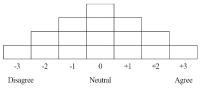
Purpose The purpose of this study is to classify the subjectivity of re-socialization barriers among retired footballers. Methods Q methodology was conducted to identify constraint factors contributing to social adjustment and reemployment perceived by 28 P-samples. Results Re-socialization barriers were classified as ‘Type I: Internal-constraint’, ‘Type II: External-constraint’, ‘Type III: Internal-conflict’, and ‘Type IV: External-conflict’. These types provided a variety of academic and practical discussions, depending on where the barriers are taken from (internal and external) and what depends on them (objective conditions and subjective ideas). Conclusions This study focused on the subjective structure of retired footballers and complemented traditional methodology focusing on hypothesis testing. Therefore, each type found in this study provides useful information not only in follow-up study on retired athletes, but also in policy-making decision such as support projects.

PURPOSE This study explores injury attributions accepted by serious football participants, specifically intermediate and advanced players. METHODS Utilizing Q methodology, 25 Q-samples and 33 P-samples were selected, and Q-classification was conducted. Principal component factor analysis through the PQ method (vers. 2.35) was employed for data analysis, and types were interpreted and named based on the Q-sample with a Z-score of ±1.0 or higher. RESULTS Results categorized injury attributions accepted by the participants into four types: 'Type I: Facility/ Human Resource Responsibility Type,” 'Type II: Luck/Other Responsibility Type,” 'Type III: Self Responsibility Type,” and 'Type IV: Insufficient Safety Education.” This study provided academic and policy discussions by reclassifying four types according to their internal and external location and controllability. CONCLUSIONS In conclusion, this study emphasizes the relevance of all four types of injury attribution to policy considerations. Ensuring participants' right to participate in safe and enjoyable sports requires addressing facilities/human resources, education, and insurance as major policy components of sports safety.
