Purpose This study aims to explore migration factors of Korean male footballers who have moved from South Korea to Southeast Asian countries. Methods Qualitative case study was conducted with 9 footballers, 4 their agents and 2 K-league staffs as the participant. Results As a result, by regarding their migration as involuntary decision, this study could provide academic and practical discussion on sport labor migration. First of all, this study established theoretical framework for involuntary migration of the participants through ‘Push-Pull Theory’ which focuses on demand and supply on the labor force. Second, this study found that a local rule (FA compensation system) of Korean professional football league (K league) and hierarchical collectivist culture contributed to their migration, which has not been reported by previous studies focused on the voluntary migration of mainstream players and it reflected local context of K league. Conclusions In conclusion, this study confirmed that sport labor migration was also considered as social phenomenon and reflected a cross section of a particular society. Through the migration of athletes, we can provide a variety of viewpoint on economic (market) structure, related policy and system in a particular society, and understand migration motives in terms of agency (subculture).
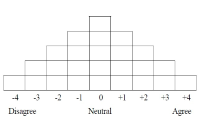
Purpose The purpose of this study is to conduct a typological classification of female recreational sport participants' coaching experience. Methods Q methodology was conducted using 25 Q-samples and 25 P-samples. Data were analyzed using PQmethod software. Results Four types were categorized: communication and character-oriented (I), function and immersion-oriented (II), process and fun-oriented (III), and function and inclusion-oriented (IV). These types were re-categorized as 'non-functional value-oriented (I, III)' and 'functional value-oriented (II, IV)'. Conclusion This study also made efforts to explore the value and norm that female participants expect from sport participation, which provided a variety of perspectives on social, psychological and philosophical discussions about woman sport. In addition, each type and its characteristics can be used as meaningful basic data in teaching method (coaching theory) for woman sport.
Purpose This study examines legal and institutional aspects of FA Compensation System (FACS) which was introduced by Korean professional football league in 2013. Methods This legal analysis reviews the current FACS in lights of several provisions of human rights in the Constitution and other relevant rules of law. Results First, the FACS violates Article 15 of the Constitution that protects 'freedom of choice to workplace' arguably implied under the 'freedom of occupation' provision since the system restricts a player's transfer within the league by requiring a transfer fee paid by the destination team even if the player has acquired the free agency status and his current contract is expiring. Second, the FACS would likely be unconstitutional according to precedents decided by the Constitutional Court and the National Human Rights Commission on the ground that 'freedom of occupation' is closely related to the rights to pursue happiness under Article 10 of the Constitution. Conclusions Based on the legal interpretations, the study argues complete abolition or significant revision of the FACS. This project calls for follow-up studies and further policy-making efforts given the practical magnitude and scholarly merits of the issue.
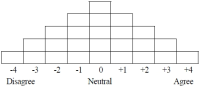
Purpose The purpose of this study was to conduct a typological classification of female college students in sport studies regarding perceived career barriers. Methods Q-methodology was used to identify female college students’ viewpoints on carrier barriers. The Q sample was distilled from 76 statements (64 from literature reviews and 12 in-depth interviews) to 25 statement after conducting literature review, in-depth interviews and surveys with open-ended questions. The P sample for this study was 30 students around Seoul and PQmethod software was used for data analysis. Results Three distinct views were extracted: First type of ‘career opaque’, revealed that students have failed to find their own aptitude and interest. Second type of ‘sexual discrimination-male centered’, implied students’ concerns about discriminating factors in relation to marriage and pregnancy for the job they desire. Third type of ‘Insufficient experience and qualification’, indicates students perceive their lack of experience or qualification required for their career. Conclusions The identification of these three viewpoints could provide insights that can be used to design more segmented and detailed career policies for female college students in sport studies.
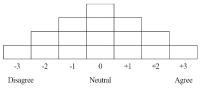
Purpose The purpose of this study is to classify the subjectivity of re-socialization barriers among retired footballers. Methods Q methodology was conducted to identify constraint factors contributing to social adjustment and reemployment perceived by 28 P-samples. Results Re-socialization barriers were classified as ‘Type I: Internal-constraint’, ‘Type II: External-constraint’, ‘Type III: Internal-conflict’, and ‘Type IV: External-conflict’. These types provided a variety of academic and practical discussions, depending on where the barriers are taken from (internal and external) and what depends on them (objective conditions and subjective ideas). Conclusions This study focused on the subjective structure of retired footballers and complemented traditional methodology focusing on hypothesis testing. Therefore, each type found in this study provides useful information not only in follow-up study on retired athletes, but also in policy-making decision such as support projects.

Purpose The purpose of this study is to explore ‘K League Influx (KLI)’ which is the phenomenon a number of international footballers migrate to South Korea and its factors. Methods Qualitative case study was conducted with 10 footballers who have migrated to South Korea and 4 their Korean agents. Results The KLI can be explained with four factors such as (1) Asian football dream and K league as a stop (not destination); (2) Brazilian footballer salary increase caused by Chinese football policy; (3) Financial crisis of European football market; and (4) The quantitative and qualitative changes in the agent market due to FIFA’s abolition of agent system and the development of new media. Conclusions These factors are close to the properties of external factor rather than internal factor. It requires various perspectives on sport labor migration (academic significance) and new management philosophy of K league and each club (practical discussion). Therefore, this study examined the possibility of 'selling-league' and suggested the follow-up study and policy direction related to it.
Purpose This study conducted legal, institutional and pedagogical consideration on C0rule in Korean collegiate sport. Methods (1) Systematically examined the unconstitutional elements of C0rule in terms of the basic rights of student-athletes, and (2) reviewed pedagogical validity in terms of higher education, college credit system and physical education. Results First, C⁰rule adopted the result (the credit) of the uniform education as the standard of sanctions. Providing discriminatory educational opportunities according to academic credit is regarded as the infringement of equal rights. Second, since the college sports league is the only place to prepare for vocational education and employment for student-athletes, restricting their opportunities according to the credit is also against the freedom of happiness and choice of profession. Third, C0 credit, the minimum standard, overlooked purpose and level of higher education and rigorous evaluation. Last, C0rule has resulted in overlooking the academic significance and status of college education, especially physical education. Conclusions This study is meaningful in that it brought the subjects to discourse field and provided opportunities to review the fundamental problem of the school sport and the basic rights of student-athletes. At the present stage of the transition of the school sport system due to the introduction of various regulatory systems, we should be careful about oligopoly and unilateral flow of knowledge and production of other alienation.
Purpose The purpose of this study is to explore the trend of K league exodus and its factors. Methods Qualitative case study was conducted by selecting 9 footballers and 7 their agents as the participants who have migrated from South Korea to China and the Middle East. Results The factors of migration were categorized as three push and pull factors such as economy (individual income and club's profit), policy (employment for foreign and military service) and environment (markets in home and abroad). To understand sport migration in the economic factor, there should be the environmental condition (overseas market) to pay high salaries and transfer fee to individuals and their clubs, and at the same time, the domestic market should be relatively poor environment. In addition, this study overcame limitations of economic and environmental factors by classifying Asian quota system and military service into political factor, and found the specificity (local context) of K league. Conclusions In conclusion, this study can be regarded as the first empirical work on sport labor migration in Korea and valuable as basic data of follow-up studies.
PURPOSE The purpose of this study is to explore the effects of the student-athlete and student peer mentoring program as a collegiate class. METHODS The peer mentoring program, conducted at A University in the first semester of the 2023 school year, was evaluated using practical action research (Zuber-Skeritt, 1996). RESULTS In the introduction stage, ‘relative and absolute evaluation’, ‘member ratio’, and ‘definition of professor role’ were categorized as challenge issues. In the progress stage, ‘de-formalized lecture method’, ‘student athlete’s coaching experience’, and ‘student’s experience of football culture’ were discovered as possibilities, while ‘vacancy and absence of mentor-mentee’, ‘limited group activities and limitations of team sports’, and ‘lack of objective evaluation’ required improvement. At the end stage, student-athletes experienced changes in values such as self-identity, football, and human relationships, as well as quantitative and qualitative changes in sports participation. CONCLUSIONS This study confirmed the potential of the peer mentoring program as a collegiate class as well as its practical significance for guaranteeing student-athletes' learning rights and for forming sports culture on collegiate campuses.
PURPOSE This study seeks to explore the subjectivity regarding leisure constraints perceived by college student-athletes. METHODS Based on Q methodology as an analysis framework, 25 Q-samples and 25 P-samples suitable for the research purpose were selected, and Q-classification and Q-factor analysis were conducted. RESULTS The leisure constraints were categorized into “Type Ⅰ: Psychological constraints,” “Type Ⅱ: Financial constraints,” and “Type Ⅲ: Spatio-temporal constraints.” The three types provided discussions on “strong athlete identity of student-athletes,” “role conflict between students and athletes,” “core competencies of student-athletes,” “current student-athlete support project,” and “school sports camp training.” CONCLUSIONS College student-athletes’ leisure constraints are closely related to strong athlete identity, anxiety about enjoying leisure, cost burden, and closedness of camp training, and each type provided new perspectives on discussions related to Korean student-athletes.
