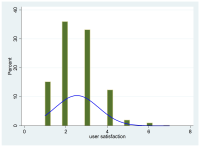
Purpose The study aims to analyze the factors affecting the Residents user satisfaction in order to improve the management of the Open School Sports Center the support facility of the National Sports Promotion Fund. Methods This data is based on Korea Institute of Sports Science(KISS)'s Open School Sports Center Usage Status and Satisfaction Survey (2016) and Open School Sports Center use performance. The analysis model is a regression model (TOBIT) that takes into account the limited characteristics of dependent variables. Results The results are as follows: the satisfaction is negatively related age, number of regulations, weekday opening hours, and usage fees. Conclusion Therefore, in order to increase the satisfaction of Open School Sports Center residents users, various supports are needed. This includes funds for PR, discounts and user-friendliness. It also requires differentiated management of each Center. In the case of regions and facilities, consumer-oriented policies need to be applied instead of collective standards.

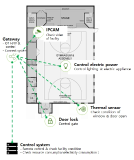
Purpose This study aims to suggest the application of IoT-based integrated management system to public sports facilities(PSF) in order to improve the utilization and management of PSF by analyzing the actual state of PSF empirically. Methods A survey was administered to managers(n=279) and users(n=500) of PSF in order to identify problems of current management and collect suggestions for improving the utilization and management of PSF. Previous research on establishing IoT-based system was also reviewed for considering the effectiveness of IoT technology. Results Generally, PSF are in low utilization and operate in a deficit. The deficit operation is caused by high labor costs and management expenses. The survey result shows that there are many problems in management and utilization such as lack of equipment, deteriorated facilities, shortage of manpower and funding, limited programs, difficulties in promotion. The result also shows that PSF need to consider developing local demand-based programs, reducing management costs, extending opening hours, improving online booking system. Conclusion To solve the problems of PSF in utilization and management, this study suggests that IoT-based integrated management system needs to be applied to PSF. It is expected that applying IoT-based integrated management system to PSF would improve operational effectiveness, ease of facility management, and user convenience.
This study aims to find the alternative to increase the participation rates of physical activities and to analyze socio-demographic factors that determine sporting participation in Korea. We estimates the sporting participation model with ʼ2012 national sport participation survey in Korea' and binary logit analysis. The results are as follows: sporting participation is positively related to gender(male), age, education level, household income, health status, leisure time in weekday, proximity to public and private sports facilities. The most significant factors influencing the raising the participation rates of physical activities factors are age and proximity to sports facilities. Therefore, to make many people to participate in sports activities, we need to supply the public sports facilities that in proximity to house and the facilities needs to be taken into participant's age such as elderly group. Also, we make effort to improve the accessibility to sports facilities of poor and unhealthy people.
