PURPOSE This study aimed to examine the relationship between job stress and occupational identity among taekwondo referees, with particular attention to the mediating roles of job satisfaction and feedback environment. METHODS Participants were 320 referees registered with the Korea Taekwondo Federation or regional Taekwondo associations. Data analysis included frequency analysis, descriptive statistics, confirmatory factor analysis, and reliability analysis. In addition, mediation effects were tested using the SPSS PROCESS Macro. RESULTS The findings revealed that job stress among taekwondo referees had a significant negative effect on job satisfaction and feedback environment. While job satisfaction was positively associated with feedback environment, it did not exert a significant influence on occupational identity. Conversely, feedback environment showed a strong positive effect on occupational identity. Furthermore, both job satisfaction and feedback environment were found to fully mediate the relationship between job stress and occupational identity. CONCLUSIONS Job stress indirectly affects occupational identity of taekwondo referees through job satisfaction and feedback environment. These results highlight the importance of fostering job satisfaction and cultivating a supportive feedback environment as essential mediating factors in mitigating the negative effects of job stress on occupational identity.
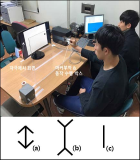
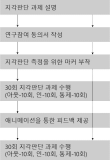
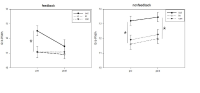
[Purpose] Perception plays an important role in understanding the environment or related objects in order for humans to perform physical movements more effectively. Sometimes they create different movements with different perceptions. Especially, visual perception errors that occur in sports situations can have a considerable effect on performance. Accurate knowledge of the environment in this process of perception is important in performing movements or actions. The purpose of this study was to investigate the effect of learning formation on perception using Muller-Liar illusion diagrams. To measure this, we compared the feedback group that induced knowledge learning and the control group that did not provide knowledge To see if there is a difference. Therefore, in this study, we have provided a visual feedback that can establish the cognitive awareness of the actual stimuli length to subjects, and investigated the changes in their matching action responses. [Methods] A total of 32 young and healthy subjects were randomly divided into two groups (Feedback and Non-Feedback groups). Subjects were asked to match the stimulus size with their index fingers and thumbs. Initially (pre-test), three different visual stimuli (inward, outward, and no arrows) were randomly presented 60 times (20 times each) and the grip sizes were recorded using the Liberty Motion Analysis System (Polhemus Co., America). Then, video clips of two lines merging each other were presented as feedbacks. Post-test protocol was identical to the pre-test protocol. The data were analyzed using the 3-way ANOVA with one RM factor (2 x 3 x 2). [Results] Results showed a significant 2-way interaction effect. Post-hoc results showed significant interaction between stimulus shape and pre/post-tests only in the experimental group. There was a significant decrease in the grip size after feedback in the OUT condition of experimental group. However, in the control group, there was no interaction between stimulus shape and pre/post-tests. [Conclusion] Overall, current results indicates that, while visual illusion can affect the action, the provision of visual feedback can establish the awareness of actual stimulus size and suppress the influence of illusion on action.
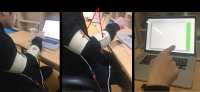
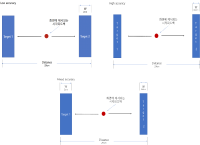
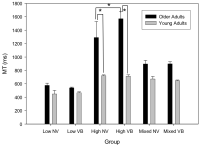
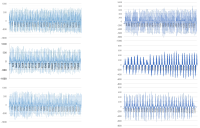
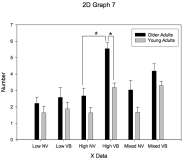
Purpose The present study was to investigate to extent that effects of sensory information distortion by muscle vibration on continuous limb movement in aging and accuracy constraint. Methods Young adult group (n=11) and older adult group (n=11) were divided. All participant were instructed to perform repetitive aiming movement to specified targets under three-accuracy constraints (i.e., low, high, and mixed accuracy constraints) in the vibration and no-vibration conditions. Kinematic data was collected by movement time and movement error frequence. Results The results showed that compared with young adult, older adult increased movement time when accuracy constraint was high under vibration condition. Older adult also was a high degree of movement errors than young adults when accuracy constraint was high under vibration condition. Conclusion The muscle vibration stimulation may influence considerably on the continuous limb movement probably due to degeneration in sensory information processing by aging.

This study aimed to analyze the patterns of service return and the 3rd stroke in relation to the winning and losing points in Badminton men's doubles matches. Especially the comparison of the patterns between rally point and service server game systems was made. Video records of 12 top elite teams were analyzed. As a result, there were significant differences in the total stroke patterns between the rally point system and the server game, and there was a higher offensive stroke tendency. After classification of situations with ‘after the service trial’ and ‘after the service return’, there were high number of winning ratio and offensive stroke in the after the service situations. There were no significant difference in the winning/losing points and winning ratio when the types of 3rd shot attempts were analyzed. I case of the win and lose in service return, there was a significant difference in the server game while not in the rally point system. Offensive stroke ratio in the server’s return categories and the service return strokes’ categories, and was no difference in shots after the return of service in the server team. From the investigation of offensive stroke ratio and winning ratio, there was a high ratio in the rally point system game but no difference in the server game. When aggressive service return took place, rally point system had higher winning ratio, but the server game system did not display such characteristic. Based on these results, recommendations of service anticipation and aggressive plays for Korean Men's doubles game have been suggested.
