PURPOSE This study both validated the Characteristics of Resilience in Sports Teams Inventory (CREST) scale for use in Korean sports and analyzed the impact of team resilience on teamwork and performance. METHODS The study surveyed 462 elite football players by using the CREST scale to measure team resilience in Korean sports. Data were analyzed using descriptive statistics, exploratory factor analysis (EFA), reliability analysis, correlation analysis, multiple regression analysis, and confirmatory factor analysis (CFA). RESULTS First, results confirmed that the CREST scale’s two main factors—resilient characteristics and vulnerabilities under pressure—can be meaningfully applied in the Korean context. Second, resilient characteristics showed positive correlation with life skills, whereas vulnerabilities under pressure showed negative correlation. Third, resilient characteristics positively predicted life skills, whereas vulnerabilities under pressure negatively affected life skills. CONCLUSIONS The CREST scale was found reliable and valid in the Korean sports context, demonstrating that team resilience significantly impacts life skills. Thus, the study contributes to evaluation of resilience in Korean sports teams and provides strategicinsights to improve team performance.
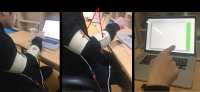
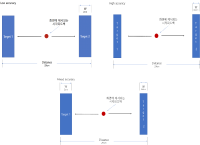
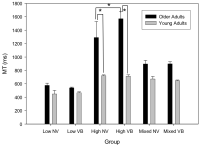
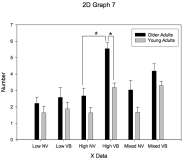
Purpose The present study was to investigate to extent that effects of sensory information distortion by muscle vibration on continuous limb movement in aging and accuracy constraint. Methods Young adult group (n=11) and older adult group (n=11) were divided. All participant were instructed to perform repetitive aiming movement to specified targets under three-accuracy constraints (i.e., low, high, and mixed accuracy constraints) in the vibration and no-vibration conditions. Kinematic data was collected by movement time and movement error frequence. Results The results showed that compared with young adult, older adult increased movement time when accuracy constraint was high under vibration condition. Older adult also was a high degree of movement errors than young adults when accuracy constraint was high under vibration condition. Conclusion The muscle vibration stimulation may influence considerably on the continuous limb movement probably due to degeneration in sensory information processing by aging.
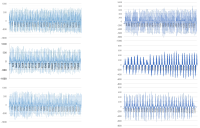
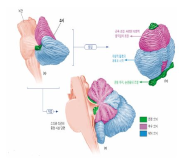
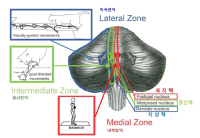
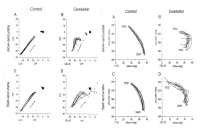
The cerebellum is one of the major parts of the brain involved in the motor control including motor coordination, muscle tone, balance, and the learning of motor skills. The purpose of this review paper was to explore of pathophysiology, anatomical function and neurophysiological mechanism for cerebellum. For this, we sought to examine of previous study related cerebellar disease. Specifically, this paper suggested that motor deficiency of limb movements, coordination, gait/posture balance, adaptation of during movement execution through information proprioception or kinaesthesia, and motor planning and programming of cerebellar patients. We expect that this review will be able to offer the useful information to research. For example, movement scientists will provide an academic information about cerebellar ataxia. Patients and their families will provide relevant information to the daily life (e.g., management and rehabilitation exercise).



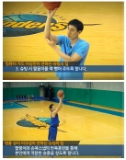
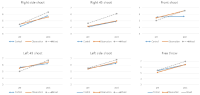
Purpose In general, motor imagery and action observation have been distinguished from each other. Recently, several studies demonstrated that combined approach to motor imagery and action observation can be more effective in motor learning. The present study examined the effects of observation learning combined motor imagery and action observation during acquisition basketball shooting skills. Methods We divided with control group, action observation group and observation learning group combined mental image and action observation in the three middle school. Action observation group provided the action observation program, and observation learning group was performed observation learning combined mental image and action observation training. All groups were perform basic basketball skills. Experimental intervention was performed for 10 weeks, and data analysis was performed 3 groups × 2 time repeated ANOVA. Results The results indicated that all group were improve after intervention, and subjects who participated in combined mental image and action observation was significant in the interaction effect on the front shoot. Moreover, the interaction effect on the motor imagery ability was significant. Conclusions These findings suggest that the use of observation learning combined mental image and action observation strategy potentially optimizes motor skills performance and motor image ability by incorporating motor imagery, especially when observing movements with intent to imitate.
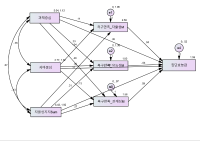
In sport context, the motivational climate created by significant others (e.g., coachs and peers) has been influences on the athletic-student's motivation, engagement, performance, and skill development. Collective efficacy is important for team performance because it influences a group's task choice, effort expenditure, persistence in the face of failure, and resistance to discouragement. This study was to examine the influence of peer motivational climate (i.e., task-involving and ego-involving motivational climate) and coach autonomous support for basic psychological need satisfaction and collective efficacy. In the study, participants were 289 athletic-students' of team sports. In the study then, questionnaire was assessed using by the correlation and path analysis. The results showed that task-involving motivational climate significantly predicted of collective efficacy, while ego-involving motivational climate were negatively predict to the collective efficacy. The results suggest the importance of considering peer influence in addition to coach influence when examining motivational climate in team sport.
PURPOSE This study aimed to examine the mediating effect of psychological needs in the relationship between multiple coaching styles and teamwork among college football players. METHODS This cross-sectional study involved 526 elite football players. Descriptive statistics, reliability analysis, confirmatory factor analysis, correlation analysis, path analysis, and macroprocess were performed using statistical software to test the mediation effects of the data collected. RESULTS The findings suggested that autonomy-supportive and structure coaching styles positively correlated with and impacted psychological needs satisfaction and teamwork. Conversely, control and chaos coaching styles negatively correlated with and impacted psychological needs satisfaction and teamwork. In addition, autonomysupportive and structure coaching styles negatively correlated with and impacted psychological need frustration, while control and chaos styles positively correlated with and impacted psychological needs frustration. Furthermore, psychological needs satisfaction and frustration were found to partially mediate the relationships between autonomy support and teamwork, structure and teamwork, control styles and teamwork, and chaos styles and teamwork. CONCLUSIONS Autonomysupportive and structure coaching styles positively influenced teamwork by satisfying psychological needs. In contrast, control and chaos coaching styles negatively impacted teamwork by contributing to psychological needs frustration.
