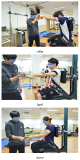
The purpose of this study was to explore and confirm Kumi-kata related factors of muscle strength by performance level in Korea elite female judoists. In order to achieve this purpose, 14 elite female judoists participated to this study. The subjects were divided to two groups (World Class Group and Non-World Class Group) according to their world ranking level(by ranked 30th). The analysis factors were repeated grip strength, Kumi-kata specific pulling strength and isokinetic strength of trunk joint. The results were as follows: Firstly, World Class Group had significantly higher repeated grip strength as compared to non-world class group (p<.001). Secondly, World Class Group had significantly higher specific Kumi-kata pulling strength as compare to non-world class group (p<.05). Finally, The differences between the two groups for isokinetic strength of trunk joint were non-significant. The results of this study indicates that a strong relationship exist between Kumi-kata related specific muscle strength and performance level in korea elite female judoists.
PURPOSE This study aimed to investigate the effects of accelerated rehabilitation exercise on physical fitness, lower extremity isometric strength, and blood variables in older adult women diagnosed with degenerative osteoarthritis. METHODS A total of 29 older adult women diagnosed with degenerative osteoarthritis residing in G city participated in the study, and 19 participants, excluding dropouts, took part in the experiment. They underwent exercise twice a week for 60 minutes per session over a period of 12 weeks. Pre- and post-experiment, the older adult fitness assessment (SFT), lower extremity isometric strength, and blood variables were measured. Data analysis was performed using SPSS 25.0, and paired sample t-tests were conducted to examine the effects before and after exercise. RESULTS The study results showed significant differences in body mass index (BMI) before and after exercise (p<0.05), and the older adult fitness assessment (SFT) showed significant differences in all items (p<0.01). Lower extremity isometric strength showed significant differences in absolute (Nm) and relative (%BW) values of 20° right flexion muscle (p<0.01). In terms of blood variables, significant differences were observed in creatine and ESR before and after exercise (p<0.01). CONCLUSIONS This study’s results suggest that regular physical activity and rehabilitation exercise programs can positively impact the muscular strength, cardiovascular endurance, exercise function, and blood composition of older adult women diagnosed with degenerative osteoarthritis. It is indicated that conducting future research, including periodic exercise programs, could be beneficial in promoting sustained exercise participation.
