
Purpose The purpose of this study was to investigate the effects of 3 weeks of fencing specific training on physical fitness in elite fencers. Methods Forty eight elite fencers participated in this program (Male= 24, Female= 24). Training program consists of dynamic stretching, step and agility training, and it was conducted with the general fencing practice during 3 weeks. Body composition and physical fitness (muscle strength/power, agility, anaerobic power and flexibility) were measured before and after training. Data were analyzed using IBM SPSS Statistics ver. 23.0 (IBM Co., Armonk, NY, USA). Paired t-test (pre vs. post) was used for comparison between groups. Results Muscle mass and body fat(%) were significantly changed after training in male group. Agility was significantly improved in change-step jump and reaction time after training both in male and female group. In Anaerobic power, peak power (relative power, absolute power) was significantly increased after training in female group. Flexibility was also significantly improved after training in left ankle ROM of female group. Conclusion Application of fencing specific training program focused on fencing movement seems to be effective on agility in both groups, muscle mass and body fat(%) in male group, and anaerobic power and flexibility in female group.



The purpose of this study was to examine the relationship of obesity index, fitness and cardiovascular risk index in middle and high school students. Obesity index, fitness score and cardiovascular risk index were measured from 1,044 middle and high school students. The results of relation between obesity index and fitness showed that the higher obesity index had significantly lower fitness score for both boys and girls (boys: p<0.001, girl: p<0.05) The results of relation between obesity index and cardiovascular risk index indicated that the higher obesity index had significantly higher cardiovascular risk index for both boys and girls (boys: p<0.001, girl: p<0.001). Moreover, The lower fitness index showed significantly higher cardiovascular risk index regardless of gender in middle school students (boys: p<0.001, girl: p<0.01). Therefore, the results of this study indicated that obese adolescents had the lower fitness level and high possibility of cardiovascular risk.
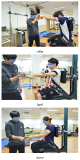
The purpose of this study was to explore and confirm Kumi-kata related factors of muscle strength by performance level in Korea elite female judoists. In order to achieve this purpose, 14 elite female judoists participated to this study. The subjects were divided to two groups (World Class Group and Non-World Class Group) according to their world ranking level(by ranked 30th). The analysis factors were repeated grip strength, Kumi-kata specific pulling strength and isokinetic strength of trunk joint. The results were as follows: Firstly, World Class Group had significantly higher repeated grip strength as compared to non-world class group (p<.001). Secondly, World Class Group had significantly higher specific Kumi-kata pulling strength as compare to non-world class group (p<.05). Finally, The differences between the two groups for isokinetic strength of trunk joint were non-significant. The results of this study indicates that a strong relationship exist between Kumi-kata related specific muscle strength and performance level in korea elite female judoists.
PURPOSE This study aimed to examine the effect of acute tart cherry juice intake on recovery after intermittent exercise in female field hockey athletes. METHODS Sixteen university female field hockey athletes were studied for a total of 3 days. The cohort was divided into 2 groups, placebo group (n=8, PLA) and the tart cherry juice group (n=8, TCJ), Each supplement was consumed 5 times over 48 hours. On the first day of the study, venous blood was collected before the test, and physical fitness variables (20m sprint, 5-0-5 agility, and Countermovement jump) were performed twice before and after the Yo-Yo Intermediate recovery test 1 to determine the degree of muscle damage and recovery of physical fitness factors. After all tests on Day 1, supplements (PLA, TCJ) were taken. After 24 hours, venous blood collection was performed, and after 48 hours, venous blood collection and physical element variables were measured to verify the effectiveness of tart cherry juice. RESULTS In the TCJ group, a significant effect was found over time in the 5-0-5 ability among the fitness variable items (p<.001) In Countermovement jump (CMJ), there was a significant effect over group and time (p<.001). Second, significant effects over group and time were shown in Interlukin-6 (IL-6) among variable items related to muscle damage and inflammation through venous blood collection (p<.05) and LDH (p<.001), and CK (p<.01) showed a tendency to decrease with time. CONCLUSIONS The results of this study suggest that acute tart cherry juice intake after intermittent exercise tends to reduce muscle damage and inflammation-related variables in female field hockey players, which could help them recover quickly, especially after hectic game schedules.
