PURPOSE This study aimed to explore the imagery strategies of elite Taekwondo demonstrators during the match preparation period. METHODS The participants were 30 elite Taekwondo demonstration athletes enrolled in the Korea University Taekwondo Federation. Data were collected using open-ended questionnaires and in-depth interviews. The study referred to the qualitative approach for data collection proposed by Gould et al. (1992). Inductive content analysis of an imagery was conducted based on the imagery classification frameworks outlined by Paivio (1985) and Suinn (1996). Three experts independently reviewed and categorized raw data and imagery cases. RESULTS The findings revealed that elite Taekwondo demonstration athletes typically utilized the types of imagery described by Paivio (1985) and Suinn (1996). Among the factors, imagery of skills appeared with the highest frequency followed by imageries of competition, anxiety regulation, mental skills, and motivation. Furthermore, 2 weeks and 1 day prior to a competition, the elite Taekwondo demonstrators mainly used imageries of skills and competition, respectively. On the day, they use imageries of anxiety regulation and mental skills. CONCLUSIONS After the competition, they mainly used imagery of skills. In summary, the elite Taekwondo demonstrators employed personalized imagery strategies for enhancing training effectiveness and optimizing performance during competition. These strategies varied according to specific phases or contexts of the competition
Purpose Recently, studies associated with the negative physical and mental effects of athletes’ pain have received extensive attention. This study confirmed the validity of the pain catastrophizing scale (PCS) developed in clinical settings and is widely used in the sports field, and examined their relationship between the perceived stress levels and fear of pain. Methods The pain catastrophizing consisted of 13 items of three factors which are Helplessness (6 items), Rumination(4 items), Magnification(3 items). To verify the validity, PSC was revised by following the recommended revision guideline procedures. To test the validation of pain catastrophizing, 206 adult athletes were recruited including the collegiate, professional, and national levels. The participants were instructed to complete questionnaires to assess the level of pain catastrophizing, perceived stress, and fear of pain. Confirmatory factor analysis (CFA) to test the fit of measurement model was adopted to examine three higher-order three-factor measurement models. Results In results, confirmatory factor analysis indicated that the Korean version of the pain catastrophizing scale demonstrated a good model fit of measurement when removing one item with a significantly lower factor load as well as the reliability of the scale was reasonable. The pain catastrophizing had a meaningful positive direct relation with perceived stress level and fear of severe pain. In addition, construct validity and predictive validity of PCS showed valid. Conclusions Based on the results of this study, the Korean sports pain catastrophizing scale can be used to measure the subjective pain intensity of Korean athletes. In addition, it is expected to provide fundamental information for evaluating athletes’ post-injury rehabilitation processes.
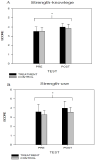
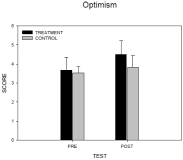
Purpose The goal of this study was to investigate the application effect of strength-based positive psychology intervention to elite archers. Methods Total of 20 elite archers participated in this study. Treatment group consisted of 10 elite archers participated in the strength-based positive psychology intervention for 8 weeks. Each individual responded the questionnaires in pre- and post-treatment sessions. Data were analyzed by repeated-measure ANOVA. Furthermore, archers participated in the program responded to in-depth interviews. Results According to the results, participants in strength-based positive psychology intervention showed that significantly increased strength knowledge, strength use, and optimism in the post–treatment compared to the pre-treatment session while control group did not show significant changes. In addition, archers perceived that there were positive effect on thinking ·coping and their self-confidence and self-esteem enhanced after participating the program. Conclusion The results of this study suggested that strength-based positive psychology intervention has positive impact on athlete’s wellbeing and perception of individuals strength and can be applicable to different sports field.
This study aimed to explore elite taekwondo competitors’ imagery strategies . The study participants were 10 elite taekwondo athletes, who worked for S business team. Data were collected through open-ended questionnaires and in-depth interviews. The data were collected based on Gould et al. (1992)’s proposed qualitative research method. The inductive content analysis of the imagery was conducted following the imagery type of Paivio (1985) and Suinn (1996). The law data and case of imagery were separated by three specialists. The results were as follows. First, elite taekwondo competitors generally used the types of imagery proposed by Paivio (1985) and Suinn (1996). In particular, imagery of anxiety regulation appeared with the highest frequency among factors and ordered imagery of motivation, imagery of skills, imagery of mental skills, and imagery of competition. Second, elite taekwondo competitors mainly used imagery of skills before two weeks for competition. They mainly used imagery of anxiety regulation the day before a competition. They used imagery of anxiety regulation and imagery of motivation on the day of a competition. They used imagery of motivation after the competition. In sum, elite taekwondo competitors used individual strategies in terms of imagery in order to ensure effective training and peak performance in competition. The strategy of imagery was applied differently based on the juncture of the competition.
