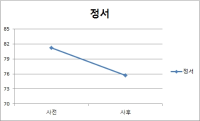
Purpose The purpose of this study was to examine the effects of positive psychological intervention program on mood state, self-esteem and happiness of university student athletes. Methods The participants were 10 university student athletes. The measures utilized the Profile of Mood States(POMS), self-esteem inventory and happiness questionnaire. Positive psychological intervention program was developed by previous studies, participants interview and expert discussion. The positive psychological intervention program were managing life, self-esteem enhancing program, being optimistic, positive emotion program, gratitude, forgiveness, communication skill training program, habit/routine making program and action strategy development. The data were analyzed by SPSS 20.0. Results These results were as followings. Firstly, positive psychological intervention program decreased total mood disturbance(TMD) of university student athlete. Secondly, positive psychological intervention program improved self-esteem of university student athletes. Lastly, positive psychological intervention program increased happiness level of university student athletes. Conclusion Training and education system should be established in which a positive psychological intervention program can be applied to university student athletes.
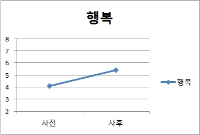
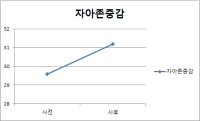
The purpose of this study was to examine the effects of happiness improvement program on psychological variables which were happiness feeling, self-esteem, interpersonal relationship, internal-external locus of control, stress, coping, perceived performance and physiological variables such as cortisol and serotonin of collegiate badminton players. The participants consisted of 10 collegiate badminton players. Happiness improvement program for collegiate badminton players was developed by previous literatures, in-depth-interview, psychological test data, and consultation of happiness improvement experts. The happiness improvement program consisted of 12 intervention program: orientation, rapport development and the understanding happiness, self-esteem enhancement techniques, interpersonal relationship strategies, stress and coping management, peak performance methods, and action plan of happiness improvement program. Each program was applied to participants in about 90-120 minute a session(2-3 times session a week). The instruments of this study were made up of three broad categories: (a) psychological data, b) physiological data, and (c) qualitative data. Firstly, happiness improvement program significantly increased happiness feeling, self-esteem, internal-external locus of control, interpersonal relationship capability, coping skills of collegiate badminton players. Secondly, happiness improvement program significantly decreased stress of collegiate badminton players. Thirdly, participants positively perceived the effects of happiness improvement program on psycho-physiological variables. The limitations of this study and future implications were discussed.
PURPOSE This study aimed to develop a positive psychological intervention program for a college ice hockey team and test its effects based on application to the team. METHODS The demands of 78 college ice hockey players were asked through open questionnaires. Collected results underwent integrated analysis to develop the desired program through the participants who were also observers of the team. The objectives of the program were established, and an appropriate program was developed based on the analyzed data, expert opinion, and precedent research. The developed program was applied to 26 players of a college ice hockey team to verify its effects. Tasks included writing experience reports and in-depth interviews. The Happiness Measures 1, Strength Knowledge, and Team Interaction Questionnaires were also administered. Collected qualitative data were categorized to follow inductive analysis procedures, while paired t-tests were performed for quantitative data using SPSS 25.0. RESULTS To improve the application of the program in real situations and maintain credibility and validity, the program was developed based on analyses of individual and team demands, methods of the participant as an observer, expert opinion, and other considerations. Statistically meaningful differences in positive psychological mind, happiness, recognition and utilization of strengths, team interactions, team cohesion, and so on were found using paired t-tests comparing data before and after the developed positive psychological intervention program. CONCLUSIONS Providing opportunities to recognize individual and team strengths and have valuable experiences for each player could enhance interactions between teammates and create a favorable team environment.
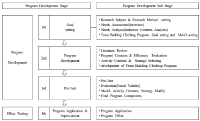
The purpose of this study was to examine the effects of team building climbing program on happiness, social development, self-esteem, stress, and depression of the youth. The participants consisted of 27 university students. The self-report instruments were compose of happiness scale, social development inventory, self-esteem scale, stress inventory, and depression scale. Qualitative data were participants’ perception about the effects of team building climbing program. Firstly, team building climbing program had positive effect on happiness of the youth, while climbing program had not significant effect on happiness of the youth. Secondly, both team building climbing program and climbing program had positive effect on social development of the youth, while team building climbing program was significant higher than climbing program in post-time. Thirdly, team building climbing program had positive effect on stress of the youth, while climbing program had not significant effect on stress of the youth. Fourthly, both team building climbing program and climbing program had positive effect on self esteem of the youth, while there were not significant between team building climbing program and climbing program in self esteem of post-time. Fifthly, both team building climbing program and climbing program had positive effect on depression of the youth, while there were not significant between team building climbing program and climbing program in depression of post-time. Limitations of this study and future implications were discussed.
The purpose of this study was to describe psychological changes and variables of injured elite athletes during sport injury rehabilitation. 5 injured elite athletes were selected as participants, and open-ended questionnaires, participant observation, and in-depth interview were used for collecting data. Results from the data were analyzed through transcription, coding, and categorization with inductive method. To validate the results of this study, triangulation, in-depth description, member checks, and peer debriefing were used, and findings of this study were as follow. The participants showed negative psychological state such as fear of return to play and anxiety during the initial rehabilitation program, but their psychological state was changed positively such as recovery of confidence and desire of return to play at the end of program. However, the specific psychological changes of each participant showed several differences according to participant's surrounding environment and situation during the rehabilitation program. All findings have important implications for implementing and developing rehabilitation program, so needs to be investigated further.
PURPOSE This study aimed to develop a team building program for a middle school soccer team in order to verify its effects. METHODS A total of 50 middle school soccer players participated in the needs analysis, and 10 middle school soccer players participated the preliminary program. In addition, a total of 37 ‘S’ middle school soccer players and 2 coaches participated the final team building program to identify its effects. The team building program was developed through the following sequence: program goal setting, organization of program activities, and the pretest. Three types of questionnaires and a self-report were utilized to verify the effects of the team building program. RESULTS The team building program was developed based on interpersonal relationships, goal setting, and communication. The level of team cohesion, team communication, and coach-athletes interaction significantly increased through this program. Furthermore, the effects of stress relief and self-improvement were revealed through the self-report. CONCLUSIONS The team building program was determined to be effective and has various benefits. It is expected to contribute to the growth of middle school soccer players if coaches actively participate in the program with their athletes.
