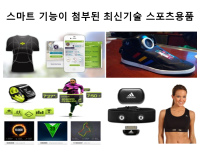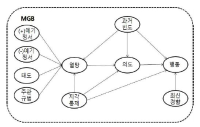
The current study aimed to examine behavioral intentions of online sports products consumers using the Extended Goal-directed Behavior Model. The questionnaires were distributed to consumers who had experience of purchasing sports products online. Data collected from 282 respondents were analyzed mainly using structural equation modeling. The results were as follows: First, attitude and subjective norm had a positive effect on desire. Second, perceived behavior control did not affect desire but had a positive effect on behavior intention. Third, positive anticipated emotions had a positive effect on desire and negative anticipated emotions had a negative effect on desire. Fourth, prior knowledge did not affect desire and behavior intention. Fifth, frequency of past purchase behavior did not affect desire, but had a positive effect on behavior intention. Lastly, desire had a positive effect on behavior intention.


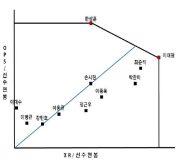
This paper analyze Korean baseball player's efficiency based on entire team and each team by using DEA (Data Envelopment Analysis) and use this efficiency to discuss effective way of recruiting players. Therefore, the purpose of this study was to evaluate each professional baseball team management efficiency through Data Envelopment Analysis. Player who were qualified free agent salary for the input variable and OPS and XR for output variable were used respectively then data were analyzed using Frontier Analyst 4.0. Also the recruiting factors of FA baseball player were confirmed by five baseball experts. we categorize the five factors of recruiting: age, durability, skill of improvement or decline, steady record, necessary position. The results were as follows. First, Han Sang-Hun and Lee Dae-Hyeong recorded the most efficient management among all professional baseball player. On the other hand, Choi showed inefficient management, followed by Park Han-Yi, Son Si-Heon, Lee Jong-wook, Jeong Keun-Woo, Lee Yong-Kyu, Lee Dae-Soo, Kang Min-Ho, Lee Byeong-Kyu.

The purpose of this study was to analyze the effects of employee’s job burnout on turnover intention and to draw average effect size(weighted averaged fisher’s z) in sports industry. After a lot of dissertations and journal articles were extracted by searching web sites, 11 papers were finally selected through thorough verification procedure. Specific analyses were conducted via MIX 2.0(Meta-analysis with Interactive eXplanations). The results were as follows. First of all, the weighted average correlation coefficient of between depersonalization and turnover intention was .326. Secondly, the weighted average correlation coefficient of between reduced personal accomplishment and turnover intention was .192. Lastly, the weighted average correlation coefficient of between emotional exhaustion and turnover intention was .326.

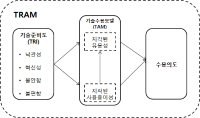
The current study was aimed to examine acceptance intention of sports Wearable products using the Technology Readiness and Acceptance Model. Data were drawn from 271 consumers in their 20s and 30s. Data were analyzed through frequency analysis, exploratory factor analysis, confirmatory factor analysis, reliability analysis, correlation analysis, simple regression analysis and multiple regression analysis using SPSS 20.0 and AMOS 20.0 program. The results were as follows: First, optimism had a positive effect on perceived usefulness but innovativeness, discomfort and insecurity did not affect perceived usefulness. Second, optimism and innovativeness had a positive effect on perceived ease of use and discomfort had a negative effect on perceived ease of use but insecurity did not affect perceived ease of use. Third, perceived ease of use had a positive effect on perceived usefulness. Fourth, perceived usefulness and perceived ease of use had a positive effect on acceptance intention.