The purpose of this study was to examine psychological capital acquisition through Asian Games Participation. 17 of national women football players were completed Psychological Capitals Questionnair. The psychological capital consists of optimism, psychological skills, self-management, collective efficacy, and performance perception was investigated after the team call-ups and before the team-release. The data was analyzed by paired t-test. As results, Korean women football players’ collective efficient and performance perception showed a statistical significance at the beginning of the team call-ups but optimism, psychological skills, and self-direction did not show statistic significances. The team-harmony, interpersonal-management, team-power, sufficient training, trust in coach, efficient communication, and psychological football factors, which were subfactor of football players’ psychological capital, showed statistical significances. However, confidence, concentration, goal-setting, imagery, willpower, anxiety-control, mental-management, life-management, training-management, innate-behavior management, physical-management, football skills, mediative skills, and football intelligence factors did not have statistic significances. These results demonstrate that effects of mega sporting events-like experiences and psychological factors’ variability and inflexibility according to weather changes should be considered when it comes to discussion of psychological factors regarding players’ performance. It is expected that this study would be a fundamental resource for understanding of psychological influences through participations in mega sporting events and discussions about further psychological interventions for teams with environmental consideration as well as methodological developments which could measure effects of the psychological interventions.
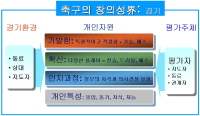
The purpose of this study was to explore a framework of understanding football performance. Researcher review was conducted to organize perspectives for football performance and drew implications as well as drift of football performance based on intelligence approach. Discussions for intelligence had been proceeded in concepts of learning ability, multiple intelligence, successful intelligence, and moral intelligence. Discussions of football performance approaches fitness, skill, and strategies in traditional intelligence aspects. The multiple intelligence perception discusses perspective, mentality, body, and analysis. The successful intelligence perspective deals with creativity, practical intelligence, and football talents. However, specific discussions for moral intelligence have not been progressed yet. FIFA’s social responsibility project and UEFA’s RESPECT campaign reflect that the discussions of football performance develops in a way of the moral intelligence. In European football, issues regarding value, such as RESPECT and against Racism, are currently emerging. Considering the change in the European football, the global football leagues will share the issues related to value in the near future. Given the fact that discussion for intelligence had been proceeded learning ability, multiple intelligence, successful intelligence, and moral intelligence, the moral intelligence will be a main concern in the further football performance discussion. The moral intelligence will be incorporated into football performance evaluations soon. Furthermore, teams and players will strive to place efforts in order for pursuing value and reputation as factors of performance.
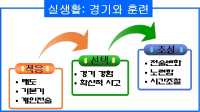



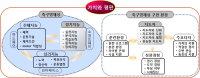

Values, such as development and social responsibilities, are added on victory-oriented Korean sport. Those change of values are along with discussions regarding improvement of players’ training environment, however, discussions on improvement of players’ training environment so far rather focused on ideological concepts, such as players’ holistic human development and human rights, therefore, there was a lack of discussion on practical training methods or teaching methods. This study focused on mental coaching as a specific method for improvement of players’ training environment. Mental coaching provides players with performance enhancement, personal growth, and self-actualization utilizing mental training, consulting, and mentoring in their training processes. This study examined a possibility of introduction of mental coaching as a training camp method for players by creating a training camp reflected on mental coaching perspectives and verifying the program effects of application. First of all, a mental coaching training camp was created through consultations with mental coaches, supervisors, and coaches. Goals of the mental coaching training camp were development of competition-routines, establishment of competition-circumstance coping strategies, comprehension of elite-players’ psychological resources, goal-setting, and motivation and the program consist of badminton competitions, mental education, a special lecture by an Olympic gold medalist, tracking, and sharing. The mental coaching training camp proceeded with middle and highschool badminton players and 31 coaches during three-days and four-nights. As results, the training camp was effective for players’ performance enhancement, personal growth, and self-actualization and team coaches realized a necessity of improvement in terms of their training and teaching behaviors. In other words, mental coaching training camp played a role as a source of long-term change as well as short-term results, thus, this study verified that the mental coaching can be introduced as a training camp method. It is anticipated that this study can provide sport fields and academic sport areas with an opportunity to consider both training contents and methods when it comes to discussion players’ training environment development.