
Purpose The purpose of this study was to investigate differences among perfectionism, anxiety, and aggression in contact and non-contact sports and verify the structural relationship model of perfectionism, anxiety, and aggression in the field of sports. Methods Male college athletes (N=299) participated in the study and perfectionism, anxiety, and aggression questionnaires were utilized after their verification of validity and reliability were conducted. The descriptive statistical analysis, the multivariate analysis, the correlation analysis, the structural equation analysis, and the multi-group analysis were conducted. Results The results are as follows: First, the level of perfectionism, anxiety, and aggression were significantly different between contact and non-contact sports (F=4.316, p<.001). Additionally, subfactors of aggression such as hostility, physical aggression, and verbal aggression factors in contact sports showed a higher average than non-contact sports. Second, perfectionism positively affected anxiety (t=6.936, p<.001) and anxiety positively affected aggression (t=3.380, p<.001). Moreover, the complete mediation effect of anxiety was found in the path from perfectionism to aggression (β=.152, p<.01). Finally, we compared path coefficients between contact and non-contact sports. As a result, positive causal relationships was indicated in the path from anxiety to aggression (β=.511, p<.001) in contact sports. However, it was not discovered in non-contact sports (β=.149, p>.05). Conclusions In conclusion, perfectionism causes anxiety and anxiety is a mediator leading to aggression in sports. Such effect is more predictable and observable in contact sports in which aggression is more favorable and encouraged. Implications and suggestions for future research are discussed.
Purpose The purpose of this study was to provide basic data for spectators group of Taekwondo performance efficient marketing activities through market segmentation from characteristics, perceived values of the Taekwondo performance spectators. Methods The subjects of this research were Kukkiwon, Taekwondowon and 1,021 questionnaires were finally used for the analysis. The results of this research were drawn by frequency analysis, CFA(confirmatory factor analysis), reliability analysis, cluster analysis (hierarchical and K-means), cross-tabulation analysis and One-way ANOVA were used for data processing through SPSS 22.0 and AMOS 22.0. Results As results of the analysis, It was subdivided into three clusters (such as group of male college students, man group of low perceived value and high degreed women group of low pragmatism). Conclusions The significant differences of the characteristics and perceived value appeared from each cluster. Cluster 1: A group of male college students, and the highest perceived value for Taekwondo performance. Cluster 2: A group of male, and a low perceived value for Taekwondo performance. Cluster 3: A group of high degreed women and a low pragmatism of perceived value. Therefore, a practical marketing strategy was needed for each groups.
Purpose The purpose of this study is to explore the trend of K league exodus and its factors. Methods Qualitative case study was conducted by selecting 9 footballers and 7 their agents as the participants who have migrated from South Korea to China and the Middle East. Results The factors of migration were categorized as three push and pull factors such as economy (individual income and club's profit), policy (employment for foreign and military service) and environment (markets in home and abroad). To understand sport migration in the economic factor, there should be the environmental condition (overseas market) to pay high salaries and transfer fee to individuals and their clubs, and at the same time, the domestic market should be relatively poor environment. In addition, this study overcame limitations of economic and environmental factors by classifying Asian quota system and military service into political factor, and found the specificity (local context) of K league. Conclusions In conclusion, this study can be regarded as the first empirical work on sport labor migration in Korea and valuable as basic data of follow-up studies.
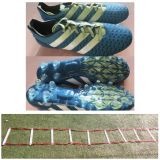
Purpose The purpose of this study was to investigate the lower extremity muscles activity during forward side step by soccer field ground types. Methods Fifteen elite high school soccer players participated in this study. Muscle activation patterns were recorded at 2000 Hz during forward side step task. Surface EMG of the tibialis anterior(TA), soleus(SOL), medial gastrocnemius(MG), lateral gastrocnemius(LG), peroneus brevis(PB) muscle was recorded, and the root mean square of the EMG was normalized, using a maximum voluntary isometric contraction(%MVIC). One-way repeated ANOVA was used for comparison among three soccer field ground types(natural grass, artificial turf, hard ground). Results Artificial turf displayed greater soleus and peroneus brevis activities compare to natural grass during forward side step task. Conclusions The relationship between increased soleus and peroneus brevis activation and greater incidence of injury in artificial turf versus natural grass requires further study. Soccer players routinely training on artificial turf for prolonged periods should be carefully monitored.

The purpose of this study was to conduct an in-depth exploration of Korean national badminton players’ psychological momentum strategies. Data were collected using an open-ended questionnaire and group interviews of 66 badminton players, including 40 members of the 2018 Korean national badminton team and 22 college and semi-pro badminton players who each had badminton careers of 10 or more years and were registered in the Badminton Korea Association. The data were analyzed using inductive content analysis and the deductive process based on the inductively categorized results. The results are as follows. First, regarding strategies for maintaining positive momentum, 188 raw data were collected and classified into three category (keeping pace, dominating the play, and psychological facilitation) and 10 sub-category (including speedy resumption of the game, attacking weak points, and fighting shout). The results suggest that badminton players maintain positive momentum by using strategies to control the speed and tempo of the game at their preferred pace, implement special techniques, exploit their opponent’s weaknesses, and cheer or talk amongst themselves to motivate each other and communicate with their partners and coaches. Second, regarding strategies for overcoming negative momentum, 293 raw data points were collected and classified into three category (time outs, psychological reminders, and changes in plays) and 11 sub-category (including delaying the game, seeking social support, and play change). The data demonstrate that badminton players overcome negative momentum using strategies to intentionally delay the game and exchange equipment, focus on performance cues, and interact with their coaches and partners to change plays and prevent errors. It is hoped that these study findings will inform efforts to provide psychological support that is effective in increasing the odds of winning for the national badminton players in the Asian Games and the Olympic.
