PURPOSE The purpose of this study was to develop a non-face-to-face self-regulation training program for middle and high school student-athletes through the conduct of a group online video counseling session, as well as to verify the effectiveness of such a tool. METHODS Based on the models of Zimmerman(2000) and Han Si-wan (2008), the 12-session non-face-to-face self-regulation training program consisting of interactions involving cognitive, emotional, and behavioral factors was developed and used on a 16-member experimental group. Additionally, self-regulation and mental toughness questionnaires were given to each member before and after the program, and the results were compared with the results of a 17-member control group. Since a qualitative evaluation was conducted, recorded training contents were organized into a text file; after which, a step-by-step coding procedure was performed, and then meanings and themes were identified and categorized. RESULTS Quantitative analysis found that the volitional inhibition mode of the control group decreased significantly; this was in comparison to the increase in the self-regulation mode of the experimental group. In addition, among the seven sub-factors of the mental strength test of the experimental group, a significant increase was found in the post-test of self-belief, attention control, emotional regulation, resilience, and optimism factors. As a result of qualitative data analysis, they complained of difficulties in the early stages of participation, but gradually recognized their problems and searched for changes, showed changes in cognition, emotion, and behavior as they approached the end of the study period. CONCLUSIONS It can be said that the non-face-to-face self-regulation training program helped student athletes improve their school life and performance by driving positive cognitive, emotional, and behavioral changes.
Purpose The purpose of this study was to evaluate the moderate to vigorous physical activity(MVPA) and sedentary time measured by accelerometer. Furthermore, the level of physical activity and adherence rate of physical activity guideline(PAG) were compared with the self-reported questionnaire. Methods The MVPA, sedentary time, and adherence rate of PAG according to age and sex were examined to people who agreed to wear accelerometers among the participants of the 2014-2015 Korea National Health and Nutrition Examination Survey. To compare the relationship between accelerometer and self-reported questionnaire, Chi-squared test and Spearman correlation analysis were performed. Results The MVPA of the accelerometer-total(AT) was 40.6 minutes/day for men and 31.1 minutes/day for women. Sedentary time was 502.9 minutes/day for men and 498.9 minutes/day for women. The MVPA of accelerometer-bout(AB) estimates was 16.4 minutes/day for men and 14.2 minutes for women. On the other hand, the MVPA of the self-report was 95.8 minutes for men and 64.3 minutes for women, and the sedentary time was 471.2 minutes for men and 455.2 minutes for women. The adherence rate of PAG was 55.6% of the self-report, 56.1% of the AT, and 21.4% of the AB. The correlation between self-report and accelerometer was statistically significant(p < 0.01), but showed a weak correlation coefficient(rho=0.112-0.351). There was no association between AB and self-report(p < 0.01). The sensitivity and specificity of the self-report were 71.3% and 48.6%, respectively. The positive and negative predictive values of the self-report were 27.5% and 86.1%, respectively. Conclusions As a result of this study, self-reported physical activity level by questionnaire had more MVPA and less sedentary time than the accelerometer-determined physical activity. In addition, the adherence rate of the PAG differed from accelerometer and self-report. The difference was significantly increased when comparing AB with the self-report. Therefore, great care must be taken when interpreting accelerometer and self-report questionnaire. Further research will be needed on specific methods that can be used by complementing the two measurement tools.
PURPOSE This study examines factors surrounding the work environment of Korean professional baseball coaches and provides implications from practical and policy perspectives. METHODS Data were obtained from 14 experts consisting of baseball coaches, front office staff, professors, and a sports journalist using Delphi technique and analytic hierarchy process analysis from September to October 2024 and were analyzed using SPSS WIN 24.0 and MS Excel 2019. RESULTS First, this study ranked the main factors “performance evaluation and contracts,” “workload,” “organizational culture,” and “support” in order of importance. Second, “enhancing job stability” was observed as the key subfactor under the “performance evaluation and contracts” domain, while “improving the work atmosphere” was prioritized in the “workload” category. Under “organizational culture,” the “elimination of nepotism and school-tiebased inequality” was the most significant, while “increasing staff and strengthening cooperation” was prioritized in the “support” domain. Third, analysis of the weighted priorities highlighted “enhancing job stability,” “raising salaries,” “increasing transparency in performance evaluation criteria,” “improving the work atmosphere,” and “elimination of nepotism and school-tie-based inequality.” CONCLUSIONS This study provides meaningful empirical data for developing the KBO League and is expected to help improve the working environment for professional baseball coaches.
Purpose The purpose of this study was to examine the role of trust on sport fan behavior following the favored team’s loss. Methods Online survey modes were employed to collect the data. A total of 300 individuals participated in the study, of which 288 were valid and therefore analyzed. To test the hypotheses, structural equation modeling was conducted using Mplus 8. Results The findings are as follows. First, cognitive trust had a significant effect(+) on future viewing intention. Second, affective trust had a significant effect(+) on future viewing intention. Third, cognitive trust had a significant effect(-) on switching behavior. Fourth, affective trust had no significant effect on switching behavior. Fifth, team identification moderated the relationship between affective trust and switching behavior. Conclusions The results of this study suggest that sport fans’ trust affects fan behavior following a team’s loss. Therefore, professional sport teams should seek to establish strong affective trust and cognitive trust.
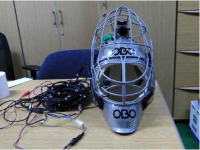
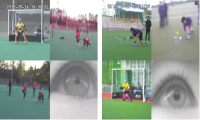
The purpose of this study is to establish the efficient defensive strategy from analyzing the goalkeeper’s gaze behavior and defensive motion in both field hokey penalty corner and penalty stroke. To achieve this goal, 3 national team goalkeepers’ gaze behavior and defensive motions were analyzed, as well as the player’s visual strategies from their interview contents. For the apparatus, multi-channel integrational system were used for analyzing goalkeeper’s reaction movement and personal visual strategies. The result is as follow: First of all, In the penalty stroke, goalkeepers were tended to focus on the bottom of the shooter’s hokey stick. Second, national hokey players had quicker anticipating saccadic movement. For this reason, their visual fixation locations were arrived in targets earlier than the hockey ball. Lastly, in the interview contents, they were reported to focus just on the ball from not disturbed by other various objects(body, hockey stick). However, they actually observed various body parts of shooters. These results imply that we need to develop an effective perceptual skill training in order to anticipate the shooting performance more accurately and rapidly. These types of perceptual and cognitive skill training should be conducted with information on knowing their specific visual cues in anticipating shooting direction.

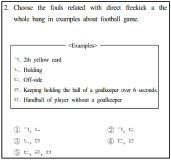
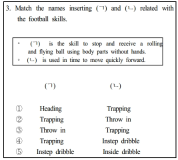
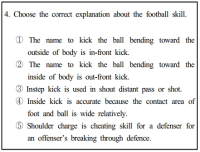
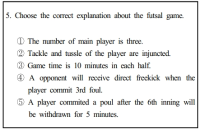
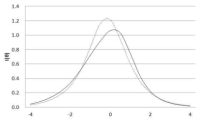
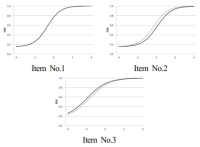
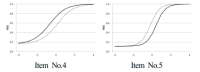
The purpose of this study was to analyze and confirm whether the items used in final paper and pencil test was determined to DIF when school sports clubs in each school operated by discriminatory curriculum in accordance with gender. Participants were 8th middle school students(male=135, female=141). They joined in school sports club every week from freshman to sophomore 1st semester. At that time, boys of them participated in soccer and basketball, and girls played dodge ball. They studied soccer unit at sophomore 1st semester, and had a final examination consisting of 5 soccer items. Using the data, differentially functioning item by the population difference between male and female were analysed quantitatively and qualitatively. The results showed that Mantel-Haenszel method(using classical test theory), comparison of item characteristic curve and likelihood ratio test(using IRT) determined item number 4 and 5 to differentially functioning item. Finally, item number 4 were identified differentially functioning item in favor of male students in intensive qualitative analyses. That item have low content validity and application-level of cognitive behavior classification. The result provides that application-level item can be functioning differentially to female students with little sports experience than male students in paper and pencil test of PE.
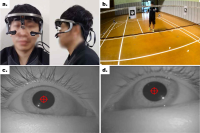
[Purpose] The purpose of this study was to examine the differences in visual search strategies between expert and novice badminton players while performing badminton serve. [Method] To this end, expert (more than 10 years experience) and novice (less than 6 months experience) badminton players performed 15 trials of two types of serve (i.e., short-serve and long-serve), in total 30 trials. All the participants’ eye movement was recorded during each trial, and mean fixation duration, fixation distribution, final fixation duration and location, and gaze entropy were analyzed. [Results] The results showed that there was no difference in mean fixation duration between expert and novice players. The analysis of mean fixation duration on each location showed that participants fixated more on the net while doing short serve whereas fixated more on the space when they did long serve. In particular, expert players fixated more on the space while doing long serve than novice players, and fixated more on the net and racquet for the short serve. However, novice players fixated more on the location of shuttle would be landed. The final fixation duration was not different between expert and novice players. Further, expert players showed higher gaze entropy than novice players. [Conclusion] The findings indicate that expert players fixated more on the net for the short serve, and the space for the long serve, and visual search strategies of experts were more varied than novice players.
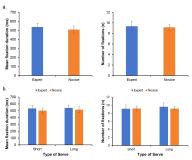
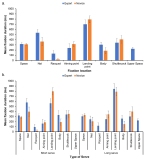

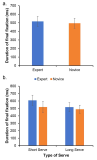
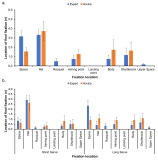
PURPOSE The main purpose of this study was to examine the difference in visual search strategies based on the skill level in success and failure cases in badminton short serves. METHODS To this end, six badminton experts (experience: more than 10 years) and six novices (less than 1 years) participated. The participants’ eye movement was recorded during each trial, and mean fixation duration, mean saccade amplitude, percentage of viewing time on each fixation location, final fixation duration, and gaze entropy were analyzed. RESULTS First, the mean fixation duration did not differ significantly, but the mean saccade amplitude increased when expert players failed to perform the serve successfully. Second, the percentage of viewing time on each location results showed that the overall viewing time was lower when the performance was unsuccessful, and the expert players fixated longer time viewing the net and space when they made a successful serve. Third, expert players showed longer QE than novice players when they made a successful serve. Finally, the gaze entropy results showed that expert players showed greater gaze entropy during successful performance, indicating that the gaze pattern was randomly distributed across trials. CONCLUSIONS When learning a badminton serve, we should fully recognize and explore the receiver’s location and external environment, and subsequently, before initiating serve movement, focus on the net or space between the receiver’s racquet and shoulders to make a more successful performance. In addition, we should make various patterns of the visual search strategy, rather than the fixed or consistent search strategy, to deceive receivers.
PURPOSE This study aimed to verify the differences in anticipated regret and gambling discontinuance intent based on the fear appeal type and source similarity in different types of horse-racing gamblers. METHODS Using convenience sampling, 172 responses were collected from horse-racing participants who bought horseracing tickets within the last 6 months. After eliminating 30 insincere responses, descriptive, correlation, reliability, and two-way multivariate covariance analyses were conducted using SPSS Ver. 26.0. RESULTS Anticipated regret and discontinuance intent were higher under fear appeal using social compared with financial risk. Compared to recreational gamblers, problem gamblers had higher anticipated regret and discontinuance intent under fear appeal using social compared with financial risk. There were no differential impacts of source similarity on anticipated regret and discontinuance intent in both types of gambler. CONCLUSIONS Practitioners in charge of conducting messaging campaign to prevent addiction to horse-racing gambling may cause problem gamblers to expect regret and quit gambling by delivering preventive messages with relatively unfamiliar risks such as social risks, rather than familiar risks such as financial ones.
Purpose The purpose of the study is to review the current trends of Korean research on sport volunteering. Methods For the research purpose, 74 KCI-listed articles published were investigated. Results The main topics of 60 articles were sport volunteering and the sub-topic or factor of the other 14 articles was sport volunteering. These articles were classified based on the publishing year, type of journal, academic area, research method, research topic, research sample, volunteer characteristics and volunteer area. Research on sport volunteering has been continuously conducted but the number of related publications has been increased since 2009. Sport volunteer research articles have been published in various sport related journals. However, the majority of the research articles are in the research areas of sport management, sport pedagogy, adopted physical education, and sport policy. Regarding the research method, more than a half of the articles were the ones using quantitative research methods, but qualitative research methods were often used as well. The majority of the research were conducted on volunteers but the research conducted on the beneficiaries of volunteer services were few. Many of the volunteers researched were college students. Event volunteering and educational volunteering were common volunteering areas in the research articles. Conclusions Korean researchers should not only conduct more research on sport volunteering with various topics but also improve the quality of the research after conducting the in-depth review of theories and literature and the better understanding about Korean situation on sport volunteering.
