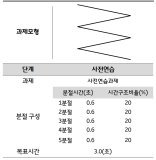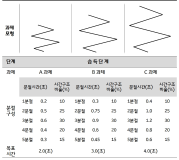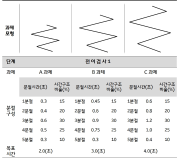
Values, such as development and social responsibilities, are added on victory-oriented Korean sport. Those change of values are along with discussions regarding improvement of players’ training environment, however, discussions on improvement of players’ training environment so far rather focused on ideological concepts, such as players’ holistic human development and human rights, therefore, there was a lack of discussion on practical training methods or teaching methods. This study focused on mental coaching as a specific method for improvement of players’ training environment. Mental coaching provides players with performance enhancement, personal growth, and self-actualization utilizing mental training, consulting, and mentoring in their training processes. This study examined a possibility of introduction of mental coaching as a training camp method for players by creating a training camp reflected on mental coaching perspectives and verifying the program effects of application. First of all, a mental coaching training camp was created through consultations with mental coaches, supervisors, and coaches. Goals of the mental coaching training camp were development of competition-routines, establishment of competition-circumstance coping strategies, comprehension of elite-players’ psychological resources, goal-setting, and motivation and the program consist of badminton competitions, mental education, a special lecture by an Olympic gold medalist, tracking, and sharing. The mental coaching training camp proceeded with middle and highschool badminton players and 31 coaches during three-days and four-nights. As results, the training camp was effective for players’ performance enhancement, personal growth, and self-actualization and team coaches realized a necessity of improvement in terms of their training and teaching behaviors. In other words, mental coaching training camp played a role as a source of long-term change as well as short-term results, thus, this study verified that the mental coaching can be introduced as a training camp method. It is anticipated that this study can provide sport fields and academic sport areas with an opportunity to consider both training contents and methods when it comes to discussion players’ training environment development.

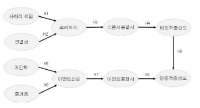
The purpose of this study was to develop a model of relationship intensification, identification formation, and loyalty achieved through mutual effect within participants of sports sponsorship. Through this, the study aims to provide guidance to businesses for establishing and developing sports sponsorships. In order to achieve the objective, two identification paths were used to understand the process of deepening consumer-sponsor relationship in professional volleyball title sponsorships. The target of this study is 'NH Nonghyup' a valleyball title sponsor in 2014-2015. A survey was conducted on 264 home crowd members of Korea Air, Samsung fire, Kepco, Woori card, OK saving bank and Hyundai capital based in metropolitan regions. Sampling method was Convenience Sampling Mode, and questionnaire has been structured to be self-administerd type. SPSSWIN Ver. 21.0 and AMOS 18.0 have been used for data processing. The results were as follows: Frist, the study showed that the connection between consumer-sponsor mutual effect positively influence "we-ness." "We-ness" in turn positively affected sponsor identification, and sponsor identification in turn positively affected attitudinal loyalty. Second, the personalization and enjoyment in consumer-event mutual effect positively affected event trust, and event trust in turn positively affected event identification, and event identification in turn positively affected behavioral loyalty. Third, attitudinal loyalty positively impacted behavioral loyalty.
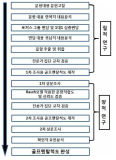
The purpose of present study is to develop the'Golf Mental Scale'that measures and assesses golf players' cognitive, emotional, behavioral response per golf mental factor experienced while competing in depth. In order to achieve this research purpose, Researcher collected raw data of golf mental question through literature review and interview with 8 members of Korean male national golf team and gathered questions per factor through Deductive-Inductive Content Analysis for the raw data. Then, Researcher conducted first and second questionnaire survey targeting 253 of elite & pro golf players and conducted Rasch Model and Confirmatory Factor Analysis for the data collected using SPSS 21.0, Winsteps Ver. 3.65 Program, AMOS 18. The conclusion reasoned out through these research process was as follows: First, golf players' psychological factor structure identified was revealed as Concentration, Self-confidence, Anxiety and Arousal control, Emotion control, Thought control. Total 37 questions were determined. Second, 5 point scale was revealed to be a good fit for Golf Mental Scale. Third, the result of Construct Validity Verification of CFA showed that Golf Mental Scale model was a good fit. Fourth, Reliability of Golf Mental Scale showed high level by recording Cronbach' α value .936. Fifth, Internal Consistency of Convergent Validity and Discriminant Validity was revealed to be satisfied. Eventually, Golf Mental Scale is expected to be used practically as a functional test tool that provides participant's response toward each situation-specific questions concretely and an objective evaluation of participant's golf mental ability per factor considering questions'level of difficulty and participants'characteristic.
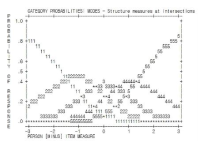
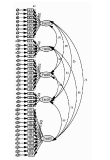
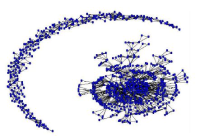
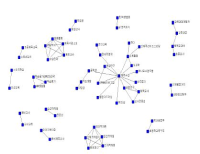
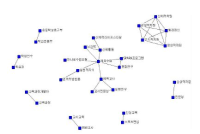
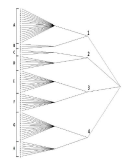
The purpose of this study was to identify the structure of knowledge in Sport Pedagogy field. Using bibliometric and social network analysis this study analyzed the keywords and citations appeared in Korean Journal of Sport Pedagogy and Korean Journal of Sport Science during 2006-2015 period. Total of 341 research papers which include 1301 keywords and 14826 citation were analyzed utilizing social network analysis as well as keywords frequency analysis, keyword co-occurrence, citation and co-ictation analysis. Results of this study showed that teaching, curriculum, and teacher education were three central theme in Sport pedagogy field. Key words such as physical activity, PE teacher, action research, and after school sport club activity were prominent research interests for scholard in the field. Quadradic Assignment Procedure analysis showed major research interests has not been changed between two periods of 2006-2010 and 2011-2015. Choi(2010)'s and You(2007)' books were most cited individual work and have influenced sport pedagogy researchers over the five years.

Frailty in older adults is related to an increased risk for poor health outcomes including falls, disability, hospitalization and mortality. The purpose of this study was to determine the thresholds of a functional fitness associated with frailty for community-dwelling woman aged 65 or older. In this study, the National Fitness Award(NFA) items for elderly were utilized as the physical function and fitness testing for korean elderly women. The total of 444 community-dwelling woman completed the testings. Frailty status was classified by the Japan LTCI system ‘Kihon Checklist’ in the study. The prevalence of the frailty was 19.1% in the study. The frail elderly were older and showed higher obesity index such as weight, body mass index (BMI), percent body fat and waist circumference than the normal elderly. After adjusting for age and BMI which was related to frailty, fitness testing items were compared depending on frailty. As the result, the frail elderly showed significantly lower fitness levels in grip strength, 30-second chair stand test, timed up and go, figure-of-8 walk around two cones, and 2-minute step test than the normal elderly. When the fitness cut-off values were analyzed using the ROC curve, also, grip strength: 34.13%, 30-second chair stand test: 14 reps, timed up and go: 7.09 seconds, figure-of-8 walk around two cones: 30.88 seconds, and 2-minute step test: 93 reps. In addition, based on the cut-off values of each fitness item, the group with a low fitness level showed a 1.86 to 3.09 higher odds ratio of frailty than the group with a high fitness level, even after age and BMI were adjusted. In conclusion, these findings indicate that the fitness cut-off values in this study are fitness levels for preventing frailty of Korean elderly women and there will be a need for a large-scale study including subdivided fitness cut-off values for each age group and targets elderly men as well.
The purpose of the study is to find the impact of social and economic factors in physical activity of children and youth. This study utilized the data from 4th Korean Children and Youth Panel Study(KCYPS), and the analysis were carried out based on the starting sample of 2,009 from ‘the elementary 4 panel’ and 1,978 from the ‘middle school 1 panel’ and 1,984 from the ‘high school 1 panel’, 5,971 full data were used in the final analysis. Data were processed using hierarchical regression analysis and it was statistically validated at the significance level of 0.05. First, Pearson r and Spearman ρ showed that all variables are statistically significant correlations. Second, among the first factors of personal and family characteristics, household income level(B=.113), family composition(B=-.049) and parental education (B=.060) were found on a significant impact on the movement of physical activity time, parental education (B=.027) was found on a significant impact on the subjective evaluation of physical education grades. Third, among the second factors of community-level characteristics, Gini coefficient (B=-.810), wealth concentrating (B=.120) were found on a significant impact on the movement of physical activity time, the Gini coefficient (B=-0.315) was found on a significant impact on the subjective evaluation of physical education grades. Additional factors that determine the coefficient of variation in the level 2 were found to be 0.623 and 0.001 respectively. Therefore, second factors of community-level characteristics are added such as Gini coefficient, wealth concentrating were explained to children and youth exercise time during physical activity 62.3%(p<.01) and subjective evaluation of physical education in grades 0.1%(p<.01). predictive power to
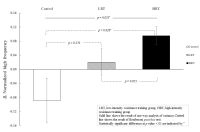
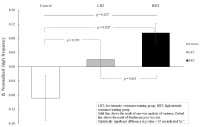
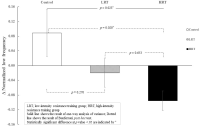
The purpose of this study is to investigate the influence of resistance training with different exercise intensities on heart rate variability(HRV) in habitual smokers. Twenty-eight healthy young smokers participated in this study were randomly divided into three groups; CON(control), LRT(low-intensity resistance training; 50% 1RM), and HRT(high-intensity resistance training; 70%1RM), respectively. LRT and HRT groups performed an 8-week resistance training(4 upper- and lower body exercises) using weight training machines, whereas CON group maintained their regular activities. All groups were evaluated basal body composition, hemodynamic parameters, HRV as autonomic nervous function, and muscular strength (1RM and isokinetic test) before and after the 8-week training. To assess the effect of 8-week training with different intensities on autonomic regulation, time and frequency domain indices of HRV were calculated from 5min R-R interval recording. As results, both LRT and HRT groups increased baseline 1RM and isokinetic strength compared to CON group. Meanwhile, high-frequency power reflecting parasympathetic activity was significantly increased in HRT compared to CON group. In addition, normalized low frequency power(LF nu) indicating a shift of sympathovagal balance towards sympathetic predominance significantly decreased while normalized high frequency power(HF nu) which reflects vagal predominance significantly increased in HRT compared to CON group. Furthermore, improved cardiac autonomic regulation and parasympathetic activation had significant association with increased muscular strength. Overall, the 8-week training has enhanced muscular strength in both training groups, particularly autonomic balance improved in young habitual smokers with high intensity resistance training.

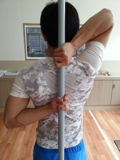
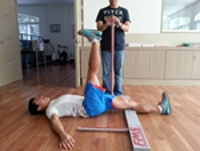
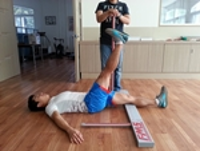
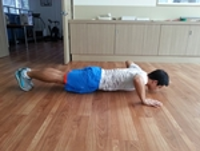
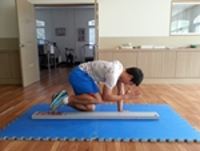
The purpose of this study was to examine the effect of the functional movement improvement training program on the score of high-school baseball players’ functional movement screen (FMSTM) test. After 16-weeks treatment period, a significant increase of Deep Squat, Hurdle Step, In-Line Lunge, Shoulder Mobility, Active Straight Leg Raise, Rotary Stability, and total score was found only in treatment group. There was decrease on the number of players in treatment group whose total score is less than 14; the criteria vulnerable being injured. The results of this study suggested that applying functional movement improvement training program on high-school baseball players can be effective to prevent injuries.












The purpose of this study was to analyze the effects of employee’s job burnout on turnover intention and to draw average effect size(weighted averaged fisher’s z) in sports industry. After a lot of dissertations and journal articles were extracted by searching web sites, 11 papers were finally selected through thorough verification procedure. Specific analyses were conducted via MIX 2.0(Meta-analysis with Interactive eXplanations). The results were as follows. First of all, the weighted average correlation coefficient of between depersonalization and turnover intention was .326. Secondly, the weighted average correlation coefficient of between reduced personal accomplishment and turnover intention was .192. Lastly, the weighted average correlation coefficient of between emotional exhaustion and turnover intention was .326.

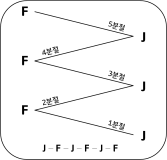
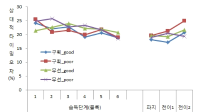
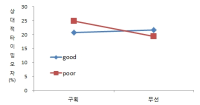
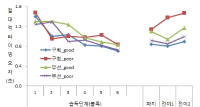
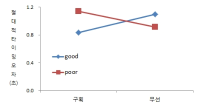
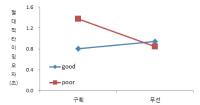
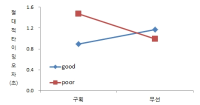
The present study was conducted to determine the effect of contextual interference (CI) and motivational properties (MP) of Knowledge of Result (KR) in learning on relative and absolute timing. Participants (N=48) were randomly assigned to one of four practice groups, which differed in practice structure on CI (blocked, random) and KR on MP (good trial, poor trial). They performed temporal timing tasks in pre-exercise and acquisition phase and went through a retention test and 2 transfer tests after approximately 24 hours. The main findings showed that first, for the relative timing error there was no significant main effect of CI and MP in the acquisition phase, retention, transfer1, and 2 test. However, there was a significant interaction effect between CI and MP in the transfer 2 test. Second, for the absolute timing error there was no significant main effect of CI and MP in the acquisition phase, retention, and transfer test 2 while there was in the transfer test 1. Moreover, there was a significant main effect between CI and MP in the retention, transfer 1, and 2 test. The findings indicated that 1) there was a significant learning effect of absolute timing between KR_good group and KR_poor group on blocked practice in the retention test, 2) random practice schedule and KR_good condition resulted in enhanced absolute timing performance relative to blocked practice and KR_poor respectively at transfer test 1, 3) there was a significant learning effect of absolute timing between KR_good group and KR_poor group on blocked practice at transfer test, 4) KR_good condition could be an useful relative timing learning strategy relative to KR_poor on blocked practice schedule at transfer test 2, effector transfer test. KR-good condition resulted in learning superior to KR_poor group on blocked practice schedule as well. However, there was no significant difference between two conditions on random practice, and 5) there was no difference in the learning effect of absolute timing error between KR_good and KR-poor group in the blocked practice, while there was not in the random practice. It indicated that motivational properties would influence the learning effect of timing in the blocked practice.