Purpose The purpose of this study is to find effective skin scuba activation factors and to provide basic data that extend the scope of research related to skin scuba. Methods Delphi method was used and the experts were categorized by experts to analyze the results. The questionnaires collected through the 2nd and 3rd delphi surveys were SPSS win ver. 22.0 and Microsoft Office Excel 2013 to calculate mean, standard deviation, median, and coefficient of variation. The concrete conclusions are as follows. Conclusions First, in terms of organization sub-factor, fostering sports-for-all participants and college club came out to be very effective and followed by cooperation system with Ministry of Public Safety and Security and Ministry of Oceans and Fisheries, strengthening cooperation and exchange with other education organizations, initializing new scuba diving education organization management and inspection institution and establishing scuba diving education organization. Second, in terms of facility/equipment sub-factor, factors that cause most effectiveness came out as expanding scuba-diving installation, developing connection system with medical department, enlarging indoor-diving education facilities, improving scuba diving equipment, consecutively. Third, in terms of leader sub-factor, training instructor through leader personality education and verification came out to be the most effective, followed by objectifying professional education institution leader training system, improving leader treatment. Fourth, in terms of program sub-factor, it is found that safety education program as the most effective factor, coming next with environment education/professional manpower training program, developing various programs, lastly, inventing insurance product. Fifth, in terms of advertisement sub-factor, as in order of guiding publics to change their view towards scuba-diving, expanding scuba-diving related events and establishing advertisement system had its effectiveness. Sixth, in terms of policy sub-factor, establishing cooperation system among administration departments came out to be most effective and then improving related law-system.

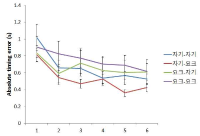
Purpose The present study was set up to investigate the effect of self-regulated learning and selection of feedback on learning of the relative and absolute timing. Methods 48 university student volunteers participated in the experiment and were randomly assigned four groups (n=12 for each) depending on practice task and feedback, namely: 1) self-regulated practice task - self-controlled feedback (self-self), 2) self-regulated practice task - york-controlled feedback (self-york), 3) york-regulated practice task - self-controlled feedback (york-self), and 4) york-regulated practice task - york-controlled feedback (york-york). The task was to examine the temporal timing error and the task goal was to press a computer keyboard 'J' and 'K' alternatively corresponding to time set. Prior to the experiment, the participants had a pre-practice session and then practiced one of three timing tasks provided by an experimenter in the acquisition phase. There were two transfer test to assess adaptability aspects of performing changes related to learning after 24 hours of the acquisition phase. Serial practice was applied in the transfer 1 and an effector transfer was examined in the transfer 2. The dependent variables were a relative timing error that is susceptible to discrepancy between the participant’s key press and the goal patterns and an absolute timing error that is susceptible to discrepancy in the time required to perform the sequence compared to the goal absolute time. Results The results showed that in the pre-test there was no significant difference in both the relative and absolute timing error across four groups. However, in acquisition phase there was a significant difference in both the relative and absolute timing error across block. The relative timing error was different across the group in the transfer test 1, however it was different only between the self-self and york-york group. Lastly, the absolute timing error was not different across the groups in the transfer test 2. Conclusion The findings revealed that the self-regulated strategy is effective to learn the relative timing in the effector transfer.
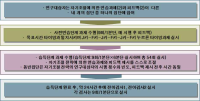




Purpose This study was to explore construct of fear and courage behavior overcoming the fear and relationship between fear and courage in competition. Methods Total 65 national athletes of combat sports(Judo, Boxing, Taekwondo, Fencing) responded to open questionnaire about fear and courage behavior in competition. The data was analyzed by triangle verification and content analysis. Results Firstly, the fear of combat sports athletes consisted of five factors, which were negative consequences, lack of preparation for a game, concerns of performing one’s best, expectation of significant others, and internalized ego threat. Secondly, courage behaviors to overcome fear were self-effort, self-suggestion, self-conviction, selfish self-regulation, social self-control, self-analysis, and acceptance of experience. Finally, there were the relationship between fear and courage in competition. Conclusion These results will contribute to provide useful information for combat sport athletes and coaches in different level to cope with competition fear.
Purpose This study was designed to examine the effects of 8 weeks of circuit exercise training on blood lipids, insulin resistance, cardiovascular function, and metabolic syndrome risk factors in 40~50s male bus drivers. Methods Twenty-nine bus drivers were randomly assigned to one of two groups, i.e., circuit exercise training group (TR: n=14) and control group (CON: n=15). Subjects in TR participated in circuit exercise training 30-40 min per session, three sessions per week for 8 weeks, whereas subjects in CON were asked to maintain their normal life pattern for same intervention period. The variables regarding body composition, blood lipids, insulin resistance, cardiovascular function, and number of metabolic syndrome risk factors were measured and compared between two groups as well as between pre- and post-test. Data were analyzed using repeated two-way ANOVA with post hoc test. Results Main results of the present study were as follows: 1) Waist circumference, waist-hip ratio, body mass index, and percent body fat decreased significantly in TR. 2) LDL-C decreased and HDL-C increased significantly in TR. 3) Fasting plasma insulin and HOMA-IR decreased significantly in TR. 4) Regarding cardiovascular function, diastolic blood pressure and mean arterial pressure decreased significantly in both TR and CON. hs-CRP were not changed significantly; however, it tended to be decreased TR. 5) Number of metabolic syndrome risk factors decreased significantly in TR(2.86±0.86 to 1.50±0.76). Conclusions It was concluded that 8 weeks of circuit exercise training would be beneficial for improvement of blood lipid profiles and insulin resistance, resulting in preventing metabolic syndrome. In particular, it would be very clinically meaningful that number of metabolic syndrome risk factors decreased from 2.86±0.86 to 1.50±0.76 by the circuit exercise training.

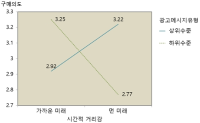
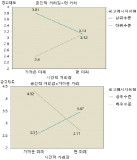
Purpose This study aims to find out the attitude changes of consumers on a corporate sponsor in a cause related marketing based on frequency of information exposure and the image of the sponsor. Methods The data were collected from 191 students of C university in Seoul and its vicinity. The data were collected three times from the sample to see the attitude changes over time. The hypotheses of the sutdy were developed based on meaning transfer theory and spreading activation theory. This study hypothesized that the attitude toward a sponsor would change in a positive direction when consumers are exposed to related information and the change would be moderated by the frequency of information exposure. Also, the changes in attitude would be different based on the image of sponsors(i.e., positive image sponsor vs. negative image sponsor). The hypotheses were analyzed using mixed-design ANOVA. Results The results of the analyses indicated that the attitude change was greater when the frequency of information exposure was higher. The attitude change in positive image sponsor was statistically lower than that of negative image sponsor possibly due to ceiling effect.

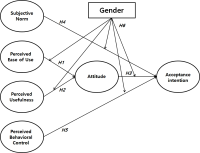
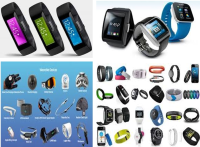
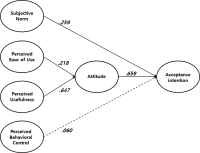
Purpose The current study was aimed to examine acceptance intention of sports wearable smart device using the Technology Acceptance Model and Theory of Planned Behavior. Methods Data were drawn from 357 consumers who had experience purchasing sports products. Data were analyzed through frequency analysis, reliability analysis, confirmatory factor analysis, correlation analysis, and structural equation modeling using SPSS 20.0 and AMOS 20.0 program. Results First, perceived ease of use had a positive effect on attitude. Second, perceived usefulness had a positive effect on attitude. Third, attitude had a positive effect on acceptance intention. Fourth, subjective norm had a positive effect on acceptance intention. Fifth, perceived behavioral control did not affect acceptance intention. Sixth, differences of path coefficients between attitude and acceptance intention, subjective norm and acceptance intention were significant according to gender. Conclusion The significance of this research is to provide the basis of positioning strategy for domestic companies of sports wearable smart device.

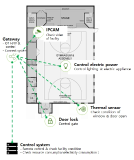
Purpose This study aims to suggest the application of IoT-based integrated management system to public sports facilities(PSF) in order to improve the utilization and management of PSF by analyzing the actual state of PSF empirically. Methods A survey was administered to managers(n=279) and users(n=500) of PSF in order to identify problems of current management and collect suggestions for improving the utilization and management of PSF. Previous research on establishing IoT-based system was also reviewed for considering the effectiveness of IoT technology. Results Generally, PSF are in low utilization and operate in a deficit. The deficit operation is caused by high labor costs and management expenses. The survey result shows that there are many problems in management and utilization such as lack of equipment, deteriorated facilities, shortage of manpower and funding, limited programs, difficulties in promotion. The result also shows that PSF need to consider developing local demand-based programs, reducing management costs, extending opening hours, improving online booking system. Conclusion To solve the problems of PSF in utilization and management, this study suggests that IoT-based integrated management system needs to be applied to PSF. It is expected that applying IoT-based integrated management system to PSF would improve operational effectiveness, ease of facility management, and user convenience.

Purpose The purpose of this study is to deeply understand what high school student athletes are doing as athletes and how they are transformed into student athletes from studying and exercising simultaneously. Through this, to understand the life of student wrestlers and to provide basic data for rational improvement of school athletic department. Methods Participants of the study selected one student in the second grade and two students in the third grade at Woosu high school in metropolitan. Data was collected through in-depth interviews, participant observation, and document analysis. The collected data was analyzed using Domain Analysis and Taxonomic Analysis by Spradley(1979). To assure the credibility of the data, additional checks and analysis were conducted with the participants, and the research process was examined by experts. Moreover, the common contents of the data were included in the research results with multilateral verification. Results Woosu high school wrestling student athletes were recognized as athletes as a training life to lose their dreams, a school life to stop their work. However, since student athletes have been studying and exercising together, they have been transformed from a trainee to a motivated active, a student who is reborn in the school community, and transformed a reflective student athlete to an immature player on a daily life. Conclusion The policy of the school athletic department to study and exercise together has a positive effect on student athletes and has a good effect. The introduction and practice of this system can expect true student athletes and establish elite physical education right away.
Purpose This study examines the regional differences in fall-related physical fitness and fall experience characteristics between Korean and Japanese elderly people. Methods The study includes 176 elderly residents of Gifu(35 male, 73.5yrs; 141 female, 72.4yrs) and 147 residents of Ulsan(46 male, 75.6yrs; 101 female, 75.6yrs). One-legged stance, hand grip strength, knee extension strength, 10 m gait, timed up and go test, 30-s chair stand, sit and reach, and reaction time were measured to examine the fall-related physical fitness. A questionnaire survey was also conducted to investigate the characteristics of the fall experiences. Results The elderly in Ulsan experienced a lot of falls compared to those in Gifu. Many of the fallers in Ulsan have fallen forward due to tripping, and they have often fallen backwards by losing balance. In addition, 14% of them suffered a bone fractured. The one-legged stance, hand grip strength, 10m gait, timed up and go, 30-s chair stand, and reaction time of the elderly in Gifu were superior to those in Ulsan. Conclusion In order to reduce the fall rate through improvements to fall related physical fitness and the awareness of fall prevention, various professional fall prevention programs and policies should be proposed, and they should be implemented systematically for community living elderly people.

Purpose The purpose of this study was to examine the effects of temporal and spatial distance and types of advertising messages on sport consumer’s attitudes toward and advertising and purchase intentions, based on the construal level theory. Methods Toward this end, 253 usable data were conducted using frequency analysis, exploratory factor analysis, reliability analysis, correlation analysis, MANOVA, and ANOVA with SPSS 24.0. Results and Conclusion The study obtained the conclusion that when using different types of messages, the consumer’s attitudes and purchase intentions are influenced by temporal distance, by spatial distance, and by the interaction between both factors.