
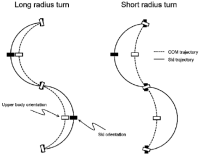
Purpose The purpose of this study was to investigate the three dimensional joint angles of the ankle, knee and hip during basic long turn, carving long turn, basic short turn and carving short turn. Methods Fourteen alpine ski instructors from Korea Ski Instructor Association participated in this study. Each skier asked to perform 4-types of turning technique, classified by radius and level. 8 inertial measurement units were used to measure three-dimensional joint angles of the ankle, knee and hip joint. Results Significant differences were found the lower extremity joint angles on the mediolateral and vertical axis during long-turn and carving-turn (p<.05). significant differences were found the lower extremity joint angles on the anteroposterior axis in the steering phases 1, 2 and complete phase (p<.05). Conclusions In the Alpine skiing, the short turn requires a complex movement of the lower limb joint compared to the long turn. When performing a long turn, the movement of the ankle joint on the vertical axis are required compared to the short turn. And the carving and short turn need to the movements of the lower limb joint on the mediolateral axis.

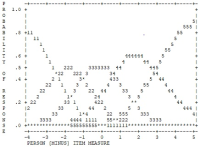
Purpose The purpose of this study was to determine item goodness-of-fit and the optimal categorization of an instrument measuring Korean elite young soccer player’s self-esteem using a two-facets Rasch model (item parameters and person parameters). Methods 10-item Rosenberg Self-Esteem Scale (RSES) with five response categories was administered to 366 elite young soccer players from the Korea football association. The Rasch analysis was conducted by WINSTEPS 3.65. Results First, the model fit the data well. Second, 5-category rating scale did function well. Third, a item-person map illustrated the distribution of RSES items and person’s level of self-esteem. Fourth, the separation reliability of the items and person was shown to be an acceptable degree of confidence, respectively. Lastly, there was statistically significant difference in self-esteem between starting players and bench players, which supported the known-difference evidence of validity. Conclusion These findings provided additional support for the suitability of the RSES in assessing self-esteem of Korean elite young soccer players.
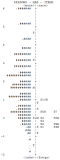
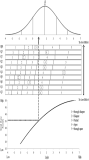
Purpose The purpose of this study was to investigate the effects of regular vigorous- and moderate-intensity aerobic exercise on serum brain-derived neurotrophic factor (BDNF) level, aging- and lifestyle disease-related blood components in middle-aged women. Methods The participants were recruited from a total of 19 physically healthy people aged 50-59 years, and were randomly divided into vigorous-intensity aerobic exercise (VIAE, n = 10) and moderate-intensity aerobic exercise (MIAE, n = 9) group. The participants were performed vigorous- and moderate-intensity aerobic exercise three times a week for eight weeks, and body composition measurement, graded exercise test, blood collection were performed before and after. Results Mean exercise time was significantly longer in the MIAE group than in the VIAE group. The V̇O2max was significantly higher in the VIAE group than in the MIAE group. Body weight, BMI, and body fat percentage were significantly lower than pre both groups. The BDNF concentration was significantly higher in the VIAE group than in the MIAE group. The dehydroepiandrosterone sulfate (DHEA-s) and insulin-like growth factor-1 (IGF-1) concentration were significantly higher than pre both groups. The free fatty acid and triglyceride concentrations were significantly lower than pre both groups, and HDL-C concentrations were significantly higher than pre both groups. Conclusions Vigorous-intensity aerobic exercise not only increases maximal oxygen uptake and blood BDNF level in middle-aged women, but also induces positive changes in aging-related hormones and lifestyle-related blood variables.
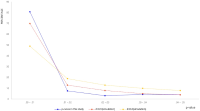
Purpose This study was aimed at laying out criticism regarding statistical hypothesis testing and presenting realistic alternatives focused on published studies of sports management in Korea. Methods Among 202 studies compiled by the Korean Society for Sport Management, vol. 19, no. 1 through vol. 23, no. 6, 115 studies which used the null hypothesis significant testing were finally selected. After data coding for selected studies, p-curve, the distribution of p-values which reported in individual studies, was schematized, and than adequacy about the sampling method and result descriptions were analyzed. Results The ratio of p-values close to zero was relatively very high in p-curve although there was no clear evidence of p-hacking. Also, approximately 82% of the studies used convenience sampling method, and incorrect descriptions in part of result and discussion due to lack of understanding of statistical hypothesis testing was found in some studies. In conclusion, the shortcomings of statistical hypothesis testing which commonly used in academic field were depended on not a defect in the method itself but researchers who misused statistical hypothesis testing. Conclusions Researchers in sport management field need to understand the advantages and disadvantages of statistical hypothesis testing and consider to use both confidence interval and effect sizes to compensate the disadvantages of p-value.
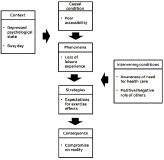
Purpose The purpose of this study is to investigate the alienation and the overcoming process of the physical activity participation of people with Adventitious Visual Impairment(AVI) Methods 21 Adults with AVI were recruited and one on one semi-structured interview was conducted. Ground theory was used to analyze the data. Member check, peer debriefing was conducted to enhance the trustworthiness of this study. Results As a result, a total of 203 concepts were derived. This consisted of 21 subcategories and the common themes of the subcategories were categorized into nine categories. Specific results are as follows. First, the physical activity of people with AVI was directly affected by the sports facilities, physical activity programs, and professional instructor. This causal condition resulted in the loss of leisure experience in the context of the busy daily life and the depressed psychological state. Second, due to the perceived need of health care and the positive involvement of others, people with AVI came to expect the effect of exercise. Third, people with AVI participated in physical activity again as a tool to achieve the purpose of health improvement. This type of physical activity has a limitation that it can not guarantee the continuity of physical activity due to the limitation that it does not contain autonomy and interest of people with AVI. Conclusions Based on these results, the following suggestions were made. First, it is necessary to improve the environment for ensuring participation in physical activity of people with AVI. Moreover education and promotion of the effects and values of the exercise should be carried out for people with AVI and their guardians. Second, it is necessary to diversify physical activity types and reconstruct existing exercise programs.
Purpose The study was designed to investigate the effects of 12 weeks of circuit training and L-tryptophan supplementation on physical fitness and metabolic syndrome. Methods Forty-one menopausal women were randomly assigned to one of three groups. i.e., combined circuit training and L-tryptophan supplementation group (CT+T: n=14), L-tryptophan supplementation group (T: n=14), and control group (CON: n=13). The subjects in CT+T exercised three sessions per week and took 3g of L-tryptophan per day for 12 weeks. The subjects in T took 3g of L-tryptophan per day for 12 weeks. The subjects in CON were asked to maintain their life pattern for the same period of intervention. Physical fitness and metabolic syndrome-related variables were measured at pre- and post-test. The data were compared by utilizing a repeated two-way ANOVA. Results Main results of the study were as follows: 1) Standing long jump, one leg standing with eyes closed, sit-and-reach, sit-up, and maximal oxygen uptake increased significantly in CT+T. 2) Body weight, body mass index, waist circumference, waist-hip ratio, fat mass, and percent body fat decreased significantly in CT+T. 3) Total cholesterol decreased significantly in CT+T. 4) Fasting plasma glucose (FPG), fasting plasma insulin, and HOMA-IR decreased significantly in CT+T. FPG and HOMA-IR decreased significantly in T. 5) Systolic blood pressure, diastolic blood pressure (DBP), mean arterial pressure (MAP), and rate pressure product decreased significantly in CT+T. DBP and MAP decreased significantly in T. 6) Number of metabolic syndrome risk factors decreased significantly in CT+T and T. Conclusion It was concluded that the circuit training and L-tryptophan supplementation would have positive effects on physical fitness and metabolic syndrome, and that L-Tryptophan supplementation would have positive effects on metabolic syndrome by improving insulin resistance and hypertension in menopausal women.
Purpose The purpose of this study was to investigate the effects of aerobic exercise intensity on body composition, health related fitness, and quality of life in elderly women. Methods 48 elderly women over 65 years of age without physical and mental problems were assigned to four groups: control group, low intensity, moderate intensity, and high intensity aerobic training group. The aerobic exercise group applied a heart rate reserve (HRR) to low-intensity group (HRR 40-55%), moderate intensity group (HRR 55-70%), high intensity group (HRR> 70%) for 12 weeks, 3 times a week for 20 minutes a day. Subjects of the control group were to maintain their usual lifestyles during the same intervention period. Body composition, health related fitness, and quality of life were measured and analyzed using repeated two-way ANOVA. Results The main results obtained in this study are as follows. 1) There was a significant decrease in sitting forward bending in the low intensity group and a significant increase in EQ-VAS. 2) There was a significant decrease in body weight, BMI, and 6 minutes walking in the moderate intensity group, and a significant increase in grip strength and EQ-VAS. 3) The high intensity group showed a significant decrease in weight, BMI, waist circumference, sitting forward bending, and 6 minutes walking, and a significant increase in grip strength, sit and stand, functional reach, and VO2max. On the other hand, there was no significant change in all variables in the control group. Conclusions In conclusion, aerobic training was found to be effective for body composition, health related fitness and quality of life in elderly women. In particular, it can be concluded that high intensity aerobic training is effective for health related fitness, and low and moderate intensity aerobic exercise is effective for improving quality of life.

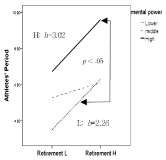
Purpose The purpose of this study was to compare the differences between the three simple control models of Hayes (2012) and to determine whether there were Moderating Effects depending on the level of self-esteem, willpower and belief that are psychological factors in the relationship between athlete's retirement and Athlete's period. Methods To achieve this objective, a total of 259 retirees were collected from data on retirement and psychological factors. The data processing method presented the reliability and feasibility of the measuring instrument through technical statistics, frequency analysis, confirmation factor analysis, and reliability analysis. In addition, we conducted a hierarchical regression analysis using the PROCESS command statement in IBM 20 to examine the regulatory effects. Results The results of the study are as follows: The first was the significant model of Hayes (2012)'s three simple control models. It is up to the researcher to choose which model to choose, but when selecting the model, the justification of the variables must be established on the basis of theoretical basis, and the reliability of the variables must be put in to produce reliable and reasonable results. The second was to verify that the relationship between the retirement factor(10) and the Athlete's period has an adjustment effect based on self-esteem, willpower and belief. Among the psychological factors, the Moderating Effects was greatest in the influence of belief on the Athletes' period, and the more reasons for retirement, the longer the Athletes' period than the weaker. The combined mental strength of all three psychological factors combined shows that the combined effect of control also significantly increases the player's ability to survive by combining with the retirement factor. In particular, sportsmanship has resulted in a better mix of retirement factors than the sense of Self-esteem and will, resulting in a longer increase in the capacity. Conclusions Therefore, players who long for a player always keep their dreams of becoming a big star in mind, and ask me to always keep the belief in hope that I will enjoy my career for a long time.


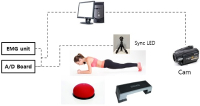
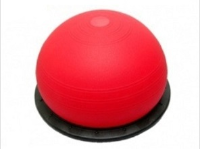
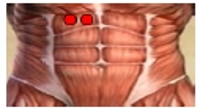
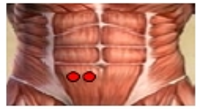
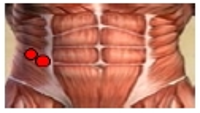
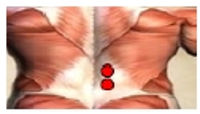
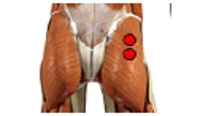
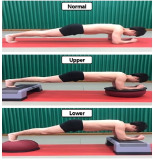
Purpose This study was to analyze and compare series of muscle activities during plank exercises with use of togu-jumper. Methods Ten male subjects (age 26.9±1.7 yrs, height 172.2±5.7 cm, weight 66.5±7.5 kg) who have no musculoskeletal disorder with one's upper or lower limb were selected as subjects. To analyze and compare series of muscle activity, five of surface EMG electrodes were attached to the upper rectus abdominis (URA), lower rectus abdominis (LRA), external abdominal oblique (EO), erector spinae (ES) and gluteus maximus (GM). Each subject did plank exercise on stable support surfaces (normal surfaces) and unstable support surfaces with the togu-jumper. For each dependent variable, one-way ANOVA with repeated measures were performed with significance level p<.05. Contrasts were performed to execute post tests for results with statistical significance. Results The study showed that the average IEMG values of URA and LRA increased in Upper (Togu-jumper used upper limb) compared to normal surfaces. This is perhaps because the effects of URA more than any other muscles for body stability. Furthermore, the peak IEMG values of LRA increased in Upper and Lower (Togu-jumper used lower limb) compared to normal surfaces. In addition, peak IEMG values of EO increased in Upper compared to Normal. This may have resulted due to momentary strong muscle activity in LRA and EO to correct body posture and balance. Therefore, using Togu-jumper on upper limb maximizes the performance of core training in plank exercise. Conclusions The study may be further applied to a method for effective training. It is considered that research and analysis has to be further done on modified plank exercise. Additionally, it is necessary to analyze not only global muscle but also local muscle, as a comprehensive research, to suggest ideal method for plank exercise.
Purpose The purpose of this study was to find out whether they can contribute to the revitalization of urban communities. Methods This study conducted in-depth interviews and focus group interviews to collect qualitative data. The collected data were analyzed through the domain analysis and the classification analysis. Results The roles of sports club managers in leadership and network intermediaries were very important in the accumulation of social capital. The formation of staff members who work for the managing and activating sports clubs has created trust and satisfaction with the sport. Their activities contributed to the formation of social capital in sports clubs and played an important role in revitalizing sports clubs. Conclusions Sports club managers performed important roles in building trust and network with the club members and even other clubs through their leadership. These management activities are possibly contributed to the creation and accumulation as social capital. Therefore this research also showed the possibilities of extension to local community of the social capital through sports clubs.
