Purpose This study is to investigate the human rights violations of Semi-professional team athletes. Methods The subjects of the survey were 4,069 people in total of 56 sports athletes from teams. than, 1,251 athletes who agreed to provide personal information (635 males and 616 females) were sampled. The survey tool consisted of a total of 76 questions asking about violence, sexual violence, and general characteristics of semi-professional athletes. Results were frequency analysis, cross-analysis, and multiple response analysis. Results Despite being an adult athlete in the semi-professional Team's Workplace Sports Team, life controls were severe in the sports team and human rights violations, such as verbal and physical violence, were widely observed, and sexual harassment and sexual violence were not small. The main perpetrators were the leaders and senior players, and the venue was the training ground. The players were in an environment where they were forced to respond passively for fear of hierarchical, collective atmosphere and personal disadvantages, and were blind spots for labor rights in terms of contracts and treatment. Conclusion To human rights violations of semi-professional athletes as the structural problems of the Korean sports. It is necessary to strengthen human rights education by the workplace movement department and conduct regular human rights surveys, and legal institutionalization to establish a disciplinary information system for perpetrators. In addition, by enacting guidelines for human rights in the sports world, a system should be prepared so that the victims can actively express their intentions.
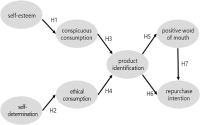
Purpose The purpose of this study was to empirically analyze the relationship between a sports-for-all club members self-esteem and self-determination, conspicuous consumption, ethical consumption, product identification, positive word of mouth & repurchase intention through structural equation model analysis. Methods For this purpose, this study set 279 members at the nine sports-for-all club located in national capital region as the research subjects. In an effort to verify the proposed structural model, this study used SPSSWIN Ver. 23.0 and AMOS 18.0. Results First, self-esteem had a positive effect on conspicuous consumption. Second, self-determination had a positive effect on ethical consumption. Third, conspicuous consumption had a positive effect on product identification. Fourth, ethical consumption had a positive effect on product identification. Fifth, product identification had a positive effect on positive word of mouth. Sixth, product identification didn’t had a positive effect on repurchase intention. Seventh, positive word of mouth had a positive effect on repurchase intention.
Purpose The purpose of this study was to explore the concept of physical education redesign. Methods Studies on curriculum redesign, physical education curriculum redesign and the revised 2015 physical education curriculum were collected and analysed. Results First, three different types of curriculum redesign were discussed. Second, there was no clear concept of physical education redesign. Third, both ‘learning content area’ and ‘standard achievement’ were related to the physical education curriculum redesign. Conclusions Two different aspects of physical education curriculum redesign emerged. Establishing the clear concept of physical education curriculum redesign and presenting the concept in the next national physical education curriculum were suggested.

Purpose This study tells about my life about the past time when I studied for the teacher certification examination, using autoethnography. Methods It primarily used personal memories and diaries. The collected data was analyzed by applying longitudinal coding method through technical categories. Results The finding of this study is described in a chronological order as follows. The first part is about my unstable ego formed in my puberty period just like riding a roller coaster. It mainly features the process of choosing a career path when I was in school and the important starting point that made me today. The second part describes about my life after entering the department of physical education. I joined the military only to flee from a fruitless college life where I was wearing an unbefitting mask to hide myself from the world that is completely beyond my control. In the military, I was lucky to realize how to apply my major to set up my career path by coincidence. The third part is about the process of finding a genuine meaning of being a physical education teacher through a transitional period experienced after returning to school and form a stable self. Lastly, passing teacher certification examination with undaunted struggles boosted my self-esteem and self-efficacy and solidified my self-identity in the end. In addition, it is possible to get a glimpse of the attitudes that teachers need to have for a teaching career in the last part. Conclusions What I want to say throughout my descriptive story is that preparing for the teacher certification examination itself is a great challenge as well as a courageous decision for the candidates, but it is an attainable goal if they try with all their heart.

Purpose The purpose of the study is to analyze China's school sports policy by dividing it into the era of four leaders before the current regime. Methods Former Chinese leader Deng Xiaoping's reform and opening up is a big axis that distinguishes China's time, more than 70 years after its founding. Therefore, we discussed the history of Chinese school sports policy by considering the background of the times, the ideology of the former Chinese leaders, and the keynote of the sports policy that influenced the school sports policy. Results The Chinese school sports policy history before and after China's reform and opening up is summarized as having a continuity to “sports as an education for all” and a distinction symbolized by “legislation and scientificization.” Conclusion Deng Xiaoping's reform and opening up has been carried on by the regimes since then, and his guiding ideology and sports policy keynote have had a profound impact on Chinese school sports policy.
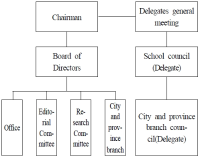
Purpose This study is to examine the historical facts about the integration of the Korean Sports Association, the Korean Olympic Committee, and the Korean School Sports Association in 1968. Methods Primary and secondary data were used to understand the integration process of the three organizations. Result First, immediately after liberation, the Korean Sports Association was reorganized and a number of new sports organizations were founded. Second, in the 1960s, the military regime exerted the government's control, making all social groups essential to register in accordance with the Act on Social Group Registration. Third, the Korea Olympic Committee and the Korean School Sports Association frequently caused friction as they operated overlapping projects with the existing Korean Sports Association. Fourth, in February 1968, the government consolidated three groups that were considered social issues based on the experience of dissolving the Korean Special Sports Association. Fifth, the integration of the three organizations is significant in that it prevented redundant projects and wasted budget, and resolved the discord in the sports world. Conclusion The first integration of the Korean Sports Association in 1968 was a historical event that absorbed the Korean Olympic Committee and the Korean School Sports Association. The integration of the three organizations is viewed as a solution for the systematic operation of the sports administration, but on the one hand, it has become the top-ranking organization in the Korean sports community since this time by well blocking the checks of the Korean Olympic Committee and Korean School Sports Association. It can be understood as maintaining absolute power.
Purpose The purpose of this studied to improve athletes’ performance through sports psychological skills training and counseling of a male canoe player in high school. Methods One male high school athlete in J area was interviewed for sports psychological skills training and counseling, and interviewed athletes and coaches diagnosed the potential psychological problems of athletes. Through this process, the athlete gained the ability to control anxiety about the game and strengthened the attention-focused ability to increase his confidence and set a goal for improving concentration. For effective training, sports psychological counselors, athletes, and coaches met once a week to create a routine. and participated in direct training on a boat with the coach every week. Sports psychological skills, anxiety about competition, and self-management of athletes were measured before and after to confirm the effectiveness of training of athletes' psychological skills. Results As a result, athletes' psychological skills and anxiety decreased, their confidence increased, and their concentration, which was diagnosed as an urgent problem of athletes, improved. Conclusions psychological skills of athletes, psychological shortcomings of players were reinforced, thus enhancing the athletes' performance. This suggests the effectiveness and necessity of training in sports psychological skills. It is hoped that continued support will serve as an opportunity to diagnose potential psychological problems of student athletes and apply them to training to contribute to improving their performance.
Purpose The purpose of this study is to identify the consistency and correlation of referee evaluation according to the judging characteristics in the preliminary and semi-final of the Latin event of dance sports, thereby deriving the problem of referee reliability and suggesting alternatives for improvement. Methods The method of study is Based on the performance data of 54 amateur Latin dances match organized by the Korea Dance Sports Federation for a total of three years 11,850(preliminary rounds & semi-final). Based on the Kappa statistics and the degree of agreement(pa), the difference in the group of examination characteristics was derived and the correlation between the five Latin events was analyzed. Results As a result of through this study, the consistency of the dance sports referee and the characteristics of the judging in the event were confirmed, and the number of judges tended to be higher when the number of judges was seven, the more the number of subjects was, and the highest level of agreement was more than 70 percent of the judges. In addition, the higher the concordance of each of the five detailed items, the higher the correlation tendency. Conclusion Differences in visual aspects between dance sports judges and the difference in the judges' ratings due to the revision of the rules, the decrease in the number of competitors participating in the competition, the number of people to be eliminated in each round, and the proportion of judges with experience in the competition are different, and these differences affect the judges and show up in the scores. The Latin dance sports events based on objectivity and reliability to improve the correct standards of judges to find the same raters, work will be required and an assessment element. With a systematic way in and to carry out the review curriculum and educational development is considered necessary.
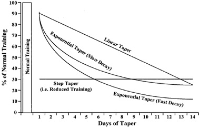
Purpose The aim of this study was to provide athletes and coaches on informations and benefits of a taper through evidence-based scientific studies and literatures in order to optimize an athlete’s top performance for the major competition. Methods Studies and literatures search was conducted using the databases RISS, KISS, SPORTDiscuss. Key words searched: taper AND(competition, OR performance, OR training, OR training). This study were eventually cited by 22 articles for results of this in total 100 articles. Results The training load is remarkably reduced during a taper. With a reduced training load, training intensity should be maintained during the taper. The training load reductions during the taper should be programmed with reducing training volume at 41% to 60% of pretaper training. The reduction of training frequency during a taper means that affect moderately trained athletes and highly trained subjects differently, reducing 30% to 50% of pretaper training and maintaining training frequencies, respectively. Detraining the duration of a taper is not easy. Most athletes is beneficial from a 2-week shorter or longer tapers, depending on their individual profiles of fitness loss, fatigue dissipation, and anxiety. The manipulations of this training program variables usually affect for most athletes and maximal performance gains. Conclusion Training intensity should be maintained during the taper, training volume reductions should be programmed at 41% to 60% of pretaper training. The reduction of training frequency could be reduced 30% to 50% of pretaper training, and most athletes is beneficial from a 2-week shorter or longer tapers. Future researches should be conducted the practical & effectual differences in individual and teamed-based sports after a taper procedure.
Purpose The study was designed to investigate the effects of 12 weeks of circuit training and L-tryptophan supplementation on physical fitness and metabolic syndrome. Methods Forty-one menopausal women were randomly assigned to one of three groups. i.e., combined circuit training and L-tryptophan supplementation group (CT+T: n=14), L-tryptophan supplementation group (T: n=14), and control group (CON: n=13). The subjects in CT+T exercised three sessions per week and took 3g of L-tryptophan per day for 12 weeks. The subjects in T took 3g of L-tryptophan per day for 12 weeks. The subjects in CON were asked to maintain their life pattern for the same period of intervention. Physical fitness and metabolic syndrome-related variables were measured at pre- and post-test. The data were compared by utilizing a repeated two-way ANOVA. Results Main results of the study were as follows: 1) Standing long jump, one leg standing with eyes closed, sit-and-reach, sit-up, and maximal oxygen uptake increased significantly in CT+T. 2) Body weight, body mass index, waist circumference, waist-hip ratio, fat mass, and percent body fat decreased significantly in CT+T. 3) Total cholesterol decreased significantly in CT+T. 4) Fasting plasma glucose (FPG), fasting plasma insulin, and HOMA-IR decreased significantly in CT+T. FPG and HOMA-IR decreased significantly in T. 5) Systolic blood pressure, diastolic blood pressure (DBP), mean arterial pressure (MAP), and rate pressure product decreased significantly in CT+T. DBP and MAP decreased significantly in T. 6) Number of metabolic syndrome risk factors decreased significantly in CT+T and T. Conclusion It was concluded that the circuit training and L-tryptophan supplementation would have positive effects on physical fitness and metabolic syndrome, and that L-Tryptophan supplementation would have positive effects on metabolic syndrome by improving insulin resistance and hypertension in menopausal women.
