
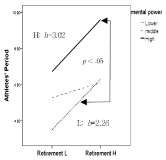
Purpose The purpose of this study was to compare the differences between the three simple control models of Hayes (2012) and to determine whether there were Moderating Effects depending on the level of self-esteem, willpower and belief that are psychological factors in the relationship between athlete's retirement and Athlete's period. Methods To achieve this objective, a total of 259 retirees were collected from data on retirement and psychological factors. The data processing method presented the reliability and feasibility of the measuring instrument through technical statistics, frequency analysis, confirmation factor analysis, and reliability analysis. In addition, we conducted a hierarchical regression analysis using the PROCESS command statement in IBM 20 to examine the regulatory effects. Results The results of the study are as follows: The first was the significant model of Hayes (2012)'s three simple control models. It is up to the researcher to choose which model to choose, but when selecting the model, the justification of the variables must be established on the basis of theoretical basis, and the reliability of the variables must be put in to produce reliable and reasonable results. The second was to verify that the relationship between the retirement factor(10) and the Athlete's period has an adjustment effect based on self-esteem, willpower and belief. Among the psychological factors, the Moderating Effects was greatest in the influence of belief on the Athletes' period, and the more reasons for retirement, the longer the Athletes' period than the weaker. The combined mental strength of all three psychological factors combined shows that the combined effect of control also significantly increases the player's ability to survive by combining with the retirement factor. In particular, sportsmanship has resulted in a better mix of retirement factors than the sense of Self-esteem and will, resulting in a longer increase in the capacity. Conclusions Therefore, players who long for a player always keep their dreams of becoming a big star in mind, and ask me to always keep the belief in hope that I will enjoy my career for a long time.


PURPOSE This study investigated the effects of 12 weeks of clubbell and stepbox training on physical fitness, badminton skills, and fatigue in male badminton, grade A (top grade) club members aged 20–30s, with over 5 years’ experience. METHODS Participants in a training group (TR: n=15) engaged in 12 weeks of clubbell and stepbox circuit training involving maximum 8–12 reps of clubbell exercises and stepbox exercises at over 77% of HRmax for 50–55 min/sessions three times a week. Participants in a control group (CON: n=15) maintained their normal lifestyle pattern during the same intervention period. Dependent variables were measured and compared using repeated measures two-way ANOVA. RESULTS The main results were as follows: 1) The groups showed no significant differences in body composition. 2) Regarding physical fitness, VO2max, relative peak power, relative average power, grip strength, push ups, repeated jump squats, SSPT (seated single-arm shot-put test), 10 m sprint, and hexagon agility increased significantly in the TR, while push ups decreased significantly in the CON. 3) As for badminton skills, forehand clear accuracy, badminton agility, badminton endurance, and smash speed increased significantly in the TR. Forehand clear accuracy decreased significantly in the CON, but badminton agility and smash speed increased significantly. 4) The groups showed no significant differences in fatigue. CONCLUSIONS In male badminton club members aged 20–30s, 12 weeks of clubbell and stepbox circuit training effectively improved physical fitness and badminton skills. However, lack of any improvement in body composition and fatigue warranted further research in these areas.
PURPOSE The purpose of this study was to provide information for improving the performance and skills of 500 m speed skaters by analyzing the kinematic and kinetic changes in their slide board movements over time. METHODS The subjects were 10 male short-distance skaters in their 20s to 30s who were registered as professional athletes with the Korea Sports Council. The changes in joint angle, joint moment, and joint power over time in the subjects’ slide board motion were measured and analyzed. RESULTS It was found that during phase 2 of the skater’s slide board movement, there was an increase in plantar flexion and a decrease in flexion of the lower extremity joint and extension of the knee and hip joint, with decrease in positive power of the knee joint. CONCLUSIONS The results of this study are expected to provide practical information to skating coaches and athletes by quantifying the biomechanical factors observed over time during slide board movements. In addition, this study is expected to contribute to the field of speed skating by presenting scientific training methods and proposing new analysis techniques to improve performance in the future.
PURPOSE The purpose of this study was to investigate the effects of 8-week aerobic exercise and polyphenol intake on body composition, cardiovascular response, vascular endothelial function, and physical fitness at rest and during exercise in prehypertensive men. METHODS The study included twenty-eight males in their 20-30 years of age with prehypertension. Participants in the aerobic exercise + polyphenol intake group (EX + PP; n = 14) performed aerobic exercise three sessions/week, 30 min/session, at 65% of the heart rate reserve, and consumed polyphenol (grape seed extract 300 mg) for 8 weeks. Participants in the aerobic exercise + placebo intake group (EX + PL; n = 14) performed the same aerobic exercise; however, they consumed placebo instead of polyphenol. All independent variables were measured at pre-test and post-test, and the data were analyzed. RESULTS The main results of the study were as follows: 1) SBP and MAP at rest decreased significantly in EX + PP, while MAP decreased significantly in EX + PL group. 2) In the EX + PP group, CO increased significantly, whereas DBP, MAP, and TPR decreased significantly during the hand grip exercise. In contrast, CO decreased significantly, while DBP and TPR increased significantly in the EX + PL group during the hand grip exercise. 3) Regarding vascular endothelial function, % FMD increased significantly in EX + PP group. 4) Sit-up increased significantly in both EX + PP and EX + PL groups; however, sit-and-reach in EX + PP group was significantly higher than that in EX + PL group at post-test. CONCLUSIONS The findings of this study showed that the 8-week aerobic exercise would have positive effects on body composition, cardiovascular response, and physical fitness at rest and during exercise in hypertensive men. Additionally, polyphenol intake would contribute more towards reduction of blood pressure at rest and during exercise and improvement of vascular endothelial function.
PURPOSE The purpose of this study was to investigate the association of physical activity level with insomnia severity (Normal, Subthreshold, Moderate and Severe) in adolescents and to use it as a basis for insomnia prevention. METHODS This study was conducted on a cohort of 50 adolescents under the age of 20 (19 males, 31 females) recruited from Hospital N in Incheon, Korea. Participants were categorized into groups according to the severity of insomnia in both males and females using the Korean version of the Insomnia Severity Index-Korean (ISI-K). The Korean version of the International Physical Activity Questionnaire was also used to calculate participants’ weekly moderate and vigorous physical activity. RESULTS The participants’ characteristics did not differ by insomnia severity in males, but there were significant differences in weight (p=.008), BMI (p=.019), SBP (p=.004), and DBP (p=.019) in females by insomnia severity. In male adolescents, there was no significant difference in the amount of physical activity by insomnia severity, but there was a trend toward decreased amount of physical activity with increasing severity. Among female adolescents, there were significant differences in the amount of physical activity by insomnia severity: moderate (p<.05), high (p<.05), and moderate-high (p<.05). In the unadjusted model, adolescents who did not meet the recommended amount of physical activity (150 minutes per week) were more likely to have insomnia (OR=4.67, 95% CI=1.34–16.24) than those who met the recommended amount of physical activity. The model after adjusting for covariates (gender and body mass index) also showed an association between the recommended amount of physical activity and insomnia (OR=3.94, 95% CI=1.17–13.28). Negatice correlations was found between insomnia index and moderate-to-vigorous physical activity (r=–.357, p=.013). CONCLUSIONS Adolescents are approximately 4.67 times more likely to suffer from insomnia if they do not meet physical activity recommendations, and there was a negative correlation between the insomnia index and moderate-to-vigorous physical activity, suggesting that physical activity should be increased to reduce the insomnia index.
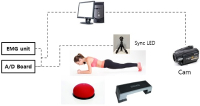
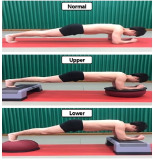
Purpose This study was to analyze and compare series of muscle activities during plank exercises with use of togu-jumper. Methods Ten male subjects (age 26.9±1.7 yrs, height 172.2±5.7 cm, weight 66.5±7.5 kg) who have no musculoskeletal disorder with one's upper or lower limb were selected as subjects. To analyze and compare series of muscle activity, five of surface EMG electrodes were attached to the upper rectus abdominis (URA), lower rectus abdominis (LRA), external abdominal oblique (EO), erector spinae (ES) and gluteus maximus (GM). Each subject did plank exercise on stable support surfaces (normal surfaces) and unstable support surfaces with the togu-jumper. For each dependent variable, one-way ANOVA with repeated measures were performed with significance level p<.05. Contrasts were performed to execute post tests for results with statistical significance. Results The study showed that the average IEMG values of URA and LRA increased in Upper (Togu-jumper used upper limb) compared to normal surfaces. This is perhaps because the effects of URA more than any other muscles for body stability. Furthermore, the peak IEMG values of LRA increased in Upper and Lower (Togu-jumper used lower limb) compared to normal surfaces. In addition, peak IEMG values of EO increased in Upper compared to Normal. This may have resulted due to momentary strong muscle activity in LRA and EO to correct body posture and balance. Therefore, using Togu-jumper on upper limb maximizes the performance of core training in plank exercise. Conclusions The study may be further applied to a method for effective training. It is considered that research and analysis has to be further done on modified plank exercise. Additionally, it is necessary to analyze not only global muscle but also local muscle, as a comprehensive research, to suggest ideal method for plank exercise.
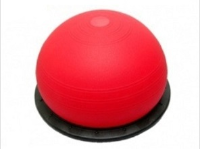
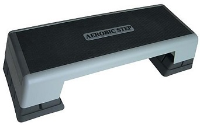
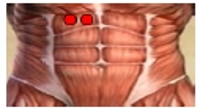
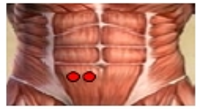
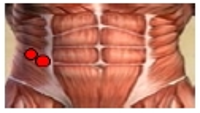
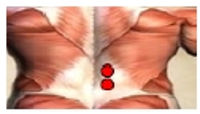
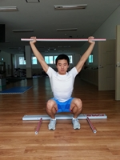
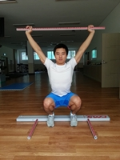
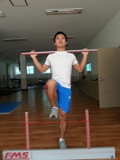
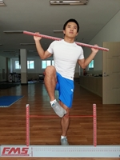
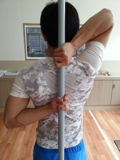
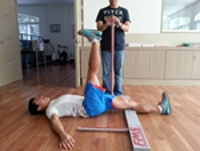
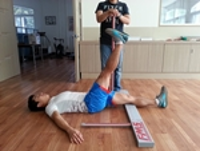
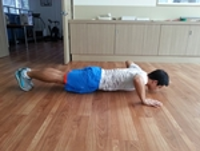
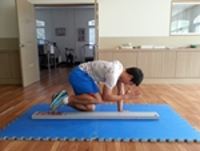
The purpose of this study was to examine the effect of the functional movement improvement training program on the score of high-school baseball players’ functional movement screen (FMSTM) test. After 16-weeks treatment period, a significant increase of Deep Squat, Hurdle Step, In-Line Lunge, Shoulder Mobility, Active Straight Leg Raise, Rotary Stability, and total score was found only in treatment group. There was decrease on the number of players in treatment group whose total score is less than 14; the criteria vulnerable being injured. The results of this study suggested that applying functional movement improvement training program on high-school baseball players can be effective to prevent injuries.









PURPOSE This study assessed Taekwondo’s impact on functional fitness and health-related quality of life (HRQoL) in older women from South Korean multicultural families. METHODS Through purposive sampling, 16 participants were divided into an experimental group that underwent a 12-week Taekwondo training program and a control group without this intervention. RESULTS Pre- and post-intervention assessments showed that the Taekwondo group experienced significant improvements in both functional fitness and HRQoL. These findings suggest that Taekwondo could be an effective physical activity for enhancing the well-being of older women in multicultural families, advocating for inclusion of culturally sensitive physical activities in health promotion programs targeting this demographic. CONCLUSIONS This study contributes to the growing body of evidence supporting physical activity’s benefits for elderly populations, particularly in multicultural family dynamics.
PURPOSE The purpose of this study was to analyze the effect size of the unified theory of acceptance and use of technology (UTAUT) in the sports field using a meta-analysis. METHODS After identifying related studies by using RISS, 22 articles were selected and used to analyze the relationship between UTAUT sub-factors (performance expectancy [PE], effort expectancy [EE], social influence [SI], and facilitating conditions [FC]) and intention to use via the comprehensive meta-analysis program. RESULTS The results are as follows: First, the effect size between PE and intention to use was 0.521. Second, the effect size between FC and intention to use was 0.514. Third, the effect size between EE and intention to use was 0.500. Finally, the effect size between SI and intention to use was 0.475. CONCLUSIONS Diverse strategies can be derived to increase consumers' intention to use in the sports field using the UTAUT model.
PURPOSE This study aimed to investigate the effects of an 8-week unstable surface Pilates training on physical fitness, abdominal muscle thickness, lumbar isokinetic muscle function, and pain in women aged 30–40 who are living a sedentary lifestyle and experiencing nonspecific low back pain. METHODS The training group (TR, n = 15) performed Pilates using small apparatuses on an unstable surface for 50 min/session, three sessions per week for 8 weeks, whereas the control group (n = 13) maintained their usual living pattern during the same intervention period. RESULTS 1) The body weight, body mass index, percent body fat, and fat mass decreased significantly in the TR, 2) whereas the hand grip strength, trunk extension, sit-andreach, and modified Schober test scores improved significantly. 3) The thickness of the external oblique, internal oblique, and transversus abdominis increased significantly in the TR. 4) Lumbar isokinetic flexor strength per body weight increased significantly in the TR. The endurance and endurance per body weight of the lumbar isokinetic extensor and lumbar isokinetic flexor also significantly increased in the TR. 5) The Korean Oswestry disability index (KODI) and the visual analog scale (VAS) score decreased significantly in the TR. 6) Significant negative correlations were found between the change rates in the KODI and nondominant hand grip strength, external oblique thickness, transversus abdominis thickness, and lumbar isokinetic extensor endurance. A significant negative correlation was found between the change rates in the VAS score and external oblique thickness. CONCLUSIONS The results revealed that the 8-week unstable surface Pilates training was beneficial in improving physical fitness, abdominal muscle thickness, lumbar isokinetic muscle function, disabilityindex, and pain levels in women aged 30–40 years who were having a sedentary lifestyle and experiencing nonspecific low back pain.
