Purpose This study examines legal and institutional aspects of FA Compensation System (FACS) which was introduced by Korean professional football league in 2013. Methods This legal analysis reviews the current FACS in lights of several provisions of human rights in the Constitution and other relevant rules of law. Results First, the FACS violates Article 15 of the Constitution that protects 'freedom of choice to workplace' arguably implied under the 'freedom of occupation' provision since the system restricts a player's transfer within the league by requiring a transfer fee paid by the destination team even if the player has acquired the free agency status and his current contract is expiring. Second, the FACS would likely be unconstitutional according to precedents decided by the Constitutional Court and the National Human Rights Commission on the ground that 'freedom of occupation' is closely related to the rights to pursue happiness under Article 10 of the Constitution. Conclusions Based on the legal interpretations, the study argues complete abolition or significant revision of the FACS. This project calls for follow-up studies and further policy-making efforts given the practical magnitude and scholarly merits of the issue.
Purpose The purpose of the study is to analyze China's school sports policy by dividing it into the era of four leaders before the current regime. Methods Former Chinese leader Deng Xiaoping's reform and opening up is a big axis that distinguishes China's time, more than 70 years after its founding. Therefore, we discussed the history of Chinese school sports policy by considering the background of the times, the ideology of the former Chinese leaders, and the keynote of the sports policy that influenced the school sports policy. Results The Chinese school sports policy history before and after China's reform and opening up is summarized as having a continuity to “sports as an education for all” and a distinction symbolized by “legislation and scientificization.” Conclusion Deng Xiaoping's reform and opening up has been carried on by the regimes since then, and his guiding ideology and sports policy keynote have had a profound impact on Chinese school sports policy.

Purpose The purpose of this study was to examine the relationship between the track records and physical abilities in elite cyclists(keirin). Methods Twenty three elite cyclists were measured height, weight, lower body circumference(thigh, calf, and ankle), basal physical abilities(grip/back muscle strength, 25m sprint, Sargent jump test, Burpee test, shuttle run test), one-repetition maximum(1RM) strength(back squat, bench press, leg curl, power clean, dead-lift, leg press), aerobic capacity(V̇O2max, METs, HRmax), and track records(200m and 500m). Stepwise multiple regression analyses were performed to investigate which physical abilities related to track records. Results A statistically significant relationship was found between 200m track records and 2 variables which were the thigh circumference and 1RM leg press(p<.05). Also, the thigh circumference and 1RM leg press were significantly related to 500m track records(p<.05). Conclusions The results showed that the thigh circumference and maximal strength were associated with the track records in elite cyclists(keirin).
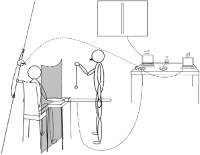
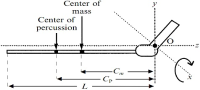
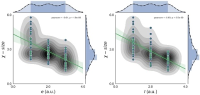
Purpose This study measured the haptic extroperception accuracy, that is, judging one hit position in a hand-held object. Especially, what factors associated the estimation of contact position when the impact is made at the grasped implement by hitting the ball. Methods Relative frequency and conditional probability based analysis verified that perceivers influenced not only the amount of pressure distinguished impressions by the coefficient of restitution but also the pressure distributions encoded impressions by the distance from the hand to the impact. Results Results conformed to previous invariant characteristic on dynamic touch in showing that perceiving the location of the impact of grasped objects, including dominant perceiving selectively modality, is constrained by inertial properties with such success requires appreciating the location of the implement’s center of percussion. Conclusion Investigated in this planes captured as a mechanical factor, we would suggest a broader hypothesis for further research into the effects of the rotational inertia related to haptic position accuracy in the hand-held object, and leading to different estimates of system function providing an account of generalization that accommodates of its varied aspects.
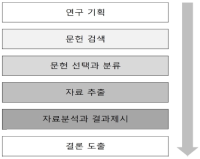
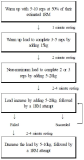
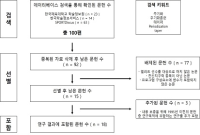
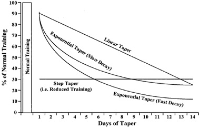
Purpose The aim of this study was to provide athletes and coaches on informations and benefits of a taper through evidence-based scientific studies and literatures in order to optimize an athlete’s top performance for the major competition. Methods Studies and literatures search was conducted using the databases RISS, KISS, SPORTDiscuss. Key words searched: taper AND(competition, OR performance, OR training, OR training). This study were eventually cited by 22 articles for results of this in total 100 articles. Results The training load is remarkably reduced during a taper. With a reduced training load, training intensity should be maintained during the taper. The training load reductions during the taper should be programmed with reducing training volume at 41% to 60% of pretaper training. The reduction of training frequency during a taper means that affect moderately trained athletes and highly trained subjects differently, reducing 30% to 50% of pretaper training and maintaining training frequencies, respectively. Detraining the duration of a taper is not easy. Most athletes is beneficial from a 2-week shorter or longer tapers, depending on their individual profiles of fitness loss, fatigue dissipation, and anxiety. The manipulations of this training program variables usually affect for most athletes and maximal performance gains. Conclusion Training intensity should be maintained during the taper, training volume reductions should be programmed at 41% to 60% of pretaper training. The reduction of training frequency could be reduced 30% to 50% of pretaper training, and most athletes is beneficial from a 2-week shorter or longer tapers. Future researches should be conducted the practical & effectual differences in individual and teamed-based sports after a taper procedure.
Purpose This study was designed to examine the effects of a single corrective exercise (CEX) and corrective kinesio taping (CKT) on gait patterns, plantar pressure, balance, and pain in 20~30s female patients with moderate hallux valgus. Methods Twenty-one participants (age: 30.1±5.1 yrs; height: 164.1±4.8 cm; body weight: 56.7±6.8 kg; body mass index: 21.2±5.7 kg·m-2; hallux valgus angle: 27.2±6.1°) with hallux valgus was recruited and participated in three trials, i.e., CEX trial, CKT trial, and combined CEX and CKT (CEX+CKT) trial, repeatedly in a counter-balanced order. One week of wash-out period was placed between the trials to minimize the effect of the previous treatment on the next treatment. Variables related to gait pattern, plantar pressure, balance, and pain were measured during each treatment. We carried out repeated two way ANOVA on measured variables. Results 1) Regarding gait patterns, CEX treatment and CEX+CKT treatments showed significant increases in the length of patients strides, the single support line during the stance phase, and significant reduction of the cadence. 2) Regarding gait cycle, CEX treatment and CEX+CKT treatments showed significant reductions in the contact times of forefoot, midfoot, and heel. There was a significant reduction of double stance phase in CEX treatment. 3) Regarding foot pressure on gait, CEX+CKT treatments significantly increased the maximum pressure of midfoot and heel. CEX treatments significantly increased the maximum pressure of forefoot. 4) Regarding balance, CEX treatment and CKT treatments significantly increased one leg standing with eyes closed. 5) Pain was significantly reduced in CKT treatment and CEX+CKT treatments. Conclusions According to the aforementioned results, it was concluded that a single CKT treatment was effective in reducing pain when walking and that plantar pressure, gait pattern, gait cycle, and balance were improved through a single bout of CEX treatments. Therefore, treatments by stage, starting with CKT treatments to reduce the pain, and then treating CEX to improve the gait pattern, gait cycle, foot pressure when walking, and balance ability, would be effective. Future research is warranted to identify the effects of long-term treatments.
