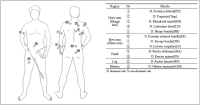
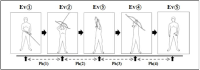
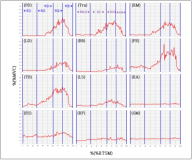
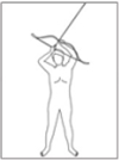
The past few decades has seen increasing kinematic studies using surface electoromyography (EMG) in archery, however there has been no such specific study in Korean traditional archery. The purpose of this study was to evaluate EMGs during archery shooting motion in Korean traditional archers. Ten men Korean traditional archers were participated, and divided into two groups according to the shooting stance; parallel stance group(PSG, n=5) and oblique stance group(OSG, n=5). The surface EMGs were measured 12 muscles during shooting motion of five events including Junbi(Set), Geogung(Set up), Manjak(Full draw), Balsi(Release), Machigi(Ending). At the result, muscle activity of posterior deltoid, trapezius, rhomboid major, latissimus dorsi, biceps brachii, forearm extensor bundle, triceps brachii, levator scapulae significantly increased at event of full draw and release, then significantly decreased again at event of ending, respectively(p<.01, p<.001). The muscle activity of erector spinae(ES) was also significantly increased at event of full draw and release(p<.01, p<.001), while no significant changes in muscles of rectus abdominis, rectus femoris(RF), gluteus maximus. As a result of comparing PSG and OSG, muscle activity of RF in OSG was higher than PSG at event of release(p<.05), it remained until event of ending(p<.05). On the other hand, the higher the tension of the bow, the higher the muscle activity of the draw arm at event of release(p<.05). These results suggest that when Korean traditional archery shooting, both side arm and back muscles are more activated than the abdomen, leg and hip muscles. The parallel stance might suppress the muscle activity of the lower extremities to twist the upper body. And the higher bowstring tension needs to increase of muscle strength in BB of draw arm.


Purpose The purpose of this study was to analyze the research topics of the articles which were published through European Sport Management Quarterly(ESMQ) from 2009 to 2018. The prior topic analysis studies of the ESMQ classified topics based on the key words using NASPE-NASSM SMPS categories. Therefore they couldn't fully reflect the content of the articles. Methods The topic modeling of the current study was conducted with the Latent Dirichlet Allocation(LDA) which generates topics based on the word usage in the article. A total of 265 articles were converted from 'pdf' format to 'txt' ANSI format for topic modeling analysis. The whole topic modeling process was done using R program and the model was set to generate 10 topics from the article. Results The 3 sport management experts were hired to label the name of the topics and the name of the topics are as follow : (1) Impact of mega sport event, (2) Cause-related marketing, (3) Factors affecting the results of the competition, (4) Managing sport organization, (5) European sport leagues, (6) Strategic management, (7) Sport economics, (8) Sport in communities, (9) Sport consumers, (10) Elite sports. It is not quite possible to compare the results of the current topic modeling results with the previous ones because of the methodological differences. However, even though the standards are different, Sport marketing topic showed the largest growth among the 10 topics extracted. Conclusions This study used the LDA probabilistic algorithm to analyze research topics, which made the analyses more objective and wholistic. However, the insights of the researchers were still needed to interpret and labeling the topics.
Purpose This study aims to contemplate the identity and significance of sport ethics as an independent academic field by examining how it began and developed, where it is now, and where it will or should be moving forward. Methods First, a history of sports philosophy which gave birth to sport ethics is surveyed. Second, the emergence of sport ethics in the historical development of sport philosophy is analyzed. Third, major methodologies and theoretical frames of sport ethics are introduced. Last, what needs to be done in South Korea in relation to sport ethics is suggested. Results Sport ethics in the future is expected to resort to interdisciplinary approaches which combine a variety of academic disciplines and methodologies. In addition, sport ethics must relate its theory to practice. The pressing task for sport ethics in South Korea is to establish its identity as a separate academic field. In order to do this, we should figure out what to study in sport ethics, and continue to study about the range, methodology, and theoretical frame of sport ethics. Conclusions The establishment and development of an academic field becomes only possible when fully supported by numerous scholars’ work, practical achievement of the field, and a diversity of policy and institution, and a continued discussion and agreement on the content and methods of the discipline. In order to enhance its status as well as professionalism of sport ethics scholars, researchers of various academic backgrounds should study sport ethics, exchange ideas on theory and methodology, and spread results of studies through education, guiding through the development of sports.
Purpose The purpose of this study was to investigate characteristics of levels of physical activity in considering gender and different types of competition-oriented physical activity classes using three-dimensional accelerometers. Methods A total of 981 students(505 male students, 476 female students) in six different types of physical education classes were participated in this study. All of the six different types of physical education classes were competition-oriented classes, and levels of physical activity were accessed by three-dimensional accelerometers. Data were analyzed using t-test and ANOVA. Results First, descriptive analyses of participation time of levels of physical activity showed that MVPA of physical education classes is 10.26 mins (22.89%) on average, and, MVPA showed differently in different types of physical education classes in the order of T ball(14.61 mins), flying disk(12.61 mins), soccer(10.78 mins), volley ball(10.56 mins), basketball(9.64 mins), and table tennis(5.73 mins). Second, female students showed significantly lower levels of MVPA in all the different types of physical education classes. Third, post-hoc analyses showed that significantly higher levels of MVPA were found in T ball physical education classes and significantly lower levels of MVPA were found in table tennis physical education classes, compared to other types of physical education classes. Conclusions MVPA in physical education classes is not satisfied with recommended MVPA, and MVPA in Korean physical education classes is lower than MVPA in same types of physical education classes in other countries. In addition, significant mean differences of MVPA are found between male and female students, and new sports physical education classes show higher levels of MVPA compared to classic sports physical education classes. These results indicate that competition oriented physical education classes widely used in Korea need to find ways to increase MVPA and to overcome different levels of MVPA between male and female students.
PURPOSE This study aimed to analyze the moderating effect of physical fitness on the relationship between abdominal obesity and metabolic syndrome (MetS) in older women. METHODS A total of 190 participants were categorized based on waisthip ratio (WHR) into high (50%) and low (50%) groups, as well as based on Z-score of fitness into high (25%; high fit), moderate (50%; moderate fit), and low (25%; low fit) groups. Logistic regression was used to assess the relative risk of MetS based on abdominal obesity and fitness levels, and moderation analysis using the Process macro was conducted to explore the moderating effect of fitness on the relationship between abdominal obesity and MetS risk factors. RESULTS After adjusting forcovariates, logistic regression showed that high WHR (odds ratio (OR)=2.721, p=0.004) led to a significantly higher risk of MetS compared with low WHR; the high fit group (OR=0.360, p=0.044) had a significantly lower risk of MetS compared wih the low fit group. Moderation analysis revealed that the impact of abdominal obesity on MetS risk factors varied depending on the level of fitness (β=-0.495, p=0.037), and the results remained significant after covariate adjustment (β=-0.458, p=0.049). CONCLUSIONS This study suggests that the risk of MetS from abdominal obesity can be mitigated by higher levels of physical fitness. These findings highlight the need for participation in regular physical activity to maintain a high level of fitness, along with proper nutritional intake, to prevent MetS in older women.
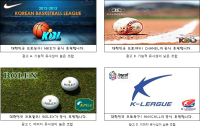
The purpose of this study was to examine the effects of congruence type between sporting event and corporate sponsor as well as the effects of advertisement exposure frequencies (1, 3 or 5 times) on advertisement attitude and advertisement effectiveness, including brand attitude and advertisement wear-in and wear-out effects. Data (N=150) were collected using a convenience sampling method and 3-group random assignment. The collected data were analyzed by means of frequency analysis, reliability analysis based on factor rho coefficient, correlation analysis, one-way ANOVA, confirmatory factor analysis, and latent mean analysis. The results were as follows; firstly, in case of higher functional congruence condition, advertisement attitude was most positive in a 3-time exposure situation and it decreased as advertisement exposure frequency further increased. However, in the lower functional congruence situation, advertisement attitude was continuously decreased as advertisement exposure frequencies increased. Secondly, in the higher image similarity situation, advertisement attitude was increased as advertisement exposure frequencies increased. On the other hand, in the lower image congruence situation, advertisement attitude was decreased as advertisement exposure frequencies increased. Lastly, advertisement attitude, brand attitude, and wear-in effects were statistically higher in the high functional and image congruence situations than did in the low functional and image congruence situations.
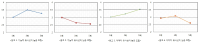
The purpose of this study was to investigate the effects of National Fitness Award program group exercise classes on daily fitness and balance-confidence among the elderly participants(n=496, 80.2% women). This study investigated body composition, daily fitness, and balance-confidence, and quality of life among the subjects who participated in the combined exercise program of improving physical fitness class for 8-week in the 10 national physical fitness certification centers by the demonstration project for the elderly of 2013 Korean National Fitness 100 project. Body composition and physical fitness for daily living were defined by Korean National Fitness 100 project for elderly, also the balance-confidence and health-related questionnaires were added. The following results were obtained by comparing the pre-test and post-test. In body composition body weight (p<.05), body mass index (p<.05), fat mass (p<.01), and percent body fat (p<.05) were significantly decreased, but muscle mass was not. Except for walking-around-two-cones-in-a-figure 8, all other daily fitness items such as relative grip strength (p<.001), chair sit to stand, two minutes place to walk, and sit-and-reach significantly increased (p<.01), and timed up and go were significantly decreased (p<.01). In balance confidence rating ABC tests (p<.001) were shown significantly increased. Although, quality of life measured by EQ-5D was not significantly improved, self-health status measured by EQ-VAS (p<.001) showed significant increase. Therefore, the group exercises of National Fitness Award program improved body composition, daily fitness and balance confidence in Korean elderly participants.
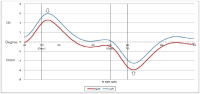
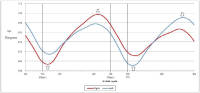
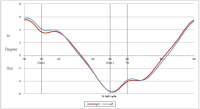
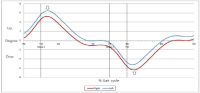
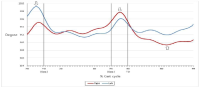
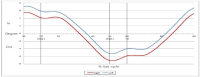
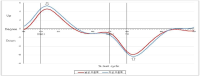
The purposes of this study were to establish gait reference data for 20s Korean and to analysis between Korean and foreigner. Male 34 and female 36 were selected for a subject group in accordance with the classification system of Korean standard body figure and age by Korean Agency for Technology and Standard. The sample size was calculated by GPower which is used for power analysis. The power of this study was 80.7%. 3D motion capture system and force platform were used to measure in this study. Gait data were collected by 8 cameras and 2 force platform. Each camera was operated at 120 frames/sec for sampling frequency and 1/1000 sec for shutter speed. The sampling frequency of force platform was 1200Hz. As a result of the study, the following results were obtained. A statistically significant difference in analysis between gender and within gender was appeared differently dependent on whether or not standardized. No significant difference appeared between legs for a female group in all temporospatial variables. But the significant difference with support time ratio and swing time ratio appeared for a male group. In analysis between gender, a significant difference appeared about walking speed and cadence. In pelvic tilt, a significant difference between right and left was found only in frontal plane for a male but found in a frontal plane and a horizontal plane for a female. In analysis between gender, a significant difference was found in sagittal plane both legs. In conclusion, normal gait pattern between gender was different and showed the difference between Korean and foreigner.

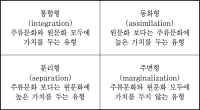
The purpose of this study is to examine acculturation strategies of expatriates in Korea in relation to spectator sport involvement. Berry's(1997) bi-dimensional model of acculturation was used as a theoretical framework to categorize the type of acculturation strategies of expatriates in Korea. Acculturation strategies of expatriates were classified into four types: integration, assimilation, separation, and marginalization. To be specific, there were 79 participants using the integration strategy, 28 using the assimilation strategy, 53 using the separation strategy, and 20 using the marginalization strategy. Research hypotheses were established to analyze differences on spectator sport involvement of expatriates between Korean spectator sport and their original cultural sport. There were significant differences in spectator sport involvement among foreigners in Korea. Firstly, the spectator sport involvement of the participants using the integration strategy was higher than that of marginalization. Second, participants categorized as using assimilation strategy were found to have lower sport involvement with Korea's spectator sport and had a higher involvement with their original cultural sport. Third, participants categorized as using separation strategy were found to have higher involvement with their original cultural sport than Korea's. Fourth, participants categorized as using separation strategy did not show significant differences with assimilation participants in comparing original cultural spectator sport. In conclusion, the result of the research indicated that expatriates living in Korea showed similar characteristics of Berry's (1997) acculturation strategies. Thus, It indicated that Berry's (1997) acculturation strategies are useful theoretical tools predicting psychological preference of expatriates in Korea. However, participants showed little difference in that all expatriates of four categories showed higher involvement with their original cultural spectator sport. Therefore, unlike Berry's (1997) theory, people with high level of acculturation showed higher levels of involvement with their original cultural spectator sport. It may provide useful information for Korean sport marketers regarding s foreign sport consumers in order to develop a market.
PURPOSE This study aimed to explore and analyze research impact of Korean ’Kinesiology’ studies, especially in the aspects of international research impact gauged by the citation counts from Scopus bibliometric database. This study contributes to relevant literature in that it is the first endeavour to evaluate the pattern about how the entire Korean ’Kinesiology’ articles have been cited in international articles. METHODS TTwo types of sample articles were collected in this paper. Firstly, 19,867 target articles published in 23 KCI-accredited Korean ’Kinesiology’ related journals from 2001 to 2015. For the Korean target articles, secondly, international citing articles that took advantage of target articles as references were collected from Elsevier’s Scopus database separately. RESULTS As a result, just 5% of the target articles were cited at least once for five years after publication. The topics of top cited research topics include ‘exercise’, ‘physical activity,’ ‘Alzheimer’s disease, ‘ ’body composition’ and ‘insulin resistance’. Besides, the Korean 'Kinesiology’ articles were the most influential to articles about ‘Medicine,’ ‘Health Professions,’ ‘Multidisciplinary,’ ‘Social Sciences,’ and ‘Nursing’. CONCLUSIONS This study showed that one Korean ’Kinesiology’ article was cited 0.09 times on an average in international Scopus-indexed articles. Considering that the average number of citations in domestic articles is 5.6 times, the international citations of Korean ’Kinesiology’ research still have much room for growth. However, this study confirmed that the scope of the international impact is not limited to a few countries, but is spreading to various countries, and its impact has been growing in recent years.
