The purpose of this study was to describe psychological changes and variables of injured elite athletes during sport injury rehabilitation. 5 injured elite athletes were selected as participants, and open-ended questionnaires, participant observation, and in-depth interview were used for collecting data. Results from the data were analyzed through transcription, coding, and categorization with inductive method. To validate the results of this study, triangulation, in-depth description, member checks, and peer debriefing were used, and findings of this study were as follow. The participants showed negative psychological state such as fear of return to play and anxiety during the initial rehabilitation program, but their psychological state was changed positively such as recovery of confidence and desire of return to play at the end of program. However, the specific psychological changes of each participant showed several differences according to participant's surrounding environment and situation during the rehabilitation program. All findings have important implications for implementing and developing rehabilitation program, so needs to be investigated further.
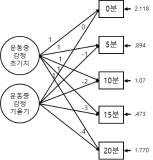
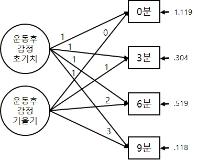
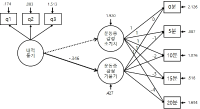
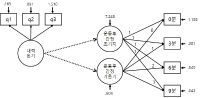
Recent research on exercise and affect has examined participants` affective changes during and after exercise with a longitudinal approach. With regard to this viewpoint, a theoretical model (Dual Mode model) has been presented to explain the different change of affect in an exercise setting and the model identified the impact of psychological factors on the affective changes. However, not only there is little empirical studies on the dual-mode model, but some relevant research has used an inappropriate statistical method (ANOVA), which cannot effectively explain the overall trends in affective change during and after exercise. Exiting research has a limitation to generalize the DM model examining only a certain gender such as active male or inactive female participants. Thus, the aim of present study was to investigate the effect of intrinsic motivation on affective change during and after exercise in participants who do not take part in regular exercise considering gender based difference. 51 inactive university students (M: 36, F: 15) responded a survey measuring intrinsic motivation for running activity and participated in moderate-intensity running exercise to examine affective change during exercise. Therefore, present study examined the influence of intrinsic motivation as a psychological variable on the trend of affective changes during and after exercise based on the dual mode model. Results from the latent curve model analysis revealed that there were decreasing trends of affect during exercise and the trends were individually different. Importantly, the decreasing trends were weaker in the participants with higher intrinsic motivation[FL=-.34, p=.000]. Additionally, participants` affective responses were positively changed after the exercise in general, but the changes were not influenced by intrinsic motivation. Therefore, the decreasing trend of affective change during exercise was weaker in the participants with higher intrinsic motivation, and the positive change in affect after exercise was not influenced by intrinsic motivation.
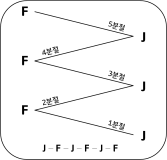
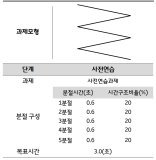
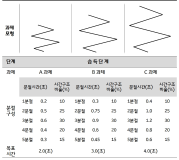
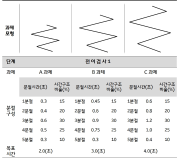
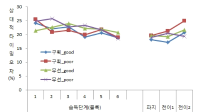
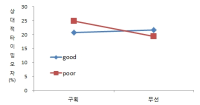
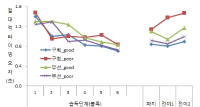
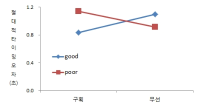
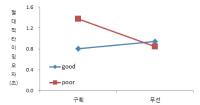
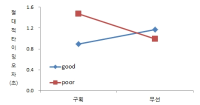
The present study was conducted to determine the effect of contextual interference (CI) and motivational properties (MP) of Knowledge of Result (KR) in learning on relative and absolute timing. Participants (N=48) were randomly assigned to one of four practice groups, which differed in practice structure on CI (blocked, random) and KR on MP (good trial, poor trial). They performed temporal timing tasks in pre-exercise and acquisition phase and went through a retention test and 2 transfer tests after approximately 24 hours. The main findings showed that first, for the relative timing error there was no significant main effect of CI and MP in the acquisition phase, retention, transfer1, and 2 test. However, there was a significant interaction effect between CI and MP in the transfer 2 test. Second, for the absolute timing error there was no significant main effect of CI and MP in the acquisition phase, retention, and transfer test 2 while there was in the transfer test 1. Moreover, there was a significant main effect between CI and MP in the retention, transfer 1, and 2 test. The findings indicated that 1) there was a significant learning effect of absolute timing between KR_good group and KR_poor group on blocked practice in the retention test, 2) random practice schedule and KR_good condition resulted in enhanced absolute timing performance relative to blocked practice and KR_poor respectively at transfer test 1, 3) there was a significant learning effect of absolute timing between KR_good group and KR_poor group on blocked practice at transfer test, 4) KR_good condition could be an useful relative timing learning strategy relative to KR_poor on blocked practice schedule at transfer test 2, effector transfer test. KR-good condition resulted in learning superior to KR_poor group on blocked practice schedule as well. However, there was no significant difference between two conditions on random practice, and 5) there was no difference in the learning effect of absolute timing error between KR_good and KR-poor group in the blocked practice, while there was not in the random practice. It indicated that motivational properties would influence the learning effect of timing in the blocked practice.
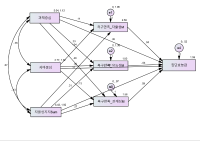
In sport context, the motivational climate created by significant others (e.g., coachs and peers) has been influences on the athletic-student's motivation, engagement, performance, and skill development. Collective efficacy is important for team performance because it influences a group's task choice, effort expenditure, persistence in the face of failure, and resistance to discouragement. This study was to examine the influence of peer motivational climate (i.e., task-involving and ego-involving motivational climate) and coach autonomous support for basic psychological need satisfaction and collective efficacy. In the study, participants were 289 athletic-students' of team sports. In the study then, questionnaire was assessed using by the correlation and path analysis. The results showed that task-involving motivational climate significantly predicted of collective efficacy, while ego-involving motivational climate were negatively predict to the collective efficacy. The results suggest the importance of considering peer influence in addition to coach influence when examining motivational climate in team sport.
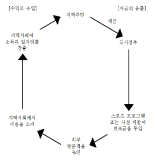
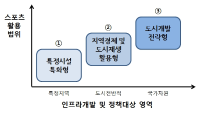
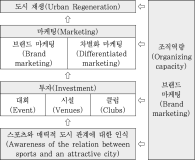
A number of global cities and local cities facilitate local economies and development by utilizing sports. However, their strategy is likely to be a short-term and one-time policy, which does not continuously strengthen their development. Therefore, the use of sports needs to be considered as more specific and longer term strategies for local development. This study examines the concept and role of sports city focused on cases of overseas sports cities, and successful and ideal cases of background and features of sports cities were analyzed to promote and lead the direction of improvement of sports cities in Korea. Consequently, strengthening a city’s sport capability and connecting it to local development need to be met to become a city into a successful sport city. To do so, it should premise recognition that sports cannot be treated separately from other urban policy area and it needs to invest in sports facilities, hosting sports events and competitions, and sports clubs based on the recognition for the importance of sports. Moreover, it needs a marketing strategy for branding and differentiation through sports of a city’s expertise. Finally, to make sports act as a catalyst to strengthen the process of an integrated city’s competitiveness, it requires a local government’s strong leadership and organization capacity of stakeholders.





The purpose of the study is to find the impact of social and economic factors in physical activity of children and youth. This study utilized the data from 4th Korean Children and Youth Panel Study(KCYPS), and the analysis were carried out based on the starting sample of 2,009 from ‘the elementary 4 panel’ and 1,978 from the ‘middle school 1 panel’ and 1,984 from the ‘high school 1 panel’, 5,971 full data were used in the final analysis. Data were processed using hierarchical regression analysis and it was statistically validated at the significance level of 0.05. First, Pearson r and Spearman ρ showed that all variables are statistically significant correlations. Second, among the first factors of personal and family characteristics, household income level(B=.113), family composition(B=-.049) and parental education (B=.060) were found on a significant impact on the movement of physical activity time, parental education (B=.027) was found on a significant impact on the subjective evaluation of physical education grades. Third, among the second factors of community-level characteristics, Gini coefficient (B=-.810), wealth concentrating (B=.120) were found on a significant impact on the movement of physical activity time, the Gini coefficient (B=-0.315) was found on a significant impact on the subjective evaluation of physical education grades. Additional factors that determine the coefficient of variation in the level 2 were found to be 0.623 and 0.001 respectively. Therefore, second factors of community-level characteristics are added such as Gini coefficient, wealth concentrating were explained to children and youth exercise time during physical activity 62.3%(p<.01) and subjective evaluation of physical education in grades 0.1%(p<.01). predictive power to

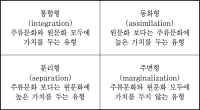
The purpose of this study is to examine acculturation strategies of expatriates in Korea in relation to spectator sport involvement. Berry's(1997) bi-dimensional model of acculturation was used as a theoretical framework to categorize the type of acculturation strategies of expatriates in Korea. Acculturation strategies of expatriates were classified into four types: integration, assimilation, separation, and marginalization. To be specific, there were 79 participants using the integration strategy, 28 using the assimilation strategy, 53 using the separation strategy, and 20 using the marginalization strategy. Research hypotheses were established to analyze differences on spectator sport involvement of expatriates between Korean spectator sport and their original cultural sport. There were significant differences in spectator sport involvement among foreigners in Korea. Firstly, the spectator sport involvement of the participants using the integration strategy was higher than that of marginalization. Second, participants categorized as using assimilation strategy were found to have lower sport involvement with Korea's spectator sport and had a higher involvement with their original cultural sport. Third, participants categorized as using separation strategy were found to have higher involvement with their original cultural sport than Korea's. Fourth, participants categorized as using separation strategy did not show significant differences with assimilation participants in comparing original cultural spectator sport. In conclusion, the result of the research indicated that expatriates living in Korea showed similar characteristics of Berry's (1997) acculturation strategies. Thus, It indicated that Berry's (1997) acculturation strategies are useful theoretical tools predicting psychological preference of expatriates in Korea. However, participants showed little difference in that all expatriates of four categories showed higher involvement with their original cultural spectator sport. Therefore, unlike Berry's (1997) theory, people with high level of acculturation showed higher levels of involvement with their original cultural spectator sport. It may provide useful information for Korean sport marketers regarding s foreign sport consumers in order to develop a market.
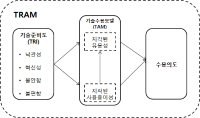
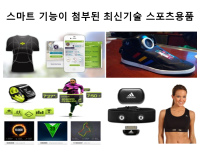
The current study was aimed to examine acceptance intention of sports Wearable products using the Technology Readiness and Acceptance Model. Data were drawn from 271 consumers in their 20s and 30s. Data were analyzed through frequency analysis, exploratory factor analysis, confirmatory factor analysis, reliability analysis, correlation analysis, simple regression analysis and multiple regression analysis using SPSS 20.0 and AMOS 20.0 program. The results were as follows: First, optimism had a positive effect on perceived usefulness but innovativeness, discomfort and insecurity did not affect perceived usefulness. Second, optimism and innovativeness had a positive effect on perceived ease of use and discomfort had a negative effect on perceived ease of use but insecurity did not affect perceived ease of use. Third, perceived ease of use had a positive effect on perceived usefulness. Fourth, perceived usefulness and perceived ease of use had a positive effect on acceptance intention.
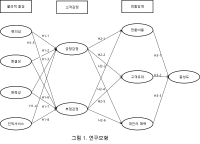
The purpose of this study was to investigate the relationship between physical environment, customers' emotions, switching barriers and loyalty among water ski resort users in Gyeonggi-do and Gangwon-do province. Convenience sampling method was used, 277 of the questionnaires were selected as the ultimately valid sample. Data were analysed by SPSSWIN 18.0 and AMOS 18.0 program using frequency analysis, reliability analysis, correlation analysis, confirmatory Factor Analysis(CFA) structural equation model(SEM). The research findings are as follows. First, relations between physical environment and customers' emotions, attractiveness, cleanliness, convenience and human service had a significant positively impact on positive emotional response. convenience, attractiveness, human service, and cleanliness had a significant negatively impact on negative emotional response. Second, relations between customers' emotions and switching Barriers, positive emotional response did not have a significant impact on switching cost and interpersonal relationship, but positive emotional response had a significant impact on attractiveness of alternatives. negative emotional response had a significant impact on switching cost, interpersonal relationship and attractiveness of alternatives Third, relations between switching barriers and loyalty, switching cost did not have a significant impact on loyalty. but interpersonal relationship and attractiveness of alternatives had a significant impact on loyalty.
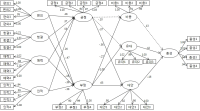
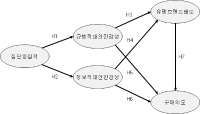
The objective of the current study is to empirically reveal the impact of self-recognized group cohesiveness and interpersonal susceptibility (normative interpersonal susceptibility and informative interpersonal susceptibility) on mountain bikers’ attitude toward name brand and purchase intents using structural equation model. In order to achieve this goal, the researchers surveyed 217 mountain bikers in six mountain bikers’ clubs in Chungcheong-do province area in South Korea. In order to validate the proposed structural model, SPSSWIN version 21.0 and AMOS 18.0 were utilized. The results showed that first, group cohesiveness had a positive influence on the bikers’ normative and informative interpersonal susceptibility. Second, normative and informative interpersonal susceptibility positively influenced attitude toward name brand. Third, normative interpersonal susceptibility did not positively influence the purchase intent, but informative interpersonal susceptibility did. Fourth, attitude toward name brand positively influenced the purchase intent.
