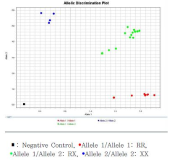
The ACTN3 R577X polymorphism has been associated with an elite athletes status. Several studies have determined that the R allele is connected with power-oriented athletic performance, whereas the nonfunctional XX genotype may give some beneficial effect for endurance performance. The main aim of the study was to determine the possible interaction between the ACTN3 R577X polymorphism and an power-oriented athlete status in Korean elite athletes(wrestling 31, judo 13, boxing 16, fencing 6, cycle 16, ≤400m athlete 18). Each athletes performed a 30-second WAPtest with a resistance equal to 7.5% for male and 5% for female body weight. Genotyping for the ACTN3 R577X (rs1815739) polymorphism was performed using the TaqMan approach. The ACTN3 R577X genotypes exhibited a HardyWeinberg equilibrium distribution in our population. The relative and absolute average power results of the 30-second Wingate test did not differ significantly among the genotypes. However, the relative peak power result of the Wingate test was significantly higher in the R-allele- dominant model groups than in the XX group in male but not female athletes. These results suggest that the ACTN3 R allele is associated with the relative peak power during the Wingate test in male Korean elite athletes.
The purpose of this study was to examine the relationship of obesity index, fitness and cardiovascular risk index in middle and high school students. Obesity index, fitness score and cardiovascular risk index were measured from 1,044 middle and high school students. The results of relation between obesity index and fitness showed that the higher obesity index had significantly lower fitness score for both boys and girls (boys: p<0.001, girl: p<0.05) The results of relation between obesity index and cardiovascular risk index indicated that the higher obesity index had significantly higher cardiovascular risk index for both boys and girls (boys: p<0.001, girl: p<0.001). Moreover, The lower fitness index showed significantly higher cardiovascular risk index regardless of gender in middle school students (boys: p<0.001, girl: p<0.01). Therefore, the results of this study indicated that obese adolescents had the lower fitness level and high possibility of cardiovascular risk.
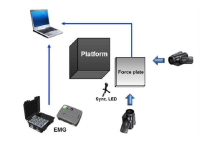
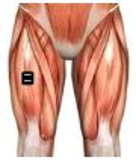
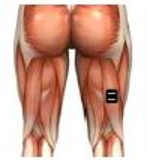
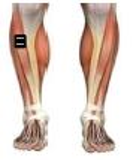
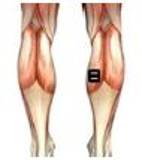
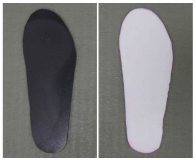
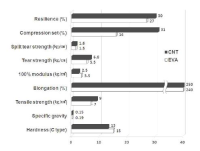
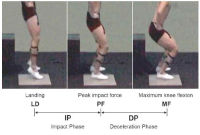
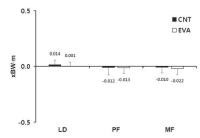
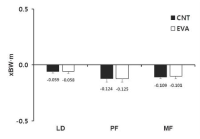
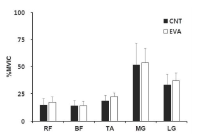
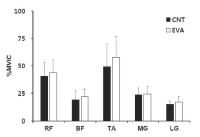
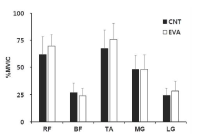
The purpose of this study was to investigate effects of carbon nanotube-based insole on the resultant joint moment and muscle activity of the lower extremity during drop landing. Ten males with no known musculoskeltal disorders were recruited as the subjects. Two digital camcorders and one force plate were used to obtain 3-D kinematics and kinetics of the lower extremity. To assess the myoelectric activities of selected muscles, five surface electrodes were attached to the right side of the lower extremity. For each dependent variable, paired t-test was performed to test if significant difference existed between with carbon nanotube-based insole(CNT) and ethylene vinyl acetate-based insole(EVA) conditions(p<.05). The results showed that average and peak IEMG values from RF, TA, MG, and LG in CNT were lower than corresponding values in EVA. Although no significant difference in resultant joint moment was found between two conditions, a decrease in the knee extension moment was found with CNT. This indicates that wearing carbon nanotube-based insole may help to decrease impact force and to control excessive flexion movement of the knee joint during landing.





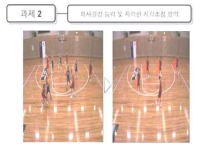
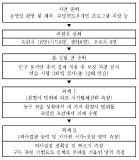
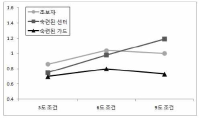
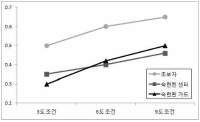
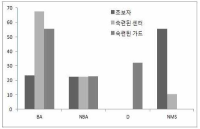
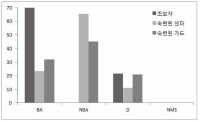
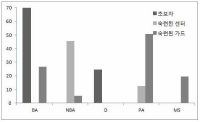
The purpose of this research was to investigate the difference in decision making and perceived eye-focus location on peripheral vision and attacker's expertise in basketball tactical game. A total of twenty four subjects who were expert guard players (n=8), expert basketball center players (n=8), and novices (n=8), participated in this experiment. All subjects participated two tasks. The first task was to anticipate the attack direction after viewing a sequence of basketball tactic film. These films simulated three situations including offensive patterns. The three situations were consist of 3, 6, 9 degree peripheral vision. The second task was to express the level of confidence on their anticipation and to verbalize the perceived visual cues immediately after responding. For this research, an Eyelink eye movement system, an equipment for measuring anticipating, basketball tactic film were used. The variables on anticipation of attack direction were speed, accuracy, and the level of confidence. The acquiring process of advanced visual cues was examined through analyzing visual search strategies and perceived eye-focus location. In order to examine the difference in visual search, in decision making, and in perceived eye-focus locations as a function of expertise, data were analyzed through descriptive statistics, two-way ANOVA, and two-way MANOVA. This research had the following results. First, there was a significant difference on the search rate among the three groups. But, on the other hand, expert guard and center exhibited more fixations of shorter duration than the novices in the 6 and 9 degree condition. Second, results from the ratio of fixation time allotted to areas in the 3 degree condition revealed that experts spent more time fixating the ball-attacker(BA) than novices. The results from the ratio of fixation time allotted to areas in the 6 and 9 degree condition revealed that expert guard and center spent more time fixating the non-ball attacker(NBA) than novices. Expert guard also fixated longer on the pass attacker(PA) and meaning space(MS) than novices. Finally, experts paid attention to two or three locations simultaneously, whereas novices did to only one location such as the ball, attacker, defender, non-meaning space in all condition.


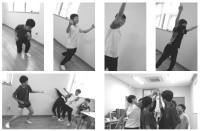
The objective of this study was to examine the relationships among preferred and perceived leadership behavior, their congruence, and satisfaction with leadership based on Chelladurai's(1978) Multidimensional Model of Leadership(MML). To achieve the study objective, 210 professional dancers from 6 professional dance teams located in Seoul and the suburbs participated in this study. For hypotheses testing, descriptive statistics, hierarchical multiple regression analyses, and a confirmatory factor analysis using SPSS and AMOS were used. Results showed that the congruence between preferred and perceived leadership behavior did not have statistically significant influence on dancers satisfaction. The results of the study were inconsistent with what MML suggested. However, the results were quite consistent with empirical evidences of previous studies that investigated the influence of the congruence between preferred and perceived leadership on satisfaction.

The purpose of this study was to verify the effect on elementary school students in the exercise start stage by performing a sport psychological skill training to improvement of psychological skill and life skill. Participants were eight elementary school boys volleyball player. The program consisted of psychological skills and life skills in educational counseling model of Visek et al(2009). It was conducted 40-50 minutes a session in total for 22 sessions. Data was collected through a psychological test, worksheet and participant observation, in-depth interviews. The collected data was analyzed to verify difference by paird t-test after pre-middle-post test and to extract meaningful data category. Quantity analysis showed that a result of sport psychological skill test proved a significant difference in willingness to overcome, confidence, concentration, anxiety regulation. Life skill test were no significant differences in all factors. However, the rise of scores was observed on result of the pre-middle paired t-test of life skill during season. Quality analysis showed possibility of goal setting, concentration on the routine, decrease of competitive anxiety, increase of positive thinking, self-understanding and understanding of others, promotion of communication among team members. This sport psychology skill training had a significant effect on the psychological skills of elementary players change. But it seems to be necessary life skills in a more through review of the information.

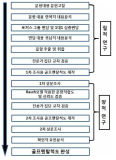
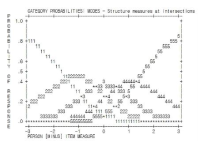
The purpose of present study is to develop the'Golf Mental Scale'that measures and assesses golf players' cognitive, emotional, behavioral response per golf mental factor experienced while competing in depth. In order to achieve this research purpose, Researcher collected raw data of golf mental question through literature review and interview with 8 members of Korean male national golf team and gathered questions per factor through Deductive-Inductive Content Analysis for the raw data. Then, Researcher conducted first and second questionnaire survey targeting 253 of elite & pro golf players and conducted Rasch Model and Confirmatory Factor Analysis for the data collected using SPSS 21.0, Winsteps Ver. 3.65 Program, AMOS 18. The conclusion reasoned out through these research process was as follows: First, golf players' psychological factor structure identified was revealed as Concentration, Self-confidence, Anxiety and Arousal control, Emotion control, Thought control. Total 37 questions were determined. Second, 5 point scale was revealed to be a good fit for Golf Mental Scale. Third, the result of Construct Validity Verification of CFA showed that Golf Mental Scale model was a good fit. Fourth, Reliability of Golf Mental Scale showed high level by recording Cronbach' α value .936. Fifth, Internal Consistency of Convergent Validity and Discriminant Validity was revealed to be satisfied. Eventually, Golf Mental Scale is expected to be used practically as a functional test tool that provides participant's response toward each situation-specific questions concretely and an objective evaluation of participant's golf mental ability per factor considering questions'level of difficulty and participants'characteristic.
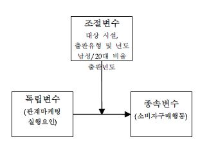
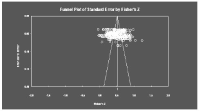
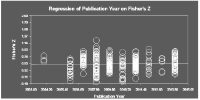
The current study aimed to investigate the impact of relationship marketing on sport consumer behaviors using meta-analytic techniques. Findings from 18 dissertations and 17 journal articles were used to test the relationship marketing and various sport consumer behaviors via the comprehensive meta analysis (CMA) program. Results showed that consumer orientation positively affected purchasing behavior of consumer. On the other hand, sport consumer behavior was not influenced by price. The relationship marketing factors had a most positive effect on, in order of, preference, reliability, and satisfaction. Results didn't find significant moderating evidence for sport facility types, publication types, publication year, the ratio of male and respondents'age.



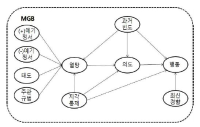
The current study aimed to examine behavioral intentions of online sports products consumers using the Extended Goal-directed Behavior Model. The questionnaires were distributed to consumers who had experience of purchasing sports products online. Data collected from 282 respondents were analyzed mainly using structural equation modeling. The results were as follows: First, attitude and subjective norm had a positive effect on desire. Second, perceived behavior control did not affect desire but had a positive effect on behavior intention. Third, positive anticipated emotions had a positive effect on desire and negative anticipated emotions had a negative effect on desire. Fourth, prior knowledge did not affect desire and behavior intention. Fifth, frequency of past purchase behavior did not affect desire, but had a positive effect on behavior intention. Lastly, desire had a positive effect on behavior intention.


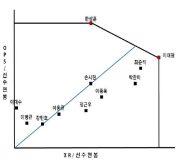
This paper analyze Korean baseball player's efficiency based on entire team and each team by using DEA (Data Envelopment Analysis) and use this efficiency to discuss effective way of recruiting players. Therefore, the purpose of this study was to evaluate each professional baseball team management efficiency through Data Envelopment Analysis. Player who were qualified free agent salary for the input variable and OPS and XR for output variable were used respectively then data were analyzed using Frontier Analyst 4.0. Also the recruiting factors of FA baseball player were confirmed by five baseball experts. we categorize the five factors of recruiting: age, durability, skill of improvement or decline, steady record, necessary position. The results were as follows. First, Han Sang-Hun and Lee Dae-Hyeong recorded the most efficient management among all professional baseball player. On the other hand, Choi showed inefficient management, followed by Park Han-Yi, Son Si-Heon, Lee Jong-wook, Jeong Keun-Woo, Lee Yong-Kyu, Lee Dae-Soo, Kang Min-Ho, Lee Byeong-Kyu.
