Values, such as development and social responsibilities, are added on victory-oriented Korean sport. Those change of values are along with discussions regarding improvement of players’ training environment, however, discussions on improvement of players’ training environment so far rather focused on ideological concepts, such as players’ holistic human development and human rights, therefore, there was a lack of discussion on practical training methods or teaching methods. This study focused on mental coaching as a specific method for improvement of players’ training environment. Mental coaching provides players with performance enhancement, personal growth, and self-actualization utilizing mental training, consulting, and mentoring in their training processes. This study examined a possibility of introduction of mental coaching as a training camp method for players by creating a training camp reflected on mental coaching perspectives and verifying the program effects of application. First of all, a mental coaching training camp was created through consultations with mental coaches, supervisors, and coaches. Goals of the mental coaching training camp were development of competition-routines, establishment of competition-circumstance coping strategies, comprehension of elite-players’ psychological resources, goal-setting, and motivation and the program consist of badminton competitions, mental education, a special lecture by an Olympic gold medalist, tracking, and sharing. The mental coaching training camp proceeded with middle and highschool badminton players and 31 coaches during three-days and four-nights. As results, the training camp was effective for players’ performance enhancement, personal growth, and self-actualization and team coaches realized a necessity of improvement in terms of their training and teaching behaviors. In other words, mental coaching training camp played a role as a source of long-term change as well as short-term results, thus, this study verified that the mental coaching can be introduced as a training camp method. It is anticipated that this study can provide sport fields and academic sport areas with an opportunity to consider both training contents and methods when it comes to discussion players’ training environment development.
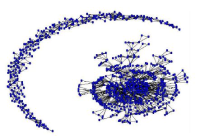
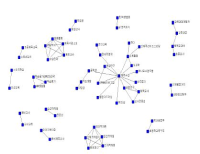
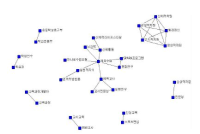
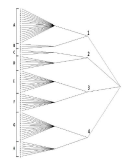
The purpose of this study was to identify the structure of knowledge in Sport Pedagogy field. Using bibliometric and social network analysis this study analyzed the keywords and citations appeared in Korean Journal of Sport Pedagogy and Korean Journal of Sport Science during 2006-2015 period. Total of 341 research papers which include 1301 keywords and 14826 citation were analyzed utilizing social network analysis as well as keywords frequency analysis, keyword co-occurrence, citation and co-ictation analysis. Results of this study showed that teaching, curriculum, and teacher education were three central theme in Sport pedagogy field. Key words such as physical activity, PE teacher, action research, and after school sport club activity were prominent research interests for scholard in the field. Quadradic Assignment Procedure analysis showed major research interests has not been changed between two periods of 2006-2010 and 2011-2015. Choi(2010)'s and You(2007)' books were most cited individual work and have influenced sport pedagogy researchers over the five years.