PURPOSE This study aimed to examine the relationship between job stress and occupational identity among taekwondo referees, with particular attention to the mediating roles of job satisfaction and feedback environment. METHODS Participants were 320 referees registered with the Korea Taekwondo Federation or regional Taekwondo associations. Data analysis included frequency analysis, descriptive statistics, confirmatory factor analysis, and reliability analysis. In addition, mediation effects were tested using the SPSS PROCESS Macro. RESULTS The findings revealed that job stress among taekwondo referees had a significant negative effect on job satisfaction and feedback environment. While job satisfaction was positively associated with feedback environment, it did not exert a significant influence on occupational identity. Conversely, feedback environment showed a strong positive effect on occupational identity. Furthermore, both job satisfaction and feedback environment were found to fully mediate the relationship between job stress and occupational identity. CONCLUSIONS Job stress indirectly affects occupational identity of taekwondo referees through job satisfaction and feedback environment. These results highlight the importance of fostering job satisfaction and cultivating a supportive feedback environment as essential mediating factors in mitigating the negative effects of job stress on occupational identity.
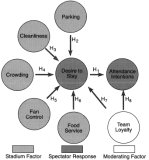
This study employed a sportscape model to analyze environmental impact on spectators’behavior. In addition, the loyalty construct in the sportscape model was reanalyzed based on the theoretical framework. Five hundred questionnaires were distributed to the spectators of World University Taekwondo Championship, and 418 questionnaires were used for data analyses. The analyses of measurement and structural models were conducted using SPSS 18.0 and EQS 6.2 programs. The results indicated that the measurement model showed acceptable reliability and validity. The structural analysis showed that five stadium factors (parking, cleanliness, crowding, food service, and fan control) have significant effects on spectators’ desire to stay and to revisit the stadium. Loyalty also positively affected revisit intention. This study emphasizes sport environment to make spectators revisit and provides future research suggestions to improve the sportscape model.


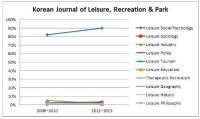
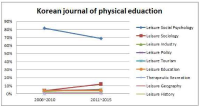
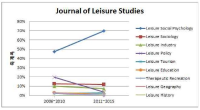
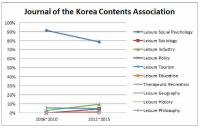
This study identified the trends in leisure and recreation research in Korea for the past 10 years. We classified previous research based on ten leisure and recreation research areas and compared the research trends of five journals: Korean Journal of Leisure, Recreation & Park, Korean Journal of Physical Education, Journal of Sport and Leisure Studies, Journal of Leisure Studies, and Journal of the Korea Contents Association. The results indicated that most research published over the last decade were included in the area of leisure social psychology, and the area of leisure social psychology showed the highest ratio in five journals compared with other research areas. To resolve the problematic results, this research suggests that future research needs to have diversity to extend the leisure and recreation research realm and to improve the quality of leisure and recreation research in Korea. We expect that this study would be used as a foundation for future leisure and recreation research.