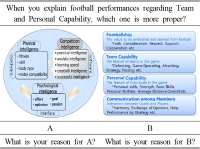
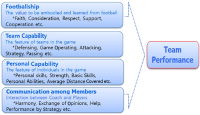
Purpose The following study was conducted to suggest and verify the validity of the concept of team performance, which has previously been considered as the total sum of individual performances. Method The concept of team performance was extracted by a conductive content analysis and an exploratory factor analysis of the data gathered from middle school football players. To verify the validity of the extracted concept, football experts' opinions were collected. Results The idea of team performance, categorized by Footballship, Team Capability, Personal Capability, Communication among Members, has been taken differently from the total sum of individual performances. Footballship is the virtue that should be materialized, and simultaneously earned during the game. Team Capability is a available resource for team's performance, Personal Capability is a available resource for a player's performance, and Communication among Members is the intimacy of communication between coaches and players. The conglomeration of experts' opinions on the concept of team performance and its components shows that team performance is evidently different from the total sum of individual performances. Conclusion The following study has been conducted to suggest and verify the validity of the concept of team performance. Team performance exists, standing distinct from the sum of individual performance, and understanding the concept of team performance will contribute not only to understanding performance, but also to improve the effectiveness of training and managing the team. Interest of the sport society is looked forward to.

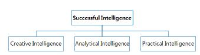
This study was to analyze the hierarchical importance of successful intelligence in Football coaches and players. In order to explore the hierarchical importance of successful intelligence 24 football coaches(under AFC A course) and 20 Korea Football Association U15 Players were responded to analytic hierarchy process questionnaires. In the Analytic Hierarchy Process, football coaches and players completed the AHP Questionnaire with creative intelligence, analytical intelligence and practical intelligence. The hierarchical importance order of successful intelligence for coach and player were analytical intelligence, practical intelligence, and creative intelligence respectively. Evaluation of hierarchical importance of successful intelligence for coach is analytical intelligence(.542), practical intelligence(.278), creative intelligence(.181) in order. Evaluation of hierarchical importance of successful intelligence for coach was analytical intelligence(.684), practical intelligence(.161), creative intelligence(.155) in order. The hierarchical importance of successful intelligence for coach and player were similar each other. Analytical intelligence, was evaluated most important factor for coach and player in successful intelligence. Successful intelligence is important issue for sport performance. More consider needs to Successful intelligence for sport psychology researchers.



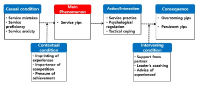
Purpose This study aims to investigate the experience of service yips in badminton players in depth through using grounded theory method. Methods We collected data from in-depth interviews with 14 participants in total, consisting of badminton players who experienced service yips, their doubles partners and coaches. The collected raw data were analyzed base on derive transcription, coding and paradigm models through grounded theory method. Results First, as a result, 59 concepts, 31 subcategories and 15 categories in regard to badminton service yips were deduced from open coding. Second, in axial coding, it was structured in a paradigm model by categories such as service yips, service mistakes, service proficiency, service anxiety, the imprinting experiences, the importance competition, the pressure of achievement, service practice, psychological control, tactical handling, support from partners, leaders’ coaching, advice from experienced ones, overcoming yips and persistent yips. Third, selective coding resulted in ‘Badminton service yips’ as the core category of this study. ‘Badminton service yips’ is a chronic performance impairment associated with badminton players making severe errors in swing motion on a service not intended by them that it is due to physiological or psychological symptoms such as hand tremors, overall body stiffness, arms stiffness, overstress, overanxiety, and concern over service mistakes. Conclusions We expect our study can be a theoretical foundation for understanding and explanation of ‘Badminton service yips’ and a useful reference for badminton players suffering from psychological difficulties caused by their service yips. The findings in this study should be considered for the development of potential strategies for overcoming the badminton service yips.
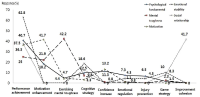
This study aimed to explore the psychological factors affecting sports performance and their purposes as perceived by adolescent athletes. Study data were collected by conducting an open-ended survey with 232 student athletes from adolescent athletes in S city. The collected data were categorized using content analysis, which was conducted twice to explore the psychological factors affecting sports performance and their purposes. From 537 answers, 30 performance-affecting psychological factors—including confidence, endurance, effort/dedication, optimal tension, and social support—were identified, and they were classified into five categories: psychological fundamental, mental toughness, motivation, emotional stability, and social relationships. From 588 answers, the purposes of the psychological factors were identified, including performance achievement, motivation enhancement, demonstrating mental toughness, cognitive strategy, confidence increase, emotional regulation, injury prevention, game strategy, and reinforcement cohesion. These performance-affecting psychological factors and their purposes may serve as a reference to understand how secondary school students perceive the relationships among various psychological factors and the relationship between the psychological factors and performance. This study is expected to inform goal setting and content organization in psychological skills training.
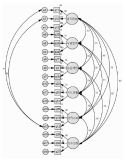
This study was to explore and confirm factors of sport psychology counseling needs in Korean elite coaches. In order to achieve this purpose, 56 elite coaches in Korean Olympic training center at Taereung and Jincheon responded on open-questionnaire and 260 coaches responded on survey. Open-ended questionnaire responses were analyzed by inductive content analysis and collected survey data were analyzed by exploratory factor analysis and confirmatory analysis. The results were as follows: Firstly, sport psychology counseling needs of elite coaches were competition preparation, negative athlete-coach relationship, athlete private problems, performance degradation, pressure on performance result, injury management, team cohesion degradation, motivation, training management, different gender athlete control, athletes drop out, pressure from outside, conflicts with colleagues, neglecting from athletes, feeling of incompetence, emotional control problem, and so on. Secondly, based on these responses, closed-ended questionnaire was developed, surveyed, and analyzed. Exploratory factor analysis illustrated that sports counseling needs of coaches were performance enhancement strategies, unreasonable pressure, negligence on training, coaching stress, competition result stress, conflicts with athletes. Finally, confirmatory factor analysis showed that construct of sport counseling needs illustrated appropriate fit indices values. The results of this study contributed to provide fundamental information on coaching education program and sport psychology counseling program development and application. Consequently, it will help coaches to control their mind at coaching in training and competitions.
