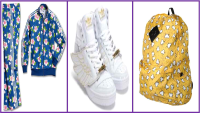
[Purpose] The present research aims to provide fundamental material required for establishing effective marketing strategies by analyzing purchasing experience of sports and art collaboration products and the determinants of purchasing intention. [Methods] Total of 370 survey questionnaires were distributed to undergraduate and graduate students in Seoul and Gyeonggi area and 331 questionnaires were analyzed as the final valid samples. For the data analysis, SPSS 18.0 version was used for frequency analysis, descriptive statistics analysis, exploratory factor analysis, reliability analysis, cross analysis, and logistics regression analysis. [Results] The study results are as follows. First, as a result of cross analysis on general characteristics, there was significant difference in age, monthly income and allowance, number of average purchases, considerations and major. Second, as a result of cross analysis on purchasing intention, there was significant difference in gender, monthly income and allowance, number of average purchases, considerations and major. Third, as a result of analyzing determinants of purchasing intention, there was significant difference in monthly income and allowance, number of average purchases, and sincerity. Fourth, as a result of analyzing determinants of purchasing intention, there was significant difference in gender, number of average purchases, considerations, major, creativity, aesthetics, interest and tenacity.

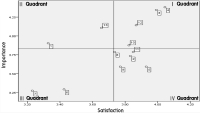
Purpose The purpose of this study is to grasp consumers' perception of badminton racket brand image using MDS and ISA. Methods To do this, we conducted questionnaires on those who participated in badminton and had experience of participating for 6 months or more in Seoul and Gyeonggi province from April 12 to 28, 2017, selected and analyzed a total of 313 copies as valid samples of this study. Results The results of study are as follows. First, as a result of MDS analysis, it showed that only the price of brand image attributes were in order of Trion > Joobong > Lining > Victor > Yonex, and the other attributes(Design, Functionality, Quality, Awareness, Advertising image, Event, Color, Popularity, Sophistication, Originality, Trust, Service) were in order of Yonex > Victor > Lining > Joobong > Trion. Second, as a result of ISA analysis, in I quadrant, Yonex showed functionality, quality, sophistication, and trust and Trion showed price, design, functionality and quality, Victor showed price, design, functionality, quality, color, sophistication, trust, service, and Joobong showed price, functionality, quality, and trust in this area. In quadrant Ⅱ as concentrated area, Yonex showed price and service, Trion showed color, trust, service, Victor showed price, Lining showed trust and service, and Joobong showed service in this area. In quadrant Ⅲ as low rank, Yonex showed advertising image, event, Trion showed awareness, advertising image, event, popularity, sophistication, originality, Victor showed advertising image, event, popularity, originality, Lining showed awareness, advertising image, event, popularity, originality, and Joobong showed design, advertising image, color, popularity, sophistication in this area. In quadrant IV as excess avoidance, Yonex showed design, awareness, color, popularity, originality, Victor showed awareness, Joobong showed awareness, event, originality in this area.




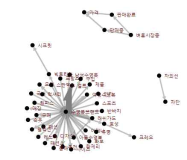
Purpose The purpose of this study was to examine the changing trends of swimsuit perception by using SNS big data. Methods By using “swimsuit” and “swimsuit brand” as key words, data was searched through blogs, cafes, Jisiksin(Tip), news, and web documents provided by naver and daum. This study used 2 years of data from January 1st, 2014 to December 31st, 2015 and social matrix program Textom was used for extracting matrix data and analyze them for frequency. To visualize data networking, NetDraw of UCINET6 program was used. Results Through analyzing the popular link words to the key words, it was known that the key words were 'swimsuit brand', 'children's swimsuit', 'rash guard', 'women's swimsuit', and 'model' in the order in 2014, and ‘swimsuit brand', 'rash guard', 'children's swimsuit', 'women's swimsuit', and 'Arena’ in the order in 2015. Second, the median of connectivity values showed that it was high in ‘swimsuit brand', 'women's swimsuit', 'children's swimsuit', 'rash guard', and 'Arena’ in the order in 2014, and ‘swimsuit brand', 'rash guard', 'women's swimsuit', 'children's swimsuit', and 'Arena’ in the order in 2015. Third, th results of CONCOR analysis demonstrated that ‘female customer’, ‘couple swimsuit’, 'rash guard', ‘brand’, 'children's swimsuit', and ‘fashion’ were grouped in 2014, and ‘brand’, ‘fashion’, 'rash guard', ‘purchase factor', and 'children's swimsuit' were grouped in 2015.




PURPOSE This study aimed to subdivide the market based on the general characteristics and consumer psychology of sports brand collaboration consumers and provide basic data for efficient collaboration marketing activities of sports companies. METHODS The subjects of this study were high school, college, and graduate students from high schools and universities in the Seoul and Gyeonggi area. Of the 600 copies of the questionnaire distributed, 475 were selected and analyzed in the final sample. Regarding the statistical method for this study, the PASW 18.0 statistical program was used for the frequency, exploratory factor, reliability, hierarchical cluster, K-means clustering, and cross analyses, as well as the one-way ANOVA. RESULTS The results of the analysis suggested five subdivided clusters with according marketing strategies: “external male,” “practical male,” “twenties design preferred female,” “low-interest women,” and “high consumption optional attributes” groups.
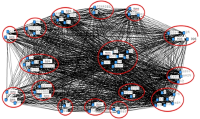
Purpose This study reviewed the seriousness of the Match-fixing through the mixed research methods of the big data analysis (quantitative) and the focus group interview (qualitative) using the keyword, ‘Match-fixing’ and discusses the cautious and comprehensive basic direction for coping with negative issues and preventing recurrence. Methods For the quantitative research method, Naver and Daum were used as the analysis channel and the main keywords selected for the data search were ‘Match-fixing’ and ‘Match-fixing+(measures/eradication/solution)’. The data collection period was limited from January 1, 2010 to December 31, 2016. In addition, for the qualitative research method, 6 homogeneous groups (experience, interest, knowledge) related to the research topic were constructed and interviewed using purposive(intentional) sampling. Results First, five factors (emotion, participant, cause, punishment, countermeasure) were categorized by big data analysis. Second, through Focus Croup interview, additional keywords for three factors (emotion, participant, countermeasure) were derived. Conclusions Therefore, it is required that various preventive measures such as emotional reward for negative emotion, preventive and ethical education, advancement of sports, establishment of Match fixing committee, Expert training are needed.
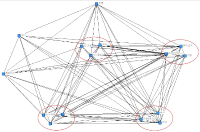

PURPOSE This study aimed to identify the factors influencing the success of the sports entertainment program “A Clean Sweep” using big data analysis. METHODS Text mining, sentiment analysis, TF-IDF, connection centrality, and semantic network analysis were conducted using the social big data analysis program Textom and social network analysis program Ucinet6. The research period was limited from June 6, 2022 to November 30, 2023. RESULTS The factors determining success were entertainment programs, Monday, OTT, and independent league. The events and marketing factors were extracted, and A Clean Sweep X Kelly, A Clean Sweep X Mom love, cheering song, uniforms, and direct viewing day influenced success. The new hire factors were rookie draft, Young-Mook Hwang, Sung-Joon Won, and Hyun-Soo Jeong. Positive (such as good, fun, looking forward to, best, and funny) and negative (such as esoteric, regrettable, shocking, dislike, and uncomfortable) emotional factors were also extracted. The extracted star marketing factors were directors (Seung-Yup Lee, Sung-Geun Kim) and players (Dae-Ho Lee, Geun-Woo Jung, Hee-Kwan Yoo, Moon-Ho Kim, Yong-Taek Park, Taek-Geun Lee). CONCLUSIONS We were able to identify the success factors of “A Clean Sweep”, which we hope will contribute to the revitalization of professional baseball as well as sports entertainment programs.
PURPOSE The purpose of this study was to understand the current market trend for golf apparel rental services and to present basic data to revitalize the golf apparel rental service market and prepare continuous growth plans. METHODS The following keywords were selected for data collection: "golf wear + rental (렌탈)," "golf wear + rental (대여)," "golf apparel + rental (렌탈)," and "golf apparel + rental (대여).“ The analysis period was limited to two years and seven months from January 1, 2020 to July 31, 2022, when COVID-19 began. The analysis was focused on the top 60 keywords to simplify the network. RESULTS Various keywords were extracted through text mining, TF-IDF, connection centrality, emotional analysis, and semantic network analysis of big data analysis. These were then categorized into four factors: “golf apparel rental service,” “self-expression and authentication,” “sharing economy,” and “emotion.” CONCLUSIONS The results of this study show that young golfers are unreluctant and are generally positive in renting golf apparel. Therefore, if the growing paradigm of the consumption behavior of MZ-generation golfers is recognized and analyzed and the requirements are continuously satisfied through various strategies, there will be a higher possibility to help expand the golf apparel rental market.
