Purpose The purpose of this studied to improve athletes’ performance through sports psychological skills training and counseling of a male canoe player in high school. Methods One male high school athlete in J area was interviewed for sports psychological skills training and counseling, and interviewed athletes and coaches diagnosed the potential psychological problems of athletes. Through this process, the athlete gained the ability to control anxiety about the game and strengthened the attention-focused ability to increase his confidence and set a goal for improving concentration. For effective training, sports psychological counselors, athletes, and coaches met once a week to create a routine. and participated in direct training on a boat with the coach every week. Sports psychological skills, anxiety about competition, and self-management of athletes were measured before and after to confirm the effectiveness of training of athletes' psychological skills. Results As a result, athletes' psychological skills and anxiety decreased, their confidence increased, and their concentration, which was diagnosed as an urgent problem of athletes, improved. Conclusions psychological skills of athletes, psychological shortcomings of players were reinforced, thus enhancing the athletes' performance. This suggests the effectiveness and necessity of training in sports psychological skills. It is hoped that continued support will serve as an opportunity to diagnose potential psychological problems of student athletes and apply them to training to contribute to improving their performance.

Purpose The purpose of this study was to investigate the effect of auditory stimulus using white noise on stability and balance during sit-to-stand and standing tasks of chronic stroke patients. Methods Eighteen chronic stroke patients participated in this study. They asked to perform the tasks of sit-to-stand, standing with eyes open and standing with eyes closed before and after listening to white noise. Eight infrared cameras and one force plate were used to evaluate the stability and balance before and after the white noise stimulus during each task. Results There was no significant difference between before and after white noise stimulus in all tasks. On the other hand, the anteroposterior range of CoP was significantly decreased after white noise stimulus in standing with eyes-closed (p<.05), and the sagittal angle of CoP-CoM was significantly decreased after white noise stimulus in standing with eyes-open and eyes-closed (p<.05). Conclusion Auditory stimulus using white noise improves the balance of chronic stroke patients. Therefore it is thought to be helpful for the independent daily life of chronic stroke patients.
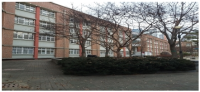
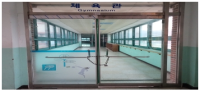
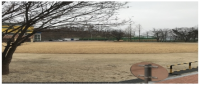
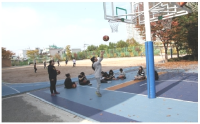
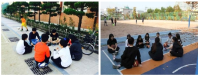
Purpose The purpose of this study was to explore environmental constraints that hindered the physical activity of female students in daily life, and then to provide alternatives to improve the problems based on the social ecological model. Methods Research participants were twelve female students to be selected in two schools(Norang, Parang middle school), the process of data collection(orientation, photovoice implementation, focus group interview) and analysis(choosing a photo, contextualizing, subjecting) were conducted according to the Photo-voice. Results The constraints of physical activity in daily life were categorized on ‘playground as like a desert’(leisure domain), ‘space of recess and in-active play’(family domain), ‘transportation replaced by mom and dad car’(transportation domain), ‘space of the only exercise as well as reproduction of gender discrimination’(school domain). Conclusions The environmental constraints were analyzed as academic, physical, daily living, socio-cultural environment. Lastly, alternatives for promoting physical activity of female student were proposed in the level of organization, community, public policy based on the social ecological model.







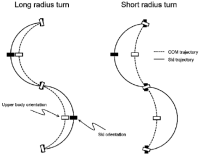
Purpose The purpose of this study was to investigate the three dimensional joint angles of the ankle, knee and hip during basic long turn, carving long turn, basic short turn and carving short turn. Methods Fourteen alpine ski instructors from Korea Ski Instructor Association participated in this study. Each skier asked to perform 4-types of turning technique, classified by radius and level. 8 inertial measurement units were used to measure three-dimensional joint angles of the ankle, knee and hip joint. Results Significant differences were found the lower extremity joint angles on the mediolateral and vertical axis during long-turn and carving-turn (p<.05). significant differences were found the lower extremity joint angles on the anteroposterior axis in the steering phases 1, 2 and complete phase (p<.05). Conclusions In the Alpine skiing, the short turn requires a complex movement of the lower limb joint compared to the long turn. When performing a long turn, the movement of the ankle joint on the vertical axis are required compared to the short turn. And the carving and short turn need to the movements of the lower limb joint on the mediolateral axis.


Purpose The purpose of this study was to provide useful information on the improvement of performance by measured the psychological-physiological stresses experienced by elite shooters during a competition. Methods Thirty-eight elite shooters participated in this study (Male = 13, Female = 25). Psychological stress was measured and used for this study based on the stress factors found in the elite target stress study by Park(2015). The cortisol, a physiological stress hormone, was measured using saliva. Results The reliability of the psychological stress sub-factor pre-post analysis results showed no statistically significant. The concentration of cortisol measured on the day before the competition (0.1704 µg/dL) significantly increased immediately before the competition (0.3558 µg/dL). Cortisol immediately before the competition showed negative correlation (r=-.361, p=.036) with the competition score, and the regression variable of cortisol was 13%. Conclusions In this study, physiological stress had a negative effect on elite shooters performance compared to psychological stress.

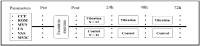
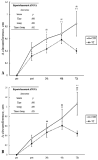
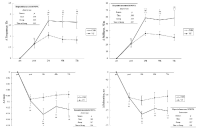
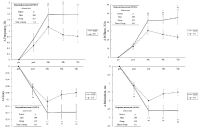
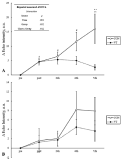
Purpose The purpose of this study was to investigate the effect of vibration therapy on the functional, imaging, and mechanical properties in elbow flexor after a single bout eccentric exercise. Methods Twenty-three untrained adults male participated in this study [CON(control)= 11, VT(vibration)= 12]. Volunteers performed 5-set of 6 maximal (90˚/s) eccentric contractions of the non-dominant elbow flexor on a isokinetic dynamometer. Vibration was applied using a side alternating vibratory platform (12 Hz frequency, 4 mm amplitude) with 3-set of 60 sec during 3-day after eccentric exercise. Results The VT group showed a reduction in exercised-induced muscle damage(EIMD) symptoms in the form of attenuating muscle swelling and echo intensity (P<.05) compared with the CON, mechanical properties were improvement (P<.05) compared with the CON. However, muscle soreness, range of motion and maximal voluntary isometric contraction were not significant (P<.05). Conclusion As currently practiced, vibration therapy after eccentric exercise may reduce EIMD by improving quality of the muscle, suggesting that this therapy is an effective strategy for EIMD.
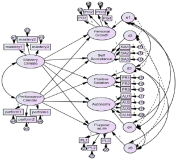
Purpose This study identified the influence of perceived motivational climate on psychological well-being in ballet majors. Methods Participants were 211(male=25, female=186) collegiate students enrolled in ballet department. Measures were The Perceived Motivational Climate in Sport Questionnaire(PMCSQ) and Psychological Well-being Questionnaire. Data were analyzed by using descriptive statistics, reliability test, correlation, and structural equation modeling. Results Results were as follows. First, mastery climate who ballet majors perceive significantly influenced on the five subscales of their psychological well-being: Mastery climate was positively related to personal growth, self-acceptance, positive relation with others, autonomy, and purpose in life. Second, performance climate who ballet majors perceive significantly influenced on the five subscales of their psychological well-being: Performance climate was negatively related to personal growth, self-acceptance, positive relation with others, autonomy, and purpose in life. Model fit indices were acceptable(RMSEA=.070). Conclusion In conclusion, this study indicated that motivational climate who ballet majors perceive was a important situational factor on their psychological well-being.
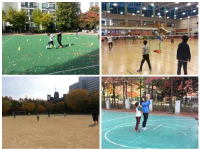
Purpose The purposes of this study were to examine the influence of a formal sports mentoring program on mentors(pre-service PE teachers), and to identify main factors affecting educational growth of the pre-service teachers. Methods Data were generated in this study using: In-depth interviews, mentoring observations, and document resources from 4 mentors and their mentees as research participants. The collected data were inductively analyzed as an iterative process of working back and forth between the data and the categories(Miles & Huberman, 1994). Results The key findings of this study are as follows. First, mentors developed pre-service teachers’ practical knowledge including teaching knowledge, environment knowledge, student knowledge within teaching contexts. Furthermore, they practiced mentee-centered education through sports mentoring not only by mentees but also for mentees. Second, with respect to the factors impacting mentors’ educational growth, there were two main factors; the systematic structure of a program and mentors’ reflexivity. Mentors improved practical knowledge through the circular ‘experiential learning’ phases the sports mentoring program provided. In addition, mentor had valuable opportunities to learn how to care mentees by reflecting on positive and negative influences deriving from interactions with their mentees. Conclusion Potential benefits were embedded in inherent nature of sport and the unique structure of mentoring. sports mentoring can provide experience of learner-friendly teaching distinct from classes of lecture type. It is necessary to be reconsidered as pre-service PE teacher education program with opportunities of other teaching practice.
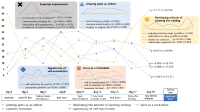
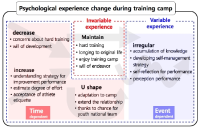
Purpose The current study aimed to identify national youth cyclist`s experience and change tendency of experience during camp training. Methods A total of 35 cyclists who participated in 2017 Korea youth national cycling camp training provided the data. The survey was conducted 9 times during the 20 days of camp training using open-ended questionnaire by diary method. The collected data were analyzed based on inductive categorization and response rates. This study was conducted in the order of formation rapport, data collection, and data analysis. Results Youth cyclists experiences during camp training to growing pains as an athlete, developing the attitude of savoring training, serve as a motivation, expertise formation and opportunity of self-examination. Based on the change in response frequency of the survey data, camp training experience falls into two categories: variable and invariable. Conclusions Youth national cyclist were growing their growth power through various experiences during the training camp, and these experiences changed to specific inflection points from the beginning to the end of the camp. Understanding changes in psychological experience can provide the design of timely psychological support and coaching method. This study will be used as a material for the design of the camp training program for the youth cyclist, as well as an opportunity to increase the interest of continuity reflection on the psychological experience.

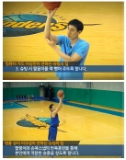
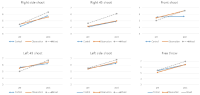
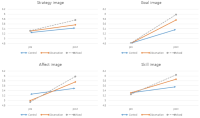
Purpose In general, motor imagery and action observation have been distinguished from each other. Recently, several studies demonstrated that combined approach to motor imagery and action observation can be more effective in motor learning. The present study examined the effects of observation learning combined motor imagery and action observation during acquisition basketball shooting skills. Methods We divided with control group, action observation group and observation learning group combined mental image and action observation in the three middle school. Action observation group provided the action observation program, and observation learning group was performed observation learning combined mental image and action observation training. All groups were perform basic basketball skills. Experimental intervention was performed for 10 weeks, and data analysis was performed 3 groups × 2 time repeated ANOVA. Results The results indicated that all group were improve after intervention, and subjects who participated in combined mental image and action observation was significant in the interaction effect on the front shoot. Moreover, the interaction effect on the motor imagery ability was significant. Conclusions These findings suggest that the use of observation learning combined mental image and action observation strategy potentially optimizes motor skills performance and motor image ability by incorporating motor imagery, especially when observing movements with intent to imitate.