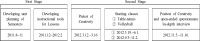
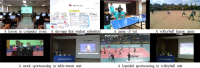
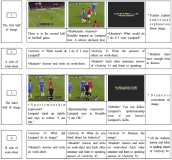
Purpose The purpose of this study was (1) to develop and to apply the PE classes based on Sportscasting Model on Creativity and Character and (2) to analyze the effects of PE classes on Creativity and Character. Methods Participants were 10th high school students(N=172) who had not experienced PE classes on Sportsasting Model. Data were collected using An Integrated Creativity Test(Lee & Lew, 2012), open-ended questionnaires and in-depth interviews with students. The data were analyzed through paired samples t-test and qualitative content analysis. Results Results showed that (1) Table-tennis and volleyball lessons on Sportscasting Model were developed and applied, and (2) significant differences were observed in creative thinking and creative personality of students’ creativity scores after lessons. And 14 creativity factors and 10 character factors were drawn from the analysis of questionnaires and interviews. Conclusion And to conclude, Sportcasting Model is efficient in developing creativity and character. Discussions were provided in terms of the development and application of PE classes based on Sportsasting Model and the effectiveness of Sportscasting Model.

Purpose The purpose of this study was to examine athletes’ psychological competition experiences. Methods For this study, 64 student athletes, attending universities located in Seoul and Chungcheongbuk-do, participated in the study by completing an unconstructed questionnaire. The data were analysed through content analysis method. Results As a result, 15 themes, such as morale loss, comparable performance levels, opponent irritation were collected and the themes were classified into three categories including objectives of psychological competition, requirements of psychological competition, and psychological battle. In match situations, athletes attempt to psychologically compete in order to achieve objectives such as opponent’s morale loss, induce carelessness, trigger agitation and anger, dispersion of attention, and distraction. Psychological competition among rivals is valid when the requirements, such as comparable performance levels, sensitivity to match situations, strong tenacity and confidence, understanding of opponent and oneself, mutual checks and balances, are met. Athletes attack and defend to win the psychological competition by utilizing opponents irritation, information distortion, unexpected behaviors, predicting and coping, pulling a poker face, exclusion of opponents, and self-focusing. Conclusion This study created a theoretical foundation for a profound understanding of athletes’ psychological competition, which is often found in sport fields. Furthermore, this study is meaningful in that it has raised a chance of interest concerning psychological interaction between players in match situations.
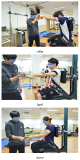
The purpose of this study was to explore and confirm Kumi-kata related factors of muscle strength by performance level in Korea elite female judoists. In order to achieve this purpose, 14 elite female judoists participated to this study. The subjects were divided to two groups (World Class Group and Non-World Class Group) according to their world ranking level(by ranked 30th). The analysis factors were repeated grip strength, Kumi-kata specific pulling strength and isokinetic strength of trunk joint. The results were as follows: Firstly, World Class Group had significantly higher repeated grip strength as compared to non-world class group (p<.001). Secondly, World Class Group had significantly higher specific Kumi-kata pulling strength as compare to non-world class group (p<.05). Finally, The differences between the two groups for isokinetic strength of trunk joint were non-significant. The results of this study indicates that a strong relationship exist between Kumi-kata related specific muscle strength and performance level in korea elite female judoists.

The purpose of this study was a investigate the endothelial function of prehypertensive during dynamic exercise. Hypothesis of this study was to impair the endothelial function in prehypertensive compared to normtensive during dynamic handgrip exercise. Eleven healthy prehypertension (24±2 yrs) and ten healthy normotensive (25 ± 2 yrs) were recruited in this study. Participants were performed dynamic handgrip exercise in one contraction per second at 30% of maximum voluntary contraction for three minutes. Vascular (blood vessel diameter, blood flow) and cardiar response (stroke volume, heart rate and cardiac output) were measured at rest and during exercise. Flow mediated dilation (FMD) was decrease significantly in prehypertensive less than normotensive (p<0.05) at rest, and vasodilation of prehypertensive was reduced significantly less than normitensive during exercise (p<0.05). All the cardiovascular responses were aot significantly different at rest and during exercise between prehypertensive and normotensive. These results suggest that endothelial function is impaired in prehypertensive compared to in normotensive
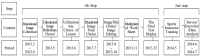
The purpose of this study was (1) to develop instructional contents for teaching and learning sportsmanship and (2) to examine the perceptions of sports instructors on that contents. Instructional contents based on sympathy was constructed from Youtube clips. Final version was developed to apply situated learning in class and was comprised of twenty-sportsmanship video clips and worksheets. Participants were sports instructors (N=208) in elementary and middle schools. Open-ended question and interview on call were used to collect the data. Qualitative content analysis was used to analyze the instructors’ perception regarding instructional contents. Results of this study showed that sports instructors responded to the contents as thoughtful experience (1) making myself realize the value of opponent, (2) making myself realize the value of sports, (3) making myself realize the value of judge, (4) making myself realize the value of coach/athlete. This study concluded that instructional contents was touching and emotional. Implication of instructional contents for teaching and learning sportsmanship, pros and cons of the contents and teaching tips were discussed.


The purpose of this study was to examine whether β-alanine ingestion for 8 weeks can regulate isokinetic knee strength, and 3km record in middle-long distance woman cyclists. Fourteen middle-long woman cyclists participated in this study and were divided into two groups; training group with beta-alanine ingestion and training group with placebo ingestion. All subjects took in beta-alanine or placebo supplement three times per a day for 8 weeks. Physical activity was evaluated by measuring the isokinetic muscular strength and 3km record before and after intervention for 8 weeks. As a results, in isokinetic test, there were significant interrelationships in peak torque of the right and left flexors at 60°/sec, peak torque of the right and left extensors at 180°/sec, peak torque of the right flexors at 180°/sec. In 3km record, result showed a significant interrelationship by groups and time. The results of present study provide evidence that beta-alanine supplement may be effective to increase physical activity and competition record in middle-long woman cyclists.

This study aimed to explore the types of traumatic event experienced by Volleyball players and then prepare to take-off the serial process of posttraumatic growth to schematize a causal network by organizing the factors for overcoming adversity. Participants experiences were collected by distributing open-ended questionnaires to 77 professional Women's volleyball players in 2013-2014 and collected data was categorized by inductive content analysis. These results were schematized by the causal network. As a result of the study, according to the trauma were categorized into four general areas: member conflict, competence loss, physical injury, and coach conflict and the emotions relative to the trauma were categorized into four general areas: powerlessness, pressure, dejection, and hostility also coping factors were categorized into three general areas: social support, intervention strategies, and psychological control. Finally, positive growth emerged as psychological leap, performance improvement, psychological maturity, and emotional stability. And as a result of the categorized study, bring about a better understanding to the posttraumatic growth by causal network. Based on the study results, that volleyball players experienced a positive development on themself after overcoming the problem that they had suffered psychological scars from a traumatic event. In doing so, they contributed to the formation of resources that helped them in their positive lives. In this regard, this study expects to provide the players who have been scratched in mind because of the traumatic experience.



The purpose of this study was to examine whether the difference between ingestion of nutrition supplements for 8 weeks can regulate physical activities and fatigue recovery. Fifty one middle-aged women participated in this study and were divided into placebo, ingestion of 20g energy supplement and ingestion of 40g energy supplement groups. Energy supplement mainly consists of carbohydrates and proteins. All subjects take in this supplement one time per a day for 8 weeks. Physical activity and fatigue recovery were measured before and after ingestion of energy supplement for 8 weeks by using the Wingate anaerobic and a blood tests. In the Wingate anaerobic test, the peak power(p<.01) and average power(p<.05) were significantly increased in ingestion of 20 and 40g supplement groups compared to the placebo group. Although concentrations of lactate and growth hormone in the blood didn’t show a significant differences among groups, blood concentrations of cortisol and ammonia were further enhanced in ingestion of 20 and 40g supplement groups compared to the placebo group(p<.001). The results of present study provide evidence that energy supplement mixed with carbohydrates and proteins may be effective to increase physical activity as well as to reduce blood concentration of fatigue-related factors after exercise.
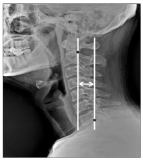
This study was designed to investigate the effects of combined treatment of chiropractic and PNF exercise on musculoskeletal function in forward head posture patients. Thirty patients volunteered to participate in the study as subjects, and they were divided into one of three groups, i.e., chiropractic group (n=10), PNF exercise group (n=10), and combined treatment of chiropractic and PNF exercise group (C+P group; n=10). Subjects in three groups went through each program for 25 min/session, three times/wk for eight weeks. Cervical alignment, cervical muscular strength and endurance, and cervical range of motion were measured and compared among groups and between pre- and post-test utilizing two-way ANOVA with repeated measures. Main results of the present study were as follows: 1) All variables regarding cervical alignment increased significantly in all three groups. The changes in C+P group were more significant than other two groups. 2) All variables regarding cervical muscular strength and endurance increased significantly in all three groups. 3) All variables regarding cervical range of motion increased significantly in all three groups. The changes in ROM regarding flexion and extension in C+P group were more significant than other two groups. It was concluded that all three treatments applied in this study would be effective for functional recovery of the musculoskeletal function in forward head posture patients. Especially, combination of chiropractic and PNF pattern exercise would be the most effective intervention for the patients.

The purpose of this study was to describe the epidemiology of Korean collegiate injuries during 2015. Collegiate student-athletes(n=167) in six sports (badminton, baseball, basketball, rugby, taekwondo, and volleyball) participating in all practices and games during pre-season, in-season, and post-season were tracked via the injury surveillance system(rate, location, type, and cause of musculoskeletal injury). Injury rate for 1000 athlete-exposure(AE) and 1000 time-exposure(TE) were calculated with 95% confidence intervals(CI). We captured a total of 961 injuries, a rate of 19.29/1000 AE(95% CI=18.07, 20.51) and 0.16/1000 TE(95% CI=0.15, 0.17). Commonly injured body locations were knee(17.5%, n=168), thigh(16.1%, n=155), ankle(12.1%, n=116), and finger(8.4%, n=81). Injuries were mostly diagnosed as contusion(40.1%, n=385), ligament sprain(21.1%, n=203), and laceration/abrasion/skin injury(13.5%, n=130). Common causes were contact with another athlete(44.6%, n=429), contact with moving object (12.7%, n=122), overuse/atraumatic(11.9%, n=114), and contact with non-yielding object(9.4%, n=90).
