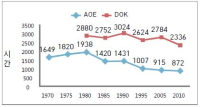
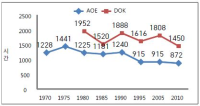
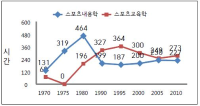
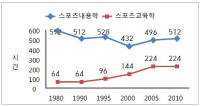
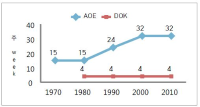
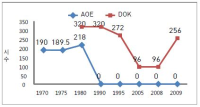
The aim of this study is to examine the directions of Physical Education Teacher Education (PETE) programs in Korea through the historical changes of each one PETE institute in England and Korea from the 1970s to 2010s based on academicisation. Document analysis and grounded theory were used to analyse historical sources and interviews. I identify four findings. First, the amounts of hours in curricula in both PETE courses have been reduced. Second, discipline knowledge in England was a first priority in the 1970s but has urgently reduced since the 1980s because of the growth and adoption of sport pedagogy. In Korea, discipline knowledge has still kept as a first priority for 40 years. However, professional knowledge in Korea has increased to enhance PETE since the middle of 2000s. Third, teaching experiences in England has increased by nearly double from 15 weeks to 32 weeks. In Korea, student have, and continue to participate in only four weeks of teaching experience. Fourth, education studies in England abolished in the 1990s. In Korea, they urgently increased in 2009. I conclude by confirming the need to study a structure and content of units of discipline knowledge and professional knowledge. I propose a system for selection of majors in the Department of Physical Education.
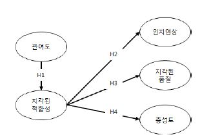
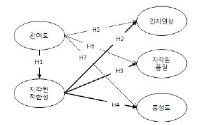
Although mega sporting events are becoming an effective means of brand communication, there has not been systematic research on involvement development and perceived fit enhancement through the sporting events. This study developed and tested a conceptual model delineating the impact of consumer involvement on perceive fit, and brand equity in mega sporting event context. Using quota sampling method, 1,847 participants (916 from IAAF; 931 from the F1) were recruited from several different cities in Korea during the mega-sporting events. Structural equation modeling were employed to examine the relationship between research constructs and test the model respectively. The study found that mega event involvement has a positive effect on perceived fit; and perceived fit influences brand equity(brand awareness, perceived quality and loyalty) toward event sponsor brands. The direct effects of involvement on sponsorship effectiveness (brand awareness, perceived quality and loyalty) did not have a significant effect on brand equity. The findings also reveal the mediating effect of perceived fit on brand equity.
PURPOSE This study employed a markerless motion analysis system to categorize the block start of elite sprinters into a four-phase sequence and examined the relationship between the kinematic characteristics of each phase and first-step performance. METHODS Seven elite male sprinters (100 m personal best: 10.52 ± 0.14 s) participated in this study. Block start movements, from block clearance to first-step touchdown, were captured at 120 Hz. The collected video data were processed using Theia3D Markerless software. The block start motion was divided into four phases (P1–P4). For each phase, the following were analyzed: knee joint extension angular velocity in the sagittal plane, pelvic rotation angular velocity in the transverse plane, a coordination index, and a timing index. RESULTS Knee joint extension angular velocity differed significantly across the phases (F=41.11, p <.001), increasing rapidly after block clearance. Notably, the ability to maintain a high angular velocity through the initial flight phase (P3) was strongly positively correlated with normalized firststep length (r =0.872, p <.05). In contrast, the coordination index did not differ significantly across the phases. CONCLUSIONS During the block start, maximizing and maintaining knee extension angular velocity through P3 is a determinant of first-step performance. This phase-based analysis offers a scientific basis for training strategies focused on movement improvement in specific phases.
PURPOSE This study sought to examine the psychological responses of nextgeneration national team athletes to injuries as well as on-site coping strategies and explore effective ways to apply these in practice. METHODS A total of 60 nextgeneration national team athletes and 5 national team coaches participated in indepth interviews and answered semistructured questionnaires to better understand psychological responses to injury. The collected data were then subjected to semantic and inductive content analysis. RESULTS The data produced three main themes: perceptions of injury (positive and negative), psychological responses to injury, and coping strategies such as rehabilitation processes and injury prevention. Analysis of negative psychological responses generated three categories: psychological withdrawal (104/58.4%), slumps (37/20.8%), and trauma (37/20.8%). Meanwhile, all positive psychological responses fell under one theme: positive attitude (28/100%). Additionally, an examination of national team coaches’ perceptions of player injuries highlighted three key areas: causes of injury (loss of concentration, psychological pressure, and arousal during competition), coaches’ response processes (immediate responses and hindering factors), and injury management strategies for field application (internal and external measures). CONCLUSIONS Psychological factors that emerge during the injury process of next-generation national team athletes must be identified to understand the challenges they face and allow coaches to implement appropriate support strategies in response to sports injuries.
PURPOSE This study aimed to explore the imagery strategies of elite Taekwondo demonstrators during the match preparation period. METHODS The participants were 30 elite Taekwondo demonstration athletes enrolled in the Korea University Taekwondo Federation. Data were collected using open-ended questionnaires and in-depth interviews. The study referred to the qualitative approach for data collection proposed by Gould et al. (1992). Inductive content analysis of an imagery was conducted based on the imagery classification frameworks outlined by Paivio (1985) and Suinn (1996). Three experts independently reviewed and categorized raw data and imagery cases. RESULTS The findings revealed that elite Taekwondo demonstration athletes typically utilized the types of imagery described by Paivio (1985) and Suinn (1996). Among the factors, imagery of skills appeared with the highest frequency followed by imageries of competition, anxiety regulation, mental skills, and motivation. Furthermore, 2 weeks and 1 day prior to a competition, the elite Taekwondo demonstrators mainly used imageries of skills and competition, respectively. On the day, they use imageries of anxiety regulation and mental skills. CONCLUSIONS After the competition, they mainly used imagery of skills. In summary, the elite Taekwondo demonstrators employed personalized imagery strategies for enhancing training effectiveness and optimizing performance during competition. These strategies varied according to specific phases or contexts of the competition
This article aims to examine the research trend of sport history by analysing published research articles over the last decade in the Korean Journal of History for Physical Education, and suggest directions of research in sport history based on the results. We have reviewed a total of 264 articles relying on the analytic framework including the criteria of time period, method, nation, theme/topic, and purpose. The research findings are as follows. First, the post-Liberation period has been studied most often with 45.3%, followed by the Japanese Colonization period (20.2%), the Joseon Dynasty period (11.4%), the diachronic research (8.8%), the period from ancient times through Goryeo (8.1%), and the period of Enlightenment (6.2%). The results indicate that most recent studies in the journal unilaterally focus on the Modern and Contemporary history with 71.7%. According to the analysis result by research method, second, more than 90% of the studies have been conducted using qualitative methods while only 0.6% of the papers have adopted quantitative methods. The qualitative methods include textual analysis, participant observation, oral life story, and focus group interview. Textual analysis has been used most often with 74.5%. Oral life story has been second (22.5%), followed by participant observation (2.1%) and focus group interview (0.3%). The findings from this category show that it is still necessary to diversify research methods and vitalize interdisciplinary research. Third, in terms of nation, over 70% of the papers have studied about Korea, and European countries are the second most frequent region in the research trend (8.3%). The nation that follows is China with 6.4%. Although we analysed a Korean journal in sport history, the result exposes the lack of scholarly attention in the studies of sport history to world sport history reflecting comparative perspectives. By the criteria of theme/topic, fourth, genre has been studied most often with 31.7%, followed by figure (14.1%), facility/institution/organization (14.0%), system/policy/event (12.8%), philosophy/ideology/theory (6.7%), remains/relics/documentary material (6.3%), and domestic regions (5.4%). The results show that the recently published research articles have attempted to include a variety of genres in sports, play, and dance. While the topics for figure and facility/institution/organization also receive significant interest, it is limited that the studies mostly focus on male sport figures but female figures are barely explored. Even when female figures are researched, the attempts are observed only in the studies of dance. Fifth, the largest ratio of papers has had the research purpose of historical evolution (37.6%), followed by value/significance (20%), type/characteristic (15.5%), thoughts/ideology/theory (9.1%), origin (6.6%), suggestion/proposal/prediction (5%), comparison/correlation (5%), and concept/terminology (1.2%). The results expose that the studies tend to concentrate on historical evolution relying on chronological description while the research on concept/terminology is of little scholarly interest. Based on what we have found, it is identified that the recent studies in sport history have mostly focused on the historical evolution of a specific sport genre in the Korean Modern and Contemporary history using textual analysis. Consequently, the results suggest that researchers in sport studies need to put in additional effort to expand research topics and methods, and invite comparative perspectives involving inter/cross-national studies.
PURPOSE The purpose of this study was to examine the current status and pattern of exercise prescription. In particular, we analyzed exercise prescription trends according to the health-related physical fitness level of Korean adults, using large-scale data from the Korea National Fitness Award program. METHODS This study used healthrelated physical fitness and exercise prescription data collected from the Korea National Fitness Award between January 2018 and April 2023. A total of 475,555 adult participants were included in the analysis. Data processing involved frequency analysis, in which the frequency of each exercise prescription by fitness component was divided by the overall frequency of exercise prescriptions, allowing for the identification of exercise prescriptions specific to health-related fitness. Furthermore, association rules analysis was applied to examine prescription patterns across different fitness domains. RESULTS First, the most frequently prescribed exercises for Korean adults were core-centered activities such as the “sit-and-stand,” “prone hold,” and “sit-ups.” Second, although upper-body-focused muscle strength exercises were commonly prescribed, the overall prescription pattern was still dominated by core-based exercises. Third, exercises specific to muscular endurance and flexibility included “lying leg raises,” “lying arm and leg raises,” and the “lying sky bicycle.” Corecentered flexibility and endurance activities, such as “hip stretches,” “front thigh stretches,” and “abdominal stretches,” were also prevented. Fourth, in the domain of cardiopulmonary endurance, swimming emerged as a distinctive aerobic exercise, particularly prescribed for obesity management. The prescription pattern in this category was characterized by compound training, combining aerobic and resistance exercises. CONCLUSIONS These findings provide foundational evidence for the development of targeted exercise prescription manuals tailored to health-related physical fitness levels. Furthermore, they support the advancement of a personalized exercise prescription system designed to improve the effectiveness of the promotion programs for Korean adults.
PURPOSE This study investigated the associations among sociodemographic factors, physical activity (PA) types and frequencies, and various mental health indicators among adolescents. METHODS Participants included 45,006 adolescents who answered the online 2024 Korea Youth Risk Behavior Survey. Mental health– related variables, such as perceived sadness and despair, suicidal ideation, perceived loneliness, and generalized anxiety disorder diagnosis, were analyzed in relation to sociodemographic factors. Associations with PA type and frequency were examined as well. The data underwent simple and multiple logistic regression analyses, and odds ratios with 95% confidence intervals were calculated. RESULTS First, sadness and despair perceptions significantly differed by gender, academic achievement, residence type, student classification, and study time. Adolescents who performed low-intensity PA ≥4 days per week and high-intensity PA 1–3 days or ≥4 days per week had significantly lower odds of experiencing sadness and despair. Second, suicidal ideation was significantly associated with gender, academic achievement, socioeconomic status (SES), residence type, urban vs. rural classification, student classification, and study time. Adolescents who engaged in low-intensity PA ≥4 days per week and high-intensity PA 1–3 days or ≥4 days per week displayed a significantly lower likelihood of suicidal ideation. Third, loneliness perceptions significantly varied by gender, academic achievement, economic SES, type of residence, urban vs. rural classification, student classification, and study time. Engaging in low-intensity PA ≥4 days per week was significantly associated with lower odds of perceived loneliness. Finally, the diagnosis of generalized anxiety disorder was significantly associated with gender, academic achievement, SES, residence type, student classification, and study time. Performing low-intensity PA ≥4 days per week and high-intensity PA 1–3 days or ≥4 days per week was significantly linked to a lower likelihood of a generalized anxiety disorder diagnosis. CONCLUSIONS Regular PA is an effective strategy for promoting adolescent mental health; specifically, appropriate exercise intensity and supportive environments for adolescents’ PA play a critical role in improving their mental health.
PURPOSE This study systematically analyzes the determinants of victory and defeat in Para Taekwondo by employing a decision tree model based on data from the 2024 Paris Paralympic Games. The study also sought to provide foundational data to enhance the athletic performance of Para Taekwondo. METHODS Game videos of 105 athletes who participated in the 2024 Paris Paralympics were analyzed. The variables examined on torso-scoring techniques, taking into account the competition rules and the characteristics of athletes with physical disabilities. Video analysis was conducted using the LongoMatch program. The collected data were used to develop a decision tree model with the CRT algorithm in IBM SPSS 25.0 to identify factors influencing match outcomes. To ensure model simplicity and prevent overfitting, constraints were applied to the maximum tree depth, as well as the number of parent and child nodes. RESULTS In men’s matches, the success rates of roundhouse kicks and double kicks were found to significantly influence match outcomes. For women, the success rate of roundhouse kicks and back kicks was the primary determinant of victory or defeat. The male winner node (Node 6) achieved a gain of 30.3% and a response value of 100%, while the female winner node (Node 6) recorded a gain of 50% and a response value of 94.1%, indicating high predictability of match outcomes. Model performance evaluation revealed that winner classification accuracy was 81.8% and loser accuracy 84.2%, for male athletes, while female winner and loser accuracies were 83.8% and 85.7%, respectively. CONCLUSIONS This study demonstrates that the key technical factors influencing victory in Para Taekwondo differ by gender. Specifically, roundhouse kicks and double kicks were decisive for male athletes, whereas roundhouse kicks and back kicks were critical for female athletes. These findings can inform the development of gender-specific training strategies and predictive models, thereby contributing to the improvement of athletic performance in Para Taekwondo.
PURPOSE This study examined the biomechanical differences in running shoes with two midsole materials, ethylene-vinyl acetate (EVA) and polyether block amide (PEBA), and carbon fiber plate insertion. METHODS Ten recreational runners participated in the study and performed running trials on a 12m runway at a controlled speed of 3.89 m/s ± 5%. Biomechanical data were obtained for time-continuous variables of the metatarsophalangeal (MTP) joint (angle, moment, and power), as well as for discrete variables (push-off time, peak vertical impact force, peak anterior propulsion force, and timing of joint power transition). Data were analyzed using statistical parametric mapping for continuous data and the Wilcoxon signed-rank test for discrete variables (α = .05). RESULTS Compared with no-plate conditions, the EVA sole with plate significantly reduced push-off time, MTP joint range of motion, positive joint power, and peak anterior propulsion force, with an earlier timing of joint power transition (p < .05). In contrast, the PEBA sole with plate decreased MTP joint range of motion but increased plantar flexion moment, negative joint power, and push-off time (p < .05). Furthermore, under plate-inserted conditions, PEBA significantly increased plantar flexion moment, negative joint power, and push-off time, as well as exhibited a delayed timing of joint power transition compared with EVA (p < .05). CONCLUSIONS The interaction between midsole material and plate insertion causes complex variations in MTP joint energy management. Specifically, EVA shoes with a plate may facilitate rapid roll-off and promote swift turnover, thereby enhancing acceleration. In contrast, PEBA shoes with a plate may promote prolonged energy absorption, which could potentially reduce joint fatigue during long-distance running.
