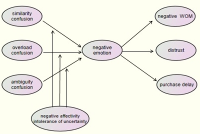
Purpose The purpose of this study was to identify how the three variables of consumer confusion proneness affect consumers' negative emotion, word of mouth, trust and decision postponement during the process of purchasing golf club. Futhermore, this study looked through the moderating effect of the personal characteristics in the relation between consumer confusion proneness and negative emotion. Method A total of 850 questionnaires were used for data analyses(i.e., frequency analysis, confirmatory factor analysis, structural equation modeling) with PASW 18.0 and AMOS 18.0. The results of the study are as follow. Results First, all of the subordinate factors of consumer confusion proneness had a significant effect on the consumer's negative emotion. Second, consumer's negative emotion had a significant effect on negative WOM. Third, consumer's negative emotion had no significant effect on distrust. Fourth, consumer's negative emotion had a significant effect on decision postponement. Fifth, the moderating role of negative effectivity partially had a significant influence in a relation ship between confusion proneness and negative emotion. Sixth, the moderating role of intolerance of uncertainty had a significant influence in a relation ship between confusion proneness and negative emotion. Conclusion The results of this study contributed to provide fundamental information on over all golf industry as in service providing point of view as well as development and application relate to it.
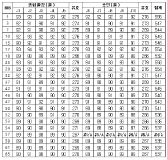
Purpose The purpose of this study is conducted to analyze the objectivity of the ski technical championships hosted by Korea Ski Instructor Association (KSIA) and to identify the error sources that affect the score of the competition. Methods To this end, we used the data from the 25th(2009) to 33rd(2017) ski technical championships held by the Korea Ski Instructor Association (KSIA). The data provided by Win Excel 2010 was used to sort out the missing data, such as abandonment, according to the data processing method. The collected data were analyzed by using SPSS 22.0 to calculate the mean and standard deviation of each season, event, and judges, and the Intraclass Correlation Coefficient (ICC). In addition, by using the single facet crossed design(p*j) of the generalizability theory’s G study, the variance component estimates for the participant(p) and the judges (j) are calculated, and the influence (%). Results As a result of the research, it was confirmed that the results of all the seasons and events from the 25th to the 33th events were very consistent, with the objective of .845~.986 higher than the recognition level of .80. In addition, the results show that the relative ratio of the judges to the error of the judging score is very low as a result of the error analysis through the dispersion component estimates. Conclusion In summary, the results of the KSIA evaluation are highly evaluated objectivity and have very low impact on the judges' errors.
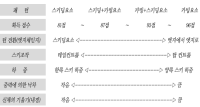
Purpose Sport has become a popular platform for corporate social responsibility (CSR) campaigns. Growing numbers of athletes, teams, and organizations are engaging in CSR campaigns to promote awareness and behaviors to support CSR campaigns addressing pressing social issues (e.g., disease prevention, health promotion, etc.). However, much of the previous work has focused on whether such initiatives benefit the organization, but not the community. The present paper provides theoretical explanations on the psychological mechanism that can demonstrate how consumers respond to CSR campaigns initiated by a sport organization. Method In particular, existing literatures in moral psychology and CSR have been reviewed to identify an explanatory mechanism that promote prosocial behavior among sport consumers. Results The present paper posits that moral emotion is a central processing mechanism explaining the link between CSR and socially responsible behaviors in consumers. The paper also provides a theoretical account to explain how moral emotions are evoked in the CSR context and how they can prompt prosocial behaviors. Conclusion This paper adds to the literature by answering the call for the need to understand underlying mechanisms linking CSR with positive social outcomes (cf. Aguinis & Glavas, 2012).
Purpose The purpose of this study is to examine the elite sport system in Germany by selecting six keyword. Methods In order to review the literature, we reviewed the reports of sports organizations such as the Ministry of the Interior, the Olympic Games of Germany, the Sports Council of Germany, and the German sports policy, history, business, programs and financial status. Conclusion In Germany, athletic associations were created in the 40s and 50s and strengthened infrastructure, projects, and workforce infrastructure by the 60s and 90s. Through its long history and tradition, Germany is at the forefront of both the Winter and Sommer Olympics. Among them, the German Olympic Sports Federation, researchers Institute, Olympic training centers, Sports School, Kader-systems and federal police·military·customs are the main keyword of elite sports. In order to support the national players in Germany, the regional Olympic training center supports sports science, sports gymnasium, sports athletic high school, sports elite school, athletes' house are operated for selection and training of excellent athletes. And all the players are in the carder system and there is a system that allows them to enter the federal police, soldiers and customs so that they can support the human resources, facilities and programs as well as train and work at the same time.
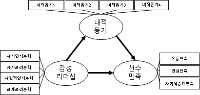
Purpose The purpose of this study was to examine the influence of coaches’ emotional leadership on athletic satisfaction and to investigate mediating effect of intrinsic motivation perceived by professional female basketball athletes in Korea and Japan. Methods 154 professional female basketball athletes in Korea and Japan participated in this study and responded to questionnaires which consisted of coaches’ emotional leadership, intrinsic motivation, and athletic satisfaction. The collected data were analyzed by frequency analysis, confirmatory factor analysis, reliability analysis, descriptive statistical analysis, correlation analysis, and structure equation analysis with using SPSS 23.0 and AMOS 23.0. Results The results of this study were as follows; Firstly, coaches’ emotional leadership had positive effect on athletic satisfaction. Secondly, coaches’ emotional leadership had positive influence on intrinsic motivation. Thirdly, intrinsic motivation had positively affect on athletic satisfaction. Lastly, intrinsic motivation completely mediated the relationship between coaches’ emotional leadership and athletic satisfaction. Conclusion In conclusion, these findings imply that coaches’ emotional leadership and intrinsic motivation are critical factors for improving athletic satisfaction.
Purpose The purpose of the study is to review the current trends of Korean research on sport volunteering. Methods For the research purpose, 74 KCI-listed articles published were investigated. Results The main topics of 60 articles were sport volunteering and the sub-topic or factor of the other 14 articles was sport volunteering. These articles were classified based on the publishing year, type of journal, academic area, research method, research topic, research sample, volunteer characteristics and volunteer area. Research on sport volunteering has been continuously conducted but the number of related publications has been increased since 2009. Sport volunteer research articles have been published in various sport related journals. However, the majority of the research articles are in the research areas of sport management, sport pedagogy, adopted physical education, and sport policy. Regarding the research method, more than a half of the articles were the ones using quantitative research methods, but qualitative research methods were often used as well. The majority of the research were conducted on volunteers but the research conducted on the beneficiaries of volunteer services were few. Many of the volunteers researched were college students. Event volunteering and educational volunteering were common volunteering areas in the research articles. Conclusions Korean researchers should not only conduct more research on sport volunteering with various topics but also improve the quality of the research after conducting the in-depth review of theories and literature and the better understanding about Korean situation on sport volunteering.

Purpose The purpose of this study was (1) to analyze judges’ evaluation on rhythmic gymnastics performance by applying generalizability theory and (2) to suggest recommendations to improve judges' rating. Methods Data were 34 players’ scores from Senior Part at 29th KGA President’s Cup National Rhythmic Gymnastics Championship in Korea. Difficulty and execution scores in ball, clubs, hoop and ribbon event were analyzed. Analysis models containing components of area and reputation rank were designed and multivariate generalizability theory were used for analysis. Results The G-study results showed (1) that the error source about players has more significant impact to evaluation than other error sources in analysis model containing components of only player and judge, (2) that the error source about players has more significant impact to evaluation than other error sources in analysis model adding components of area, but the error source about area has more significant impact to evaluation of clubs event than other error sources, (3) that the error source about players has more significant impact to evaluation than other error sources in analysis model adding components of reputation rank, but the error source about reputation rank has more significant impact to evaluation of hoop event than other error sources in analysis model adding components of area. The D-study results showed generalizability coefficient was stable in analysis model without components of area and reputation rank, but generalizability coefficient in analysis model containing components of area and reputation rank not stable in some event. Conclusion Recommendations for improving judging were discussed.


Purpose The purpose of this study is to identify the causal relationship between competitive strategy, absorption capacity and business performance of commercial fitness center and to confirm the control effect of absorption capacity between competitive strategy and business performance. Methods 330 fitness center managers and administrators were selected for the study. Out of 330, 308 questionnaires were collected and used for data analysis. The questionnaire consisted of confirmatory factor analysis, reliability analysis, correlation analysis and structural equation model analysis. Finally, Ping 's two - step approach was used to verify the moderate effect of absorptive capacity. Results The results of the study are as follows. First, competition strategy of fitness center has a positive effect on absorptive capacity. Second, the competition strategy of fitness center has a significant effect on business performance. Third, the absorptive capacity did not effect the management performance. Fourth, the absorptive capacity was found to be moderate effect between the competition strategy and the management performance of the fitness center. Conclusion Based on the results, the fitness center managers and administrators of fitness center should set up competitive strategy internally and increase absorptive capacity to utilize external information by internalizing it.

Purpose Incidence and prevalence of Korean teenager cheerleading injuries were surveyed. Methods A total of 769 junior cheerleaders who participated in National Sport Cheerleading Competitions responded to a questionnaire, and 435 reported experiences of injuries. Results Risk factors for injury included older age (p<0.001), increased experience (p<0.001), and higher BMI (p<0.05). The most frequent injury occurred at wrist, ankle, knee, shoulder and waist. And the most responded types of injury were muscular pain and contusion. Cheerleading experience affected on injury prevalence. They were injured when they perform Elevator (<0.5 yrs), Cradle (0.5-1 yrs), Cradle and Basket toss (1-2 yrs), Cradle and Pyramid (2-3 yrs). These techniques involved in bodily movements of going up and cradle. About 56% of injury was treated at home or not treated at all, and 60% of injury was either self-treated or not intervened. And only 32% of cheerleaders practiced on a formal mattress. Conclusion Safety measures for these youth cheerleaders are necessary and guidelines for securing safety and preventing and treating injuries for these population are urgent.

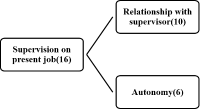
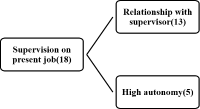
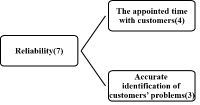
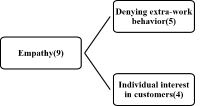
Purpose This study attempted to investigate the difference on job satisfaction and service quality between non-regular and regular workers in commercial sports facilities. Methods With the purpose of the study, the purposive sampling as the non-probability sampling method was used to intentionally select the representative cases. We conducted through utilizing in-depth interviews with 6 non-regular and regular workers, respectively, who have worked for more than a year at total commercial sports facilities holding more than 3 programs with more than 500 memberships. This study aimed to explain real phenomena as much as possible by utilizing NVivo 11, one of qualitative research method programs, on the basis of raw data. Results In conclusion, non-regular and regular employment types in commercial sports facilities did not affect service quality provided for customers. However, it was derived that there was a slight difference between regular and non-regular workers on job satisfaction. Conclusion It is necessary to improve the wage and compensation system for regular workers as well as the labor policy to improve treatment of the wage according to the qualification of non-regular workers in commercial sports facilities. In spite of the instability of non-regular workers, the effort of converting into regular workers would evoke organizational commitment, loyalty, and attachment of non-regular workers, when properly acknowledged.