Purpose The purpose of this study was to investigate the effect of a 10-week aerobic exercise training on cardiovascular function, atherosclerosis, and vascular endothelial function in elderly women. Methods Twenty impaired fasting glucose (IFG) and normoglycemic elderly women volunteered to participate in the study. The participants in aerobic exercise training group (TR: n=9) completed 20-40 minutes of aerobic exercise program at 30-50% HRR for 3 times per week during 10 weeks. The participants in control group (CON: n=11) were asked to maintain their normal life pattern during the same intervention period. Results Main results of the study were as follows: 1) There were no significant main effect or interaction in body weight, fat-free mass, fat mass, percent body fat, and body mass index. 2) There were no significant main effect or interaction in heart rate, stroke volume, cardiac output, total peripheral resistance (TPR), systolic blood pressure, diastolic blood pressure, mean arterial blood pressure, pulse pressure, and rate pressure product. However, interaction between group and test in TPR was close to statistically significant level (P =.054), and it tended to be decreased in TR group. 3) There was a significant main effect of test in high sensitivity C-reactive protein(hs-CRP), it tended to be decreased in TR group. There were no significant changes in total cholesterol(TC)/high density lipoprotein-cholesterol (HDL-C) ratio, triglyceride/HDL-C ratio, and low density lipoprotein-cholesterol/HDL-C ratio. 4) There were significant main effect of group, main effect of test, as well as interaction between group and test in % flow mediated dilation(FMD), and it increased significantly (P<.01) in TR group. Nitric oxide tended to be increased in TR group, even though it did not change significantly in both groups. Conclusions It was concluded that the 10-week aerobic exercise training would be beneficial for improvement of vascular endothelial function, resulting from the decrement of total peripheral resistance.
PURPOSE This systematic review and meta-analysis aimed to assess the effectiveness of exercise programs in improving physical fitness among middle-aged adults in Korea. METHODS A literature search was conducted using KCI-registered databases on DBpia, RISS, and KISS up to September 21, 2023. The review followed the PICOSD framework (population: middle-aged adults; intervention: exercise program; comparison: did not participate in exercise program; outcome: physical fitness; study design: randomized controlled trials). Two researchers independently evaluated bias using the Cochrane Risk of Bias tool for randomized trials (RoB 2). The data was synthesized using the CMA 3.0 program, applying a random effects model to estimate the overall effect size using Hedges’g. RESULTS Out of 914 screened documents, 15 studies were selected, comprising 405 participants. The overall effect size for improving physical fitness was significant (g=0.994, 95% CI: 0.712–1.276). Sub-analysis indicated significant improvements in various components, including muscle strength (g=1.295, 95% CI: 0.909-1.682), muscular endurance (g=0.972, 95% CI: 0.637-1.308), cardiorespiratory endurance (g=1.092, 95% CI: 0.453–1.731), flexibility (g=0.883, 95% CI: 0.555–1.210), muscle power (g=1.421, 95% CI: 0.656– 2.186), and agility (g=1.854, 95% CI: 0.347–3.361) compared to the control group. An additional analysis focusing solely on women revealed a slight increase in effect size, although the order of effect sizes remained consistent across fitness components. CONCLUSIONS This meta-analysis confirms the effectiveness of exercise programs in enhancing physical fitness in middle-aged adults. The systematic review also highlights key considerations for designing exercise programs for this demographic. Future studies should aim to minimize bias and enhance the quality of reporting to ensure more robust results.
PURPOSE This study aimed to examine the associations between accelerometer-measured physical activity and both cardiometabolic disease risk factors and metabolic syndrome in Korean adults. METHODS We performed a retrospective cohort study with age-sex matched case-control using data from the 2014-2016 Korea National Health and Nutrition Examination Survey, which was administered to South Korean adults (n=320). Individuals were categorized into quartiles based on accelerometer-measured moderate-to-vigorous physical activity (MVPA). Demographic and physical characteristics, waist circumference, visceral adiposity index, blood pressure, lipid profiles, and TG/HDL-C were observed. The associations between MVPA status and cardiometabolic disease risk factors as well as metabolic syndrome were determined using multiple logistic regression. RESULTS For the waist circumference, SBP, DBP, MBP, visceral adiposity, triglyceride, and a surrogate estimate of insulin resistance, the Q1 and Q2 groups had higher means compared with the Q3 and Q4 groups. HDL-C was higher in the Q3 and Q4 groups compared to the Q1 and Q2 groups. Odds ratios for cardiometabolic disease risk factors and metabolic syndrome decreased in a curvilinear manner with the increasing quartile of MVPA. CONCLUSIONS Adults with higher MVPA participation were strongly associated with cardiometabolic disease risk factors and metabolic syndrome.
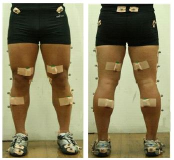
The purpose of this research is to investigate the factors affecting the performance capability of lunge movements by performing lunge movements which are commonly used as a method of instant physical movement in sports with a kinetic analysis including an EMG analysis. This research targeted 14 skilled fencers and made the subjects perform kick-lunges which allow them to go farthest from their positions and performed an analysis on such, applying a 3D motion analysis system and an EMG system. The subjects performed kick-lunges in two movements; one with a preliminary movement and the other without it and those are performed with both dominant leg and non-dominant leg. The result of this research is as follows. The lunges with a preliminary movement showed higher performance capability than those without it. Furthermore, as the level of skills gets higher, the length of lunges gets longer, and it seemed that a tactical mechanism shortening exercise performance times was used as a mechanism to control the impulse coming from such lengthened lunges. In addition, a difference appeared in mechanical factors such as moment and power in a dominant leg movement and it seemed to result from a difference in an functional capability using muscles.



Purpose This study focuses on accessibility to sports facilities that can be classified into structural leisure constraints. The purpose of this study is to explore exploratory analysis of the types of reservation methods and payment methods, which are the initial stages of consuming sports facilities, and to explore inconveniences that consumers feel when making reservations. Methods A quantitative research method was used to derive the results, and data were collected through a questionnaire survey method. The collected data were analyzed by technical statistics focusing on the reservation method, payment method, and inconvenience during reservation. Results As a result, it was found that the main types of reservation methods and payment methods were homepage, homepage/telephone, telephone, homepage/app, and account transfer and card payment, respectively. In the case of inconvenience, the procedure was complicated, address and location, and reservation method were identified as the main matters. Conclusions Efforts must be made to secure both the convenience and publicity of accessibility at an early stage, such as reservation methods and payment methods for sports facilities.
Purpose The purpose of this study was to find out whether they can contribute to the revitalization of urban communities. Methods This study conducted in-depth interviews and focus group interviews to collect qualitative data. The collected data were analyzed through the domain analysis and the classification analysis. Results The roles of sports club managers in leadership and network intermediaries were very important in the accumulation of social capital. The formation of staff members who work for the managing and activating sports clubs has created trust and satisfaction with the sport. Their activities contributed to the formation of social capital in sports clubs and played an important role in revitalizing sports clubs. Conclusions Sports club managers performed important roles in building trust and network with the club members and even other clubs through their leadership. These management activities are possibly contributed to the creation and accumulation as social capital. Therefore this research also showed the possibilities of extension to local community of the social capital through sports clubs.
PURPOSE The purpose of this study was to identify a sport-specific assessment for elite race walking athletes by comparing physiological responses to different types of walking graded exercise test (GTX) protocols. METHODS Six elite race walking athletes completed two types of walking protocols in a randomized crossover design with 1 week of interval between trials. Exercise time, oxygen uptake (VO2), ventilation (VE), and heart rate (HR) were measured in each trial; the lactate level was measured during the recovery period. RESULTS VO2, VE, and HR differed significantly between the trials (p<.01~.05). Exercise time (p<.01) and VO2 (p<.05) differed significantly between the walking protocols; however, VE and HR did not differ significantly. During the recovery period, lactate levels differed significantly between the trials (p<.01), but not the walking protocol. CONCLUSIONS These results suggest that modified walking GXT protocols were appropriate to assess elite race walking athletes.
PURPOSE This study aims to analyze the intention to adopt sports artificial intelligence (AI) coaching services by applying the theory of planned behavior(TPB) and examining generational differences in TPB factors between MZ and older generations. METHODS Data were collected through a survey of sports consumers, and 252 valid questionnaires were included in the final analysis. The hypotheses were tested using structural equation modeling, and generational differences were assessed through latent mean analysis. RESULTS Attitude, subjective norms, and perceived behavioral control significantly predicted adoption intention. Additionally, latent mean analysis revealed a significant generational difference in the subjective norms, with older generations perceiving them more strongly than the MZ generation. CONCLUSIONS These findings highlight the need for generation-specific strategies for sports AI coaching providers to enhance adoption.

The purpose of this study was to analyze the effects of employee’s job burnout on turnover intention and to draw average effect size(weighted averaged fisher’s z) in sports industry. After a lot of dissertations and journal articles were extracted by searching web sites, 11 papers were finally selected through thorough verification procedure. Specific analyses were conducted via MIX 2.0(Meta-analysis with Interactive eXplanations). The results were as follows. First of all, the weighted average correlation coefficient of between depersonalization and turnover intention was .326. Secondly, the weighted average correlation coefficient of between reduced personal accomplishment and turnover intention was .192. Lastly, the weighted average correlation coefficient of between emotional exhaustion and turnover intention was .326.

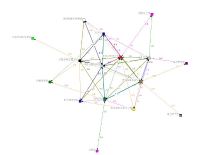
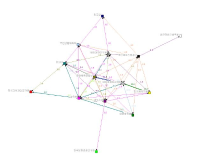
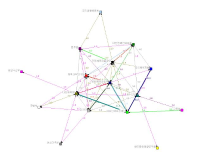
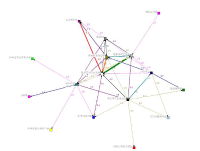
The purpose of this study was to investigate structural characteristics and participants` roles & functions of sport policy network in Korea, by social network analysis on structural characteristics of sport policy network and AHP analysis on participants` roles and functions. For that, 21 executive officers from 19 organizations and agencies related to sports policy were selected as study subjects, and, the materials collected from whole twice surveys on them were analysed by Ucinet 6 and Expert Choice 2000 program. As the results, the governmental organizations like the Blue House and Ministry of CultureㆍSports and Tourism composed the central position group of sport policy network of Korea, and took the main functions of planing and arrangement within their main roles of policy agenda formation and policy decision, so, sport policy network of Korea could be called centralized network by government. And, in cases of private agencies, Korea Sports Council composed the central position group only in policy network of professional sport, Korea Council of Sport for All of sport for all, and Korea Sports Association for the Disabled of disability sport, and, each of them took the main roles and functions of policy execution in their fields, so, it was obvious that the private agencies were divided into their own sport policy areas.