Purpose This study was carried out for the purpose of providing national players of our country by grasping various techniques and difficulty composition of world-level players. Methods For doing so, this research was executed by objecting 9 finalists in parallel bar of 2012 London Olympics and 8 finalists in parallel bar of 2016 Rio Olympics. Collected datum were treated with average, standard deviation, percentage (%) by using SPSS 18.0, and they was analyzed while securing feasibility through expert meeting. Results Research results are same as follows. First, Rio Olympics players appeared higher than London Olympics such like 6,61 points in average D-score of 2012 London Olympics final game and 7.0 points in average D-score of Rio Olympics final game. Second, I group was turned up to prefer Healy technique (34.88%) of D difficulty in two olympics. Third, Ⅱ group carried out Bwd. uprise and salto fwd. p. to sup technique of D difficulty by each 4 players (36.35%) in two olympics, so the technique was displayed as preferred techniques of players. Fourth, Ⅲ group executed at the London Olympics, C difficulty was the most frequently used, but at the Rio Olympics, D difficulty and E difficulty were the most frequent. Fifth, Players in London Olympics and Rio Olympics executed Basket to hdst technique, and it appeared to be most preferred technique by players. Sixth, Ⅴ group executed at the London Olympics, D difficulty was the most frequently used, but at the Rio Olympics, F difficulty was the most frequent. Conclusions These findings will be useful datum to gymnasts and instructors of our country by providing valuable datum in preparing 2020 Tokyo Olympics after grasping preferred techniques and trends of world-excellent players.

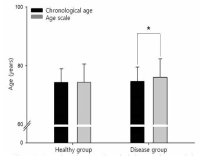
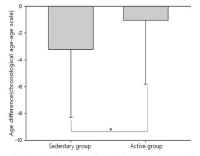
Purpose Evaluating the aging of senior and providing optimal sevices are important things for successful aging. This study identified functional fitness related with heath of aged 65 years or older and developed an age scale (longevity fitness age) for assessing their aging. Methods Participants were 458 older people (166 male, 292 female). They were divided into healthy group and disease group. Healthy group was used for the development of the longevity age equation and disease group was for investigating the validity of the equation. Participants completed 13 function fitness variables. The first principal component obtained from a principal component analysis was used to compute the equation. All variables except for grip strength and carrying beans were correlated with chronological aged. Grip strength and variables related lower functional fitness had differences between healthy group and disease group. Finally, 4 variables were selected for the equation. Results It was the following: longevity fitness age=0.942*X1+2, 185*X2+0.673*X3+0.051*X4+0.588*chronological age+58.401, where X1=standing up from a supine position, sec (s), X2=maximum walking (s), X3=standing up and sitting down a chair (s), X4=one leg balance with eyes open (s). The longevity fitness age of healthy group do not have a difference compared to their chronological age but disease group had a difference significantly. Age difference (chronological age-longevity fitness age) of sedentary group in disease group was significantly bigger than its active group. Longevity fitness age could assess an aging of senior. Conclusion We suggest that it can use as the tool for early detecting senior who need the health care service.

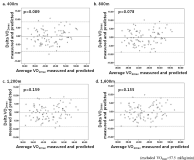
Purpose The purpose of this study was to develop the new indirect method assessing maximal oxygen uptake (VO2max) using heart rate (HR) and accelerometer during walk exercise. Methods One hundred seven participants (55 male, 52 female) performed a graded exercise test to determine VO2max and two types of 1,600 m walk exercises (fast walk and pace controlled walk). The equations for estimating VO2max was developed by stepwise multiple regression. The validity of developed equations tested through the correlation between measured VO2max and estimated VO2max, was assessed by predicted residual sum of squares, and Bland-Altman plotting. Results VO2maxwas correlated with time, and HR/activity count per minute (ACM) measured in pace controlled walk exercise at all distance (400 m, 800 m, 1,200 m, 1,600 m). The equations were valid significantly and their multiple correlation coefficients or standard estimated error were similar to that Åstrand-Rhyming cycle ergometer test or Rockport 1 mile walk test. Using HR/ACM in pace controlled walk (400 m), it was possible to estimate VO2max(R2: 0.675, %SEE: 10.7). The equation was: VO2max=121.659+6.656×Gender-0.865×Age-9.540×Time-2460.952×HR/ACM (Gender, 0=female, 1=male: Time, hundredth of a minute: HR, heart rate: ACM, activity count per minute). Conclusion Estimation equations developed in this study are considered to estimate VO2max through a shorter distance, or a lower intensity of walk exercise. It is required studies to target a wide range of ages or to develop walk test on a lower bpm.
Purpose The purpose of this study was to investigate the effect of a 10-week aerobic exercise training on cardiovascular function, atherosclerosis, and vascular endothelial function in elderly women. Methods Twenty impaired fasting glucose (IFG) and normoglycemic elderly women volunteered to participate in the study. The participants in aerobic exercise training group (TR: n=9) completed 20-40 minutes of aerobic exercise program at 30-50% HRR for 3 times per week during 10 weeks. The participants in control group (CON: n=11) were asked to maintain their normal life pattern during the same intervention period. Results Main results of the study were as follows: 1) There were no significant main effect or interaction in body weight, fat-free mass, fat mass, percent body fat, and body mass index. 2) There were no significant main effect or interaction in heart rate, stroke volume, cardiac output, total peripheral resistance (TPR), systolic blood pressure, diastolic blood pressure, mean arterial blood pressure, pulse pressure, and rate pressure product. However, interaction between group and test in TPR was close to statistically significant level (P =.054), and it tended to be decreased in TR group. 3) There was a significant main effect of test in high sensitivity C-reactive protein(hs-CRP), it tended to be decreased in TR group. There were no significant changes in total cholesterol(TC)/high density lipoprotein-cholesterol (HDL-C) ratio, triglyceride/HDL-C ratio, and low density lipoprotein-cholesterol/HDL-C ratio. 4) There were significant main effect of group, main effect of test, as well as interaction between group and test in % flow mediated dilation(FMD), and it increased significantly (P<.01) in TR group. Nitric oxide tended to be increased in TR group, even though it did not change significantly in both groups. Conclusions It was concluded that the 10-week aerobic exercise training would be beneficial for improvement of vascular endothelial function, resulting from the decrement of total peripheral resistance.

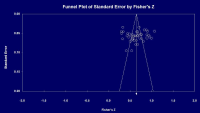
Purpose The purpose of this study was to conduct the impact of technology acceptance model(TAM) in sports field using a meta-analysis. Methods First of all, findings from 22 articles were used to analyze the relationship between perceived usefulness, perceived ease of use and intention to use via the comprehensive meta analysis(CMA) program. Results Its study results are as follows: First, results showed that TAM have a big effect on intention to use, with an effect size of .537. Second, the most influential effect size of TAM sub-factors was perceived usefulness. Third, in application and SNS had a most effect on TAM. Lastly, results found significant moderating evidence for ratio of female. But ratio of 20’s was not founded significant moderating evidence. Conclusion Based on the results of this study, it will be possible to pursue the behavior of the audience in the field where TAM is applicable in sports field.


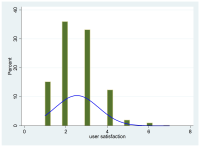
Purpose The study aims to analyze the factors affecting the Residents user satisfaction in order to improve the management of the Open School Sports Center the support facility of the National Sports Promotion Fund. Methods This data is based on Korea Institute of Sports Science(KISS)'s Open School Sports Center Usage Status and Satisfaction Survey (2016) and Open School Sports Center use performance. The analysis model is a regression model (TOBIT) that takes into account the limited characteristics of dependent variables. Results The results are as follows: the satisfaction is negatively related age, number of regulations, weekday opening hours, and usage fees. Conclusion Therefore, in order to increase the satisfaction of Open School Sports Center residents users, various supports are needed. This includes funds for PR, discounts and user-friendliness. It also requires differentiated management of each Center. In the case of regions and facilities, consumer-oriented policies need to be applied instead of collective standards.

Purpose This study aimed to investigate the psychological capitals created by the experience of winning an Olympic medal by using the photovoice method. Methods Data were collected on the way the participants-five Bronze medalists in the Women's volleyball in 1976 Montreal Olympics-take and send photographs. The interviews were conducted by phone based on the collected data. The photographs were placed into the parent category after conducting inductive content analysis, and their validity was confirmed from the expert meetings. Results The results of the study, indicate that the participants have earned psychological capitals such as my matter volleyball for diligence, the gift of a Bronze medal to gratitude, the source of achievement, challenges, and key of relationship tenderness from the experience of winning an Olympic medal. Conclusion In this regard, this study provides an opportunity to extend the study on the lives of retired athletes who won an Olympic medal to various perspectives, as well as the impact of sports experience on everyday life.






Purpose The purpose of this study was to evaluate the effect of detachable forefoot outsole on muscle activity of the lower extremity during downhill walking. Methods Thirteen male university students (age: 23.5±2.1 yrs, height: 175.7±4.6 cm, weight: 651.9±55.5 N) who have no musculoskeletal disorder were recruited as the subjects. Each subject walked down 20° ramp with forefoot’s design for the detachable outsole’s angle(5°, 10° and 20°) and type(A and B). To assess the myoelectric activities of selected muscles, six of surface EMG(QEMG8, Laxtha Inc. korea, sampling frequency = 1,024 Hz, gain = 1,000, input impedance > 1012 Ω, CMRR > 100 dB) electrodes with on-site pre-amplification circuitry were attached to ES, RF, BF, TA, LG, and MG. For each dependent variable, two-way ANOVA with repeated measures was used to determine whether there were significant differences among forefoot’s design for the detachable outsole’s angle and type (p<.05). When correlation effect was not statistically significant, post hoc analyses were performed using the multiple comparison through bonferroni, and if correlation effect was statistically significant, one-way ANOVA was performed as for the form of outsole which is an inter-group variable in order to find out simple main effect, and the paired t-test was performed to find out the angle of outsole, which is an intra-group variable. Results In IDLS phase, In terms of Rectus Femoris, 10°-B outsole showed statistically higher muscle movement than 5°-B, 5°-A outsole showed statistically higher muscle movement than 5°-B, 20°-A outsole showed statistically higher muscle movement than 20°-B. Among these outsoles, Conclusion 5°-B outsole was found to the most useful outsole for improving stability and controlling the bodily movement due to the body weight load when walking down the ramp.


Purpose The purpose of this study was to examine the relationship between performance factors and physical fitness in secondary school female biathlon athletes. Participants in this study were 14 female biathlon athletes. Methods All factors such as aerobic capacity(VO2max, %AT), wingate test(peak power, average power, fatigue index), isokinetic test(trunk, knee, hip, ankle), 1RM test(leg press, chest press, lat pull down), physical fitness(grip, knee and back muscle strength, sit & reach, power, agility) were tested. In order to analyze collected data, pearson product moment and multiple regression analysis were utilized. The results were summarized as follows : First, there was a significant correlation between aerobic. Results The results were summarized as follows : First, there was a significant correlation between aerobic capacity and three factors(standing broad jump, isokinetic test 60° right knee extension)(p<.01). There was a significant correlation between wingate test and four factors(isokinetic test 30° left ankle ever, 30° right ankle ever, 120° left ankle inver, leg press)(p<.10). Conclusion These results suggested new evidence that ankle strength is necessary for performance in female biathlon athletes.

Purpose This study was conducted to investigate the appropriateness of the concept of condition for athletes and to conceptualize condition in a way suitable for field and then to produce a tool to test condition that reflects usability. Methods 30 college athletes and national athletes with more than 5 years of experience were selected. In the conceptual review stage, the appropriateness of the concept of condition was verified. In the conditional element collection stage, the condition concept reflecting usability was extracted. In the development stage of the conditional questionnaire, a condition questionnaire was developed in consultation with the data provider to reflect usability. Results Previous studies on the condition of athletes were complicated and the necessity for consideration of usability was raised. As a result of conceptualization with consideration of the application to the sport scene, condition in a scene is summarized into both physical and psychological states. As a result of the appropriateness evaluation of the tool that produced the condition inspection tool reflecting the condition element based on universality and peculiarity of conditionality, the athletes evaluated that the condition inspection tool properly reflects condition, is easy to apply and can be used for condition control. Conclusion The development and application of psychological testing instruments reflecting usability will accelerate the application of sports psychology in the appropriate direction. The reflection of usability will contribute not only to the reliability and validity of the psychological testing tools used in the field of sports psychology, but also to the improvement of the possibility of intervention by leaders and athletes, the convenience of development procedures, and the utility of response results.
