PURPOSE This study explored psychological experiences in long jump competitions and examined the continuity of psychological experiences over time. METHODS A total of 28 adult long jumpers, 18 men and 10 women, were provided data through in-depth interviews. Data on psychological experiences were extraced through inductive content analysis, while continuity by period was analyzed by calculating the response frequency ratio using Excel. RESULTS First, the psychological experience in the long jump competition was categorized as fundamental, competition intelligence, emotional control, and communication capacity experience. Second, in long jump competitions, results showed that jumpers experienced mixed feelings of anxiety and pressure, self-confidence, and concentration in the first period; peer communication and analysis thinking were necessary in the second period; practical intelligence and pressure control were important in the third period; learning ability and creativity were crucial in the fourth period; learning ability and coach communication were applied in the fifth period; and fighting spirit and creativity were present in the sixth period. Third, the psychological experience of long jumpers by period, basicphysical strength was maintained; competition intelligence increased in the second and fourth periods; communication skills increased until the fifth period, and decreased after; while emotional control decreased. This reflects the contextual changes over time andthe change in competition records owing to that. CONCLUSIONS In the long jump competition, psychological experience changes by period and affects competition records. This study will contribute to further understanding of psychological continuity.
PURPOSE The purpose of this study was to examine the effects of an eye movement exercise intervention on cognitive function and prefrontal cortex connectivity in the elderly with mild cognitive impairment. METHODS Ten older adults with mild cognitive impairment participated in eye movement exercise consisting of saccadic eye movement, pursuit eye movement, vestibular-ocular eye movement, and vergence eye movement for 4 weeks. Cognitive function (MoCA-K), reaction time during stroop task, and prefrontal cortex connectivity were measured using the functional near-infrared spectrometric analyzer (fNIRS) before and after the intervention. RESULTS First, cognitive function of the elderly with mild cognitive impairment showed significant improvement after the eye movement exercise (p < .05). Second, reaction time decreased significantly from 1.16 to 0.91 ms after eye movement exercise. Third, the strength of prefrontal cortex connectivity (left OFC - right FPC, right OFC - right FPC) increased after the intervention in the older adults with mild cognitive impairment. CONCLUSIONS The results of this study suggest that eye movement exercise is an effective intervention for improving cognitive function through improvement of brain functional connection in the elderly patients with mild cognitive impairment.
PURPOSE This study aimed to identify movement pattern differences in the running of youth soccer players with and without lateral ankle sprain (LAS) histories. METHODS A total of 12 participants were recruited and assigned to the LAS group or the control group. All participants were assessed for anthropometric data, and they filled in the subjective ankle function questionnaires. Then, reflective markers were attached to their bodies, and they were instructed to run at the preferred speed on the 9-m runway thrice. 3D joint angles for ankle, knee, and hip joints were exported, and their mean values and 95% confidence intervals were calculated. Ensemble curve analysis was conducted to compare running kinematics between the groups. RESULTS The LAS group exhibited fewer dorsiflexion angles and more inversion angles compared to the control group. Excluding the dorsiflexion deficits and more inverted ankles, there were no significant differences between the groups. CONCLUSIONS Although the ankle kinematic patterns found in this paper are not considered LAS risk factors, it will be able to identify precise LAS risk factors with prospective design (e.g., lower extremity movement patterns) as well as intrinsic risk factors.
PURPOSE This study was conducted to estimate the tendency of psychological factors influencing cycling performance by analyzing the characteristic factors of athlete reputation in the news big-data. METHODS To explore the psychological factors influencing cycling performance, an open questionnaire was conducted on 82 cyclists, and Inductive Content Analyses was performed. Overall, 89,520 news articles were collected through BIGKinds, and forming factors of athlete reputation were derived through LDA topic modeling analysis and inductive categorization. Through regression analysis, time series tendency of the factors of athlete reputation was calculated. Finally, the tendency of psychological factors to influence cycling performance was estimated based on the previously derived results in this study. RESULTS The psychological factors influencing cycling performance were found to be; emotion control, trust capital, cognitive control, motivation and communications with the coach. The forming factors of athlete reputation was found to be; reporting of the sports event, infrastructure creation, analysis to performance, moral issue, social environmental changes and sports gossip. The time series tendency of the forming factors of athlete reputation was found to include the categories of Hot, Warm, Cool and Cold. The psychological factors influencing cycling performance are estimated to expand to exercise performance and moral intelligence. CONCLUSIONS The results of this study suggest that the discussion of psychological factors influencing cycling performance extends not only to exercise performance, but also to moral intelligence, reflecting the socio-cultural context in the discussion of performance.
PURPOSE Previous research has rarely examined foot segment motion and muscle activity simultaneously in relation to foot type. Therefore, this study aimed to investigate how foot type influences segmental foot kinematics and lower limb biomechanics during walking. METHODS Fifty-eight healthy adults were sorted into normal group (NG), pes planus group (PPG), or pes cavus group (PCG) using the Foot Posture Index, navicular drop, normalized navicular height, and normalized instep height. Furthermore, three-dimensional foot kinematics and lower limb muscle activity were recorded during 12-meter, self-paced walking using an optical motion capture system and surface electromyography. Kinematic analysis during the stance phase included measurement of joint angles and ranges of motion (ROM) for the following segments: foot relative to the shank, forefoot relative to the midfoot, lateral forefoot relative to the midfoot, medial forefoot relative to the midfoot, and hallux relative to the medial forefoot. Moreover, muscle activity analysis included the tibialis anterior, peroneus longus, and medial and lateral heads of the gastrocnemius. RESULTS Compared with the NG and PPG, the PCG exhibited greater ROMs in the frontal plane for the forefoot relative to the midfoot and medial forefoot relative to the midfoot. Additionally, the PPG exhibited a greater ROM in the frontal plane for the hallux relative to the medial forefoot compared with the NG. The intersegmental angles according to foot type demonstrated distinct kinematic differences between the PPG and NG in the transverse plane, specifically in the forefoot relative to the midfoot and medial forefoot relative to the midfoot relationships. However, no significant differences were observed in lower limb muscle activity during the stance phase. CONCLUSIONS This study provides insights into kinematic changes according to foot type during walking. Moreover, the findings of this study may deepen our understanding of the intrinsic risk factors for lower extremity injuries and tissue stress associated with variations in foot type.
PURPOSE This study compares the effects of video group and metaverse group counseling for student athletes to analyze differences in immersion, sychological skills learning effects, and each approach’s participation experiences. METHODS Twenty-four high school archery students were divided into three groups: a metaverse experimental, a video comparison, and a control group. For the experimental and comparative groups, 10 non-face-to-face psychological skills training sessions were conducted. With the control group, results were compared and analyzed by measuring psychological skills and social presence pre- and post-training. Additionally, analysis of the qualitative effects of psychological skills training was performed. RESULTS The psychological skill test’s quantitative analysis of the video comparison group showed a more significant effect in anxiety control factors than the metaverse experimental and the control groups. Moreover, in the social presence test, both the metaverse and the video groups showed significant differences in social presence and satisfaction; furthermore, Scheff post-verification results showed that the two environments’ satisfaction was significantly higher than that of the control group. Qualitative analysis confirmed that the metaverse and video groups experienced psychological, technical, and relational changes in common. CONCLUSIONS Although the metaverse group using avatars was likely to increase immersion, both the video and the metaverse groups were effective in psychological skills training, suggesting that the training effect may vary depending on the non- face-to-face environment’s stability and participation method. Future studies should examine effects of applying the metaverse platform to sports psychological skills training and various psychological support activities by solving the metaverse environment’s technical limitations.
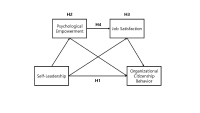
[Purpose] The purpose of this study is to draw practical implications applicable to the field through analysing serial multiple mediator model of self-leadership, psychology empowerment, job satisfaction and organizational citizenship behavior. [Methods] In order to achieve the purpose of this study, we surveyed Korea national league players(187 usable sample). Four hypotheses were tested using frequency analysis, exploratory factor analysis, reliability analysis, correlation analysis and PROCESS macro through SPSS statistics. [Results] The results are as follows. First, self-leadership has a significant effect on organizational citizenship behavior. Second, mediating effects of psychological empowerment between self-leadership and organizational citizenship behavior were significant. Third, mediating effects of job satisfaction between self-leadership and organizational citizenship behavior were significant. Fourth, serial multiple mediator effects leading to self-leadership→psychological empowerment→job satisfaction→organizational citizenship behavior were significant. [Conclusions] Korea national league players must perform self-leader, goal setting, self-observation, self criticism, constructive thinking strategies, dedication and voluntary attitude for clubs and colleagues. The team’s coaches should strive to praise the athletes for their pride, provide appropriate feedback, prevent job burnout, and the management of front office should make practical efforts such as improving the welfare environment and presenting the future vision of club.
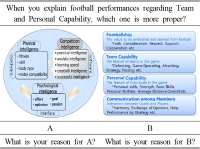
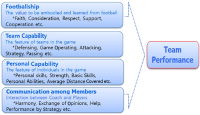
Purpose The following study was conducted to suggest and verify the validity of the concept of team performance, which has previously been considered as the total sum of individual performances. Method The concept of team performance was extracted by a conductive content analysis and an exploratory factor analysis of the data gathered from middle school football players. To verify the validity of the extracted concept, football experts' opinions were collected. Results The idea of team performance, categorized by Footballship, Team Capability, Personal Capability, Communication among Members, has been taken differently from the total sum of individual performances. Footballship is the virtue that should be materialized, and simultaneously earned during the game. Team Capability is a available resource for team's performance, Personal Capability is a available resource for a player's performance, and Communication among Members is the intimacy of communication between coaches and players. The conglomeration of experts' opinions on the concept of team performance and its components shows that team performance is evidently different from the total sum of individual performances. Conclusion The following study has been conducted to suggest and verify the validity of the concept of team performance. Team performance exists, standing distinct from the sum of individual performance, and understanding the concept of team performance will contribute not only to understanding performance, but also to improve the effectiveness of training and managing the team. Interest of the sport society is looked forward to.
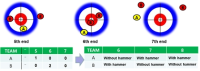
Purpose The purpose of this study is to investigate the characteristics of the winners and the losers of curling games to provide the winner strategies for the curling stakeholder. Methods For this study, data was collected from 2014 Sochi Winter Olympics web-site(http://sochi2014.curlingevents.com), which covers 199 games in total. Using the collected data, we extracted additional data such as the shot types and accuracy per players, team average score per end, whether or not with hammer per end and so on. and then a Chi-square test in statistic package SPSS 23.0 was used. The statistical significance was considered with p< 0.05. Results As a result, it was found that there were statistically significant difference between winners and losers of curling game on the shot type and accuracy(Draw, Front and Clearing). It was also found that there was not statistically significant between winners and losers about the number of blank end per end. It was found that 9th end average score was relatively lower than the other end in both the winners and the losers. It was found that the characteristics of the winners tends to be successful in more point from 5th end to 8th end with hammer and steal without hammer. Conclusion In conclusion, the strategies to win the curling game is to improve the shot performance of Lead and Skip, to organize the operation sequence for the successful blank end, and to develop the database and software in curling.

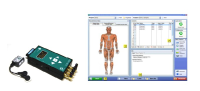
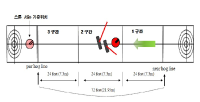
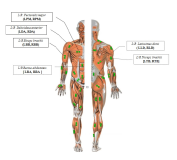
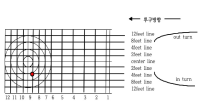
Purpose This is to provide essential data for training necessary for sweeping through the analysis of muscle activity generated at this time and how much sweeping and what trajectory moves the stone when the movement of the stone is controlled through sweeping. Methods To check and record the distance between the stones by checking the stop position of the stone made by sweeping each section, the length (progress distance) and width (progress direction) were recorded using a reference table and a record preparation table. With the EMG attached, a total of 60 sweeps were made 20 times each from the beginning of the section to the end of the section. Sweeping subjects were asked to sweep as much as possible under the same conditions in all three sections. Results As a result of the study, the muscle mobilization patterns of the 1st and 2nd sections of the stone with the faster speed and the 3rd section with the stone's slower speed appeared differently. It was confirmed that the sweeping motion of curling is a motion that is used evenly among the muscles of the upper extremity, and it can be verified that it is a suitable item for the development of upper body muscles. Also, the right deltoid's muscle activity rate during push and the right triceps brachii during pull was high. Conclusion Each section of the stone's sweeping effect is an exercise that has many variables, such as changes in atmospheric temperature and humidity, changes in ice temperature, temperature-size-number of pebbles, and the edge state-resilience of stones, etc. It is judged that experience can cope with these variables and requires training.