Purpose This study focuses on accessibility to sports facilities that can be classified into structural leisure constraints. The purpose of this study is to explore exploratory analysis of the types of reservation methods and payment methods, which are the initial stages of consuming sports facilities, and to explore inconveniences that consumers feel when making reservations. Methods A quantitative research method was used to derive the results, and data were collected through a questionnaire survey method. The collected data were analyzed by technical statistics focusing on the reservation method, payment method, and inconvenience during reservation. Results As a result, it was found that the main types of reservation methods and payment methods were homepage, homepage/telephone, telephone, homepage/app, and account transfer and card payment, respectively. In the case of inconvenience, the procedure was complicated, address and location, and reservation method were identified as the main matters. Conclusions Efforts must be made to secure both the convenience and publicity of accessibility at an early stage, such as reservation methods and payment methods for sports facilities.
Purpose The purpose of this study was to develop an effective college life adaptation program for freshman student-athletes. Methods A total of 160 student-athletes and 5 experts agreed to participate in this study. Four procedures were followed in this study: the needs assessment, the preliminary program development, and the application of the program. For the needs assessment, in-depth interviews were conducted, and the data were analyzed using an inductive reasoning process. Results The results of the needs investigation showed seven need factors and four interruption factors for college life adaptation. In addition, three need factors based on experience and seven interruption factors based on experience were found. The preliminary program was developed based on the needs assessment through the expert meeting, and the program consisted of four stages. Each stage consisted of three sessions, and each session contained a specific topic. The program was provided to nine freshman student-athletes in two months. As a result, the final program which consisted of four stages and thirteen sessions was developed after the reinforcement process based on evaluation of the preliminary program was conducted. Conclusions It is concluded that, the program is able to be expected to help them to understand their roles, have a better sense of responsibility and improve their self-esteem. Therefore, coaches and mental performance consultants should provide the college life adaptation program for freshman student-athletes to reduce their stress and have a better college life.
Purpose The purpose of this study was to examine the role of trust on sport fan behavior following the favored team’s loss. Methods Online survey modes were employed to collect the data. A total of 300 individuals participated in the study, of which 288 were valid and therefore analyzed. To test the hypotheses, structural equation modeling was conducted using Mplus 8. Results The findings are as follows. First, cognitive trust had a significant effect(+) on future viewing intention. Second, affective trust had a significant effect(+) on future viewing intention. Third, cognitive trust had a significant effect(-) on switching behavior. Fourth, affective trust had no significant effect on switching behavior. Fifth, team identification moderated the relationship between affective trust and switching behavior. Conclusions The results of this study suggest that sport fans’ trust affects fan behavior following a team’s loss. Therefore, professional sport teams should seek to establish strong affective trust and cognitive trust.
Purpose Recently, studies associated with the negative physical and mental effects of athletes’ pain have received extensive attention. This study confirmed the validity of the pain catastrophizing scale (PCS) developed in clinical settings and is widely used in the sports field, and examined their relationship between the perceived stress levels and fear of pain. Methods The pain catastrophizing consisted of 13 items of three factors which are Helplessness (6 items), Rumination(4 items), Magnification(3 items). To verify the validity, PSC was revised by following the recommended revision guideline procedures. To test the validation of pain catastrophizing, 206 adult athletes were recruited including the collegiate, professional, and national levels. The participants were instructed to complete questionnaires to assess the level of pain catastrophizing, perceived stress, and fear of pain. Confirmatory factor analysis (CFA) to test the fit of measurement model was adopted to examine three higher-order three-factor measurement models. Results In results, confirmatory factor analysis indicated that the Korean version of the pain catastrophizing scale demonstrated a good model fit of measurement when removing one item with a significantly lower factor load as well as the reliability of the scale was reasonable. The pain catastrophizing had a meaningful positive direct relation with perceived stress level and fear of severe pain. In addition, construct validity and predictive validity of PCS showed valid. Conclusions Based on the results of this study, the Korean sports pain catastrophizing scale can be used to measure the subjective pain intensity of Korean athletes. In addition, it is expected to provide fundamental information for evaluating athletes’ post-injury rehabilitation processes.
Purpose The aim of this study was to examine how middles school students in physical education class perceived relations between parental and teacher’s autonomy support, enjoyment, self-efficacy, academic effort, and P · E class flow. This study also investigate the mediating effects of enjoyment, self-efficacy, and academic effort on the relations between parental autonomy support and P · E class flow and between teacher’s autonomy support and P · E class flow. Methods For this study, 323 middle school students completed surveys to measure their perceptions of parental and teacher’s autonomy support, enjoyment, self-efficacy, academic effort, and P · E class flow. SPSS 24.0 was used to calculate descriptive statistics, reliability, and correlations. Amos 22.0 was utilized for confirmatory factor analysis, convergent validity, discriminant validity, and structural equation modeling. Additionally, 2000 bootstrap samples were requested for the mediation effect analysis. Results First, parental autonomy support was positively predictive of enjoyment and self-efficacy. Second, teacher’s autonomy support positively influenced enjoyment and self-efficacy. Third, enjoyment and self-efficacy positively affected academic effort. Forth, academic effort was positively related to P · E class flow. Fifth, there were partial mediating effects of enjoyment, self-efficacy, and academic effort on the relationship between parental autonomy support and P · E class flow. Lastly, there were partial mediating effects of enjoyment, self-efficacy, and academic effort on the relationship between teacher’s autonomy support and P · E class flow. Conclusions The study found that teachers' autonomy support was stronger predictive of student’s P · E class flow in physical education class than parent's autonomy support was. The finding is meaningful in that it is worth providing and utilizing practical knowledge from an educational perspective.
Purpose The purpose of this study is to explore the process of change in parallel bar Skills over the last 20 years and to suggest the Skills to learn. Methods This study targeted on 48 finalists in parallel bar from 5 Olympic Games from 2000 to 2016 and 2019 World Championship over the last 20 years and explored the process of change in difficulty elements, each element group, and salto and arm hang. Results First, Element Group I preferred healy to support the most and performed it for 41 times. Also, percentage of salto and arm hang got lower and got substituted by Swing forward with 3/4turn and 3/4 healy to support and following a swing element to handstand on 1 rail, Healy to support. Secondly, Element Group III performed underswing frequently while performing salto and arm hang less frequently. Element Group III changed their skills to Moy piked with straddle backward to handstand, Swing forward straddle cut backward, and regrasp with straight body at horizontal. Third, Element Group IV preferred double salto backward pike the most in the past. However, the skill changed to double salto forward tuck with 1/2turn starting from 2016 Olympics. Conclusions Parallel bar is regarded as a weak gymnastics event. In response, this study result is expected to be used as the base data for growing the strength in parallel bar and winning the medals in main international competitions by suggesting the parallel bar Skills that Korean athletes need to learn.
Purpose The purpose of this study is to analyze the changes in the game factors since the introduction of the VAR system and discuss the meaning of the changes in the K-League. Methods The game factors related to referee decisions (goal, penalty kick, offside, foul, yellow card, red card, additional time) were divided into home and away team and analyzed by two-way ANOVA for 556 games before and 583 games after the VAR system was implemented. All game factors that occurred during the match and additional time were analyzed as independent t-test before and after the implementation of the VAR system. Results First, there was no statistically significant difference between a goal and a penalty kick. Second, the offside was significantly reduced throughout the home team, away team and the entire game(p<.001). Third, fouls were significantly reduced in home teams, away teams and the entire game (p<.01). Fourth, yellow cards were significantly reduced in both home and away teams and the entire game(p<.001). The red card increased significantly throughout the home team, away team, and the entire game(p<.001). Sixth, the additional time showed no difference the first half and the entire game, and was a little reduced in the second half (p<.05). Conclusions As a result of this study, players should not anticipate offside decision and stop playing in critical situations that may lead to a score or penalty kick, and continue playing until the referee makes a final decision. In addition, all red card situations are review through the VAR system, so excessive foul play or unnecessary behavior should be avoided. K-League referees are required to make a more accurate decision in the red card situation, and the time wasted by the VAR system during the game is not much.
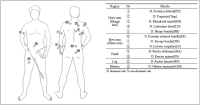
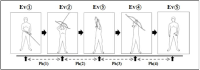
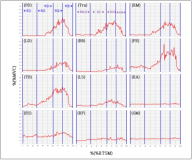
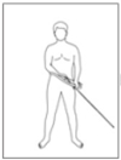
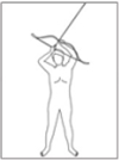
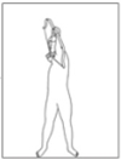
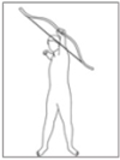
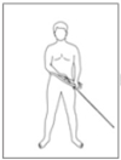
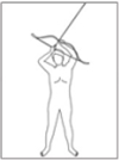
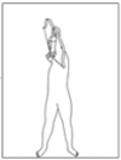
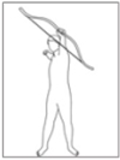
The past few decades has seen increasing kinematic studies using surface electoromyography (EMG) in archery, however there has been no such specific study in Korean traditional archery. The purpose of this study was to evaluate EMGs during archery shooting motion in Korean traditional archers. Ten men Korean traditional archers were participated, and divided into two groups according to the shooting stance; parallel stance group(PSG, n=5) and oblique stance group(OSG, n=5). The surface EMGs were measured 12 muscles during shooting motion of five events including Junbi(Set), Geogung(Set up), Manjak(Full draw), Balsi(Release), Machigi(Ending). At the result, muscle activity of posterior deltoid, trapezius, rhomboid major, latissimus dorsi, biceps brachii, forearm extensor bundle, triceps brachii, levator scapulae significantly increased at event of full draw and release, then significantly decreased again at event of ending, respectively(p<.01, p<.001). The muscle activity of erector spinae(ES) was also significantly increased at event of full draw and release(p<.01, p<.001), while no significant changes in muscles of rectus abdominis, rectus femoris(RF), gluteus maximus. As a result of comparing PSG and OSG, muscle activity of RF in OSG was higher than PSG at event of release(p<.05), it remained until event of ending(p<.05). On the other hand, the higher the tension of the bow, the higher the muscle activity of the draw arm at event of release(p<.05). These results suggest that when Korean traditional archery shooting, both side arm and back muscles are more activated than the abdomen, leg and hip muscles. The parallel stance might suppress the muscle activity of the lower extremities to twist the upper body. And the higher bowstring tension needs to increase of muscle strength in BB of draw arm.
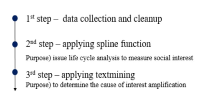
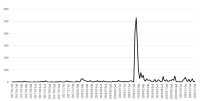
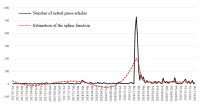
Purpose The purpose of this study is to analyze issues of sexual violence case in sports field reported in the press by using spline function model and text mining. In specific, spline function model is used to measure social interest level based on issue attention cycle theory and figure out the flow of issues by applying text mining. Methods Study material is 2,660 news articles reported from January 1, 2017 to December 31, 2019 and press DB(Big Kinds) of Korea Press Foundation is used to collect study material. Results Social interest level on sexual violence case in sports field is dramatically increased due to disclosure of Sim player starting from Me Too movement started from the culture and art world. Because of this, as structural problem in sports field arises, social interest level comes to a climax, and then it was founded that the government’s countermeasures establishment and special audits by the Ministry of Education were in progress. From the perspective of the issue attention cycle, it has the stages of latent-occurrence-rising-decision-decay-disappearance, but the period from rising to declining is short, so it corresponds to a breaking issue attention cycle. Conclusion This study examines the progress of sexual violence case in sports field from rising to disappearance in the perspective of the issue attention cycle. With this incident, the world of sports is establishing sports ethics center and proceeding policies such as Basic Sports Act, and the future studies need to review the effectiveness of this policy.
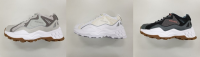
Purpose The purpose of this study was to investigate the effect of midsole hardness on gait mechanisms by wearing a backpack. Methods Ten healthy adult males(age:23.20±1.33yrs, heights: 1.72±0.03cm, weights: 67.60±5.95kg) participated in this study. Subjects walked at a speed of 1.5m/s in an 8m section wearing randomly selected midsole hardness (Soft, Medium, Hard) shoes and backpack (30% of body weight). For measurement of body movement, 10 infrared cameras (Vicon motion capture system, UK) and force plate (AMTI, ORG-6, US) were used. Results First, in the shock phenomenon change, the ground contact time was longer when wearing a backpack. Second, in the shock absorption strategy, the pack plantarflexion velocity at the ankle joint was faster in Hard than Soft, and the pack dorsiflexion moment decreased when wearing a backpack (p<.05). Also, the pack extension moment of the knee increased significantly when wearing a backpack. Fourth, in the mechanical negative work, the ankle joint performed less work than the medium soft, and the knee joint increased as the backpack was worn (p<.05). Conclusion As a result of this study, the difference in the hardness of the midsole used in this study does not seem to affect the biomechanical movement of gait even when wearing a backpack. In future studies, it is necessary to investigate the effect of the midsole through the presence or absence of shoes or inducing muscle fatigue.
